ESG Audit for Prestige Real Estate: Valuing a Domain Worth Over €10 Million Against 2026 Regulations
April 1, 20264 min read
Ultra-luxury is no longer defined by gold but by energy performance. How ESG auditing and green engineering are transforming the valuation of exceptional estates against new 2026 obligations.
In 2026, the luxury real estate paradigm has fundamentally shifted. The most sophisticated buyers no longer ask only "how many square metres?" but "what is the energy rating?" Historic châteaux, Parisian hôtels particuliers and wine estates face an unprecedented challenge: reconciling architectural heritage with environmental performance.
The New Paradigm: When Luxury Goes Green
Three converging regulatory and market forces are redefining prestige real estate in 2026:
The Tertiary Decree — Mandatory 40% energy consumption reduction by 2030 for commercial buildings over 1,000 m²
Climate and Resilience Act — Progressive ban on renting "thermal sieves" (EPC ratings F and G), even for prestige properties
European Taxonomy — Institutional investors and family offices now integrate ESG criteria into real estate allocation decisions
Result: a listed château with a G rating can see its value decrease by 25 to 35% compared to an equivalent renovated property. The "luxury thermal sieve" has become an oxymoron that the market punishes mercilessly.
Our Approach: Prestige Real Estate ESG Audit
Our audit goes far beyond the regulatory EPC. We deploy dynamic thermal modelling analysing the building's energy behaviour hour by hour, accounting for specificities of historic buildings: massive stone walls, slate roofs, heritage joinery, fireplace heating systems.
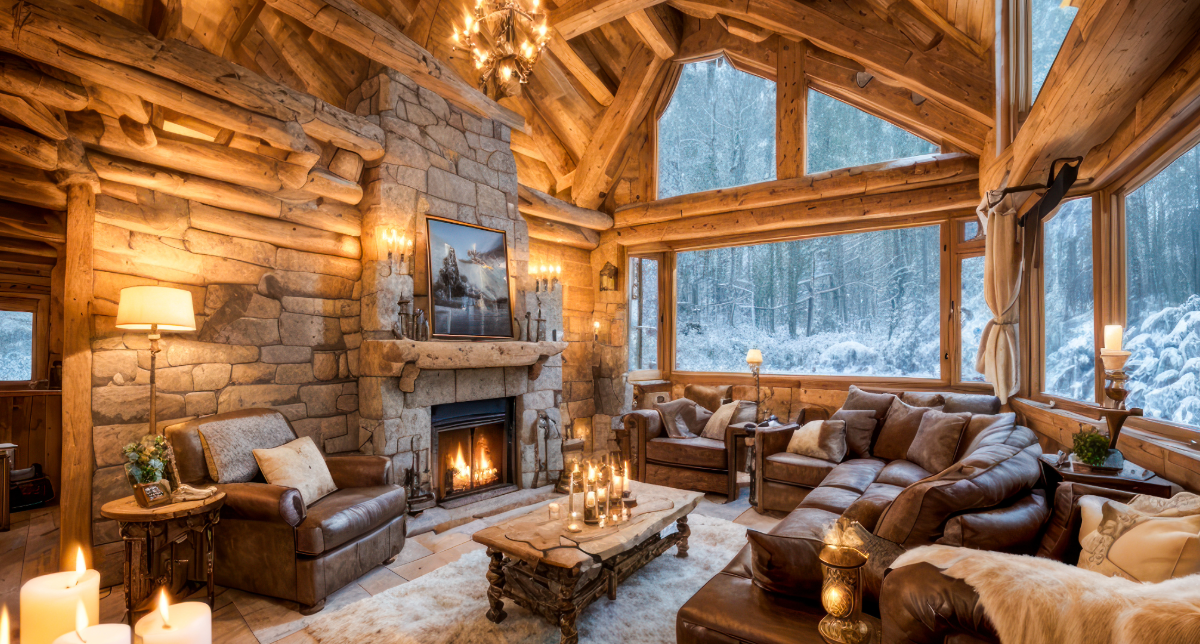
Sustainable luxury: when energy performance elevates heritage
Renovation Strategies for Exceptional Heritage
Bio-sourced interior insulation — Lime-hemp renders, wood fibre panels: breathable materials compatible with ancient stone walls
Heritage double glazing — Period-identical joinery reproduction with modern thermal performance
"Sustainable luxury is not a compromise — it is an evolution. A 17th-century château equipped with geothermal and bio-sourced insulation offers superior comfort to new construction, while preserving a soul that money cannot buy."
FAQ — ESG Audit & Energy Renovation for Luxury Heritage
Can a château listed as a Historic Monument truly achieve a good EPC without denaturing its architecture?
Yes, provided a bespoke approach is adopted. Listed buildings benefit from an EPC exemption for rentals, but not in terms of resale valuation. We use invisible insulation techniques (lime-hemp interior renders, heritage double glazing, geothermal) that fully preserve external appearance. On our latest projects, we achieved performances equivalent to EPC C on 18th-century buildings without any visible alteration.
What is the average cost of energy renovation for a domain worth over €10 million?
The energy renovation budget typically falls between 8 and 15% of the property's value, i.e. €800,000 to €1.5 million for a €10 million domain. ROI is measured at three levels: energy savings (30-60% cost reduction), heritage appreciation (20-40% valuation increase), and tax advantages.
Does French law really prohibit renting a prestige property rated F or G on the EPC?
Yes, since 1 January 2025, properties rated G are prohibited from rental as primary residence. Properties rated F follow in 2028. Exceptions are very limited. Crucially, these exemptions do not prevent market discount — informed buyers will systematically apply a discount to energy-inefficient properties.
How does the European ESG taxonomy concretely impact prestige property value?
The European Taxonomy requires investment funds and family offices to report the "green" share of their real estate assets. A non-compliant property becomes a "brown" asset that institutional investors must progressively divest or renovate. This reduces the pool of potential buyers for un-renovated properties — particularly critical for domains over €10 million.
What labels and certifications do you recommend to maximise a renovated domain's valuation?
We recommend a progressive labelling strategy: first the BEC Label (Controlled Energy Building), specific to heritage buildings, then HQE Heritage certification for the most ambitious renovations. For domains with activities (hospitality, events, viticulture), ISO 14001 and Green Key add a global environmental dimension valued on the international market.
Does your ESG audit include biodiversity and natural resource management?
Yes, our audit integrates a complete biodiversity component: ecological species inventory, ecological corridor analysis, carbon sink evaluation. For wine estates, we include an analysis of organic or biodynamic conversion potential — a growing valuation factor that can add 10-15% to the value of adjoining agricultural land.