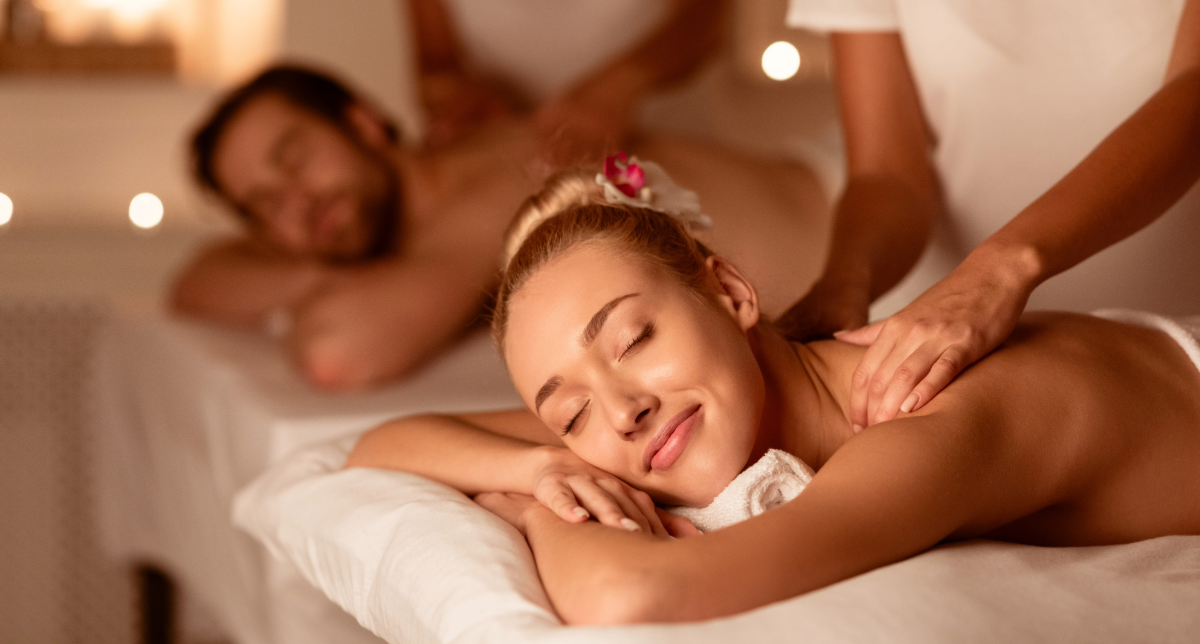
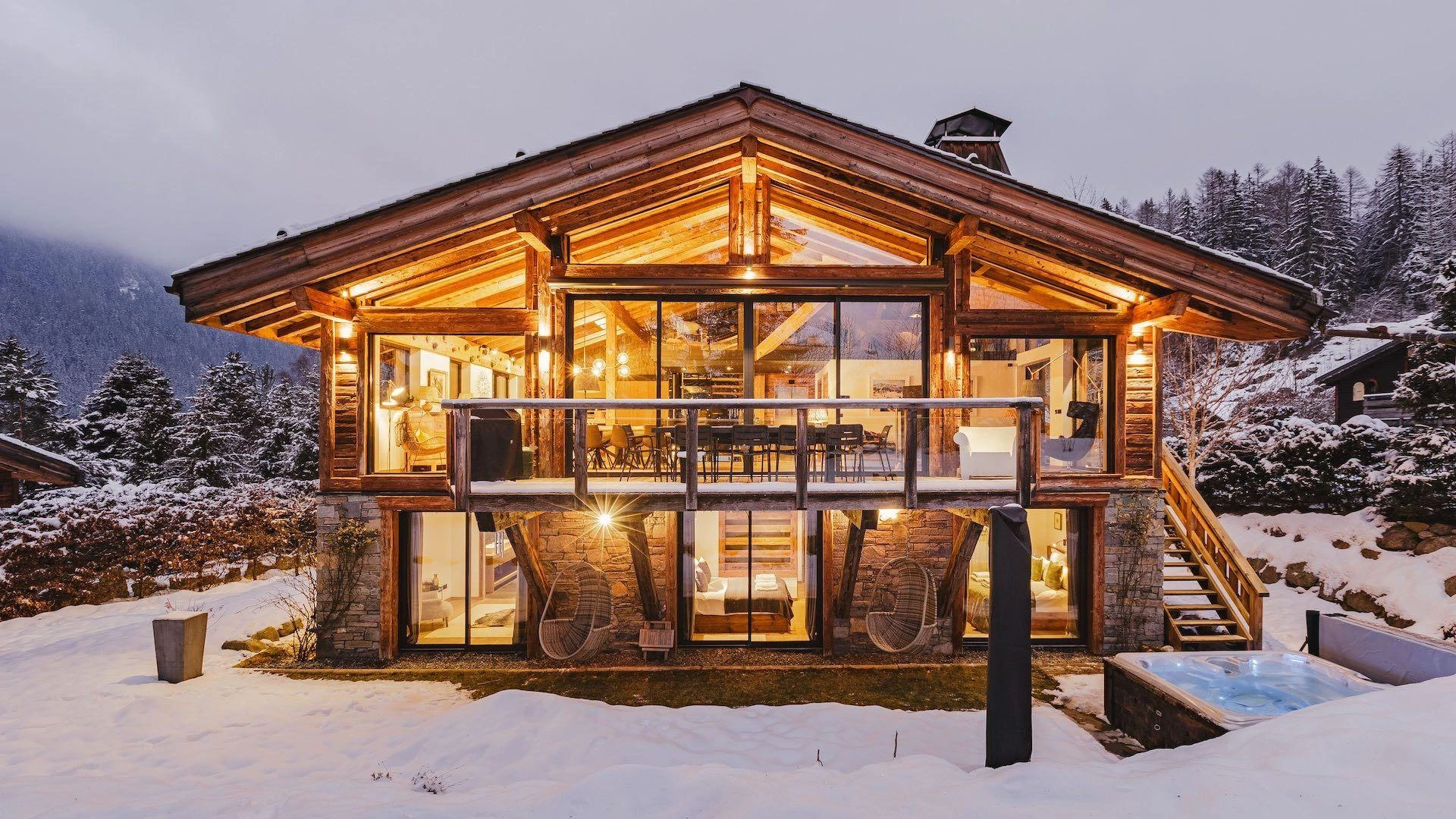
There is a market hole in Alsace and the Grand Est that few investors have had the lucidity to identify — and that the 2026 data now makes perfectly readable. On the one hand, love rooms at 250-400 euros per night whose experience does not exceed that of a good city hotel. On the other, Relais & Châteaux at 800-1,500 euros which do not target couples but classic travelers. Between the two, an absolute void: the sensorially impeccable stay for two, with an entirely private spa, in rural or peri-urban Alsace, one hour from Strasbourg, Basel and Frankfurt. This void, at 500-600 euros per night, with two units and 60% occupancy, generates 220,000 to 260,000 euros in annual turnover per unit. And it responds to four structural trends which all converge in the same direction.
-
Investment Analysis · Wellness Luxury Couples · Alsace Grand Est · 2026
The missing niche — and why now.
$920 billion
Global wellness tourism market 2026 (Global Wellness Institute)
+5.8%
Global CAGR wellness tourism 2026-2035
39.1%
Europe's share of the global wellness market 2025 (Global Wellness Institute)
1 trip / 5
Now includes a wellness component (Global Wellness Institute)
I have worked in luxury concierge and real estate investment consulting for long enough to know how to distinguish surface trends from underlying movements. We see surface trends everywhere — in magazines, in startup pitch decks, in LinkedIn posts on the “self-care economy.” The underlying movements can be read in market data, in the real behavior of wealthy customers, and in the holes that no one has yet been able to fill.
In 2026, there is a fundamental movement in Alsace and the Grand Est that is perfectly understandable — and a market hole that is, to my knowledge, still devoid of any serious competitor. This gap is that of the stay for two which combines the entirely private spa, the absolute privacy, the carefully constructed sensory experience, and the price positioning which says something important to couples who have the means to demand the best: 500 to 600 euros per night, without a restaurant, with everything you need to not need it.
The four trends that are converging — and why now
First trend: the structural growth of wellness tourism. The global wellness tourism market has crossed the symbolic trillion-dollar mark in 2024-2025, according to the Global Wellness Institute. In 2026, it is estimated at $920 billion by Business Research Insights, with a CAGR of 5.8% over the decade 2026-2035. Europe represented 39.1% of this global market in 2025 — or around $360-430 billion. Germany alone is worth 90 billion dollars in this sector. And above all: according to the Global Wellness Institute, 1 trip in 5 now includes a wellness component, whatever its primary nature. The wellness tourist is no longer the client of the Swiss clinic or the Thai resort — it is the Alsatian or Rhineland couple who wants an impeccable weekend an hour from home.
Second trend: the explosion of cross-border demand. The Grand Est is one of the French regions most exceptionally positioned to capture premium cross-border demand.bind. An hour's drive from the Vosges or the Alsatian plain: Strasbourg (720,000 inhabitants in its urban area), Basel (870,000), Karlsruhe (310,000), Freiburg im Breisgau (230,000), Mulhouse (250,000 in the metropolitan area), and beyond Stuttgart and Frankfurt. This cross-border clientele — particularly German and Swiss clientele — is accustomed to high levels of price and quality, they pay without negotiating when the experience justifies it, and they are massively underserved by the current high-end offering of the Grand Est in the couples segment.
Third trend: the structural weakness of the premium rural offer in the Grand Est. Count the accommodation in rural or peri-urban Alsace which simultaneously offers a fully private spa, international-level decoration, and an experience designed for two from the first moment to the last. We can count them on the fingers of one hand — and counting. The prestigious hotel offering in the Grand Est is concentrated in city centers (Hôtel Régent Petite France in Strasbourg, mansions in Nancy) or in Relais & Châteaux which do not target couples but mixed clienteles. The luxury rural offer exists but it generally stops at the good character gîte - not at the five-star private spa.
Fourth trend: the gap between 250 euros and 800 euros. This is the most precise and exploitable market hole. Below 250-400 euros per night, you have love rooms, some of which are remarkable but whose experience remains limited — jacuzzi in the room, careful decoration, but no real private spa, no concierge service, no tailor-made sensory program. Above 800-1,500 euros per night, you have Relais & Châteaux and palaces that are not positioned for couples — they are positioned for classic travelers who want the gourmet table and the wine cellar. At 500-600 euros, with exclusive private spa, sensory program built for two, no restaurant but private chef or gourmet basket service, you have no direct competitor in the Grand Est. This is the definition of white positioning.
The business model — what the numbers say
Two units. 500-600 euros per night. 60% occupancy rate over the year — a perfectly realistic objective for a well-positioned and well-distributed property, given AirDna-ARTGE data for the region. At 550 euros per average night and 60% occupancy: 365 days × 60% = 219 nights × 550 euros = 120,450 euros per unit per year. On two units: 240,900 euros annual turnover. With additional services — private chef, massages, baskets of local products, organization of activities — the range of 220,000 to 260,000 euros per unit mentioned in the analysis is not only achievable but prudent.
This model does not depend on Eurométropole compensation, does not compete with the 2,000 Strasbourg Airbnbs on standard platforms, and is not subject to urban density constraints. It operates in a territory – rural or peri-urban Alsace – where regulations are more flexible, where land is still accessible, and where the landscape is precisely what the target clientele is looking for.
Blind spots not to ignore before getting started
An honest analysis of this positioning cannot obscure the real constraints which determine the difference between a project that holds up and one that suffers.
The cost of the private spa. This is the budget item that surprises project leaders the most. A standardized private well-being space - sauna, hammam, jacuzzi, experience shower, cold plunge pool if we go all the way with the contemporary concept, massage room - represents between 80,000 and 150,000 euros per unit,depending on the surface area, the equipment used and the applicable health and safety standards. This budget does not include the decoration, nor the equipment of the room, nor the exterior surroundings. It must be integrated from the start into the financing plan — not discovered at the time of the quote.
The DPE of the property acquired or built. Since 2025, housing classified G has been prohibited for rental. In 2028, the E will be affected. For luxury tourist accommodation, this is non-negotiable: a poor DPE is not a theoretical constraint, it is an immediate regulatory risk. Any acquisition of an old property must begin with a serious energy audit - with costing of the work necessary to achieve at least a DPE C, ideally B. This work must be included in the business plan from the due diligence phase.
Development permit and change of use. If you transform an old farm, a farmhouse or an agricultural building into tourist accommodation, you enter into the regime of planning permit or building permit depending on the scale of the work. In Alsace, certain territories are in architectural and landscape heritage protection zones — which can extend instruction times and impose aesthetic constraints. This dimension must be checked in advance with an architect and the town hall concerned, before any acquisition.
Distribution strategy. This is the most critical decision after product design — and the one that is most often underestimated. This type of accommodation should not be distributed on Booking.com or Airbnb. It should be on Mr & Mrs Smith, Tablet Hotels, Small Luxury Hotels of the World, and ideally on i-Escape or Hip Hotels. These platforms target exactly the target clientele — wealthy couples, demanding travelers, premium international clients — and they impose quality standards that protect positioning. The commission is higher (15-25%) but the added value in terms of customers and reputation is incomparable. The own mailing list, built from the opening, is also a major asset: a clientele that returns and prescribes is more valuable than any advertising campaign.
The role of Adopte un Conciergerie in this project
This type of project — ultra-luxury wellness accommodation for couples in rural Alsace — is precisely at the intersection of all the skills that Adopts a Conciergerie has developed for several years in the Grand Est. We support the identification and acquisition of the property — off-market if necessary, in the areas of rural Alsace best positioned geographically in relation to the three customer base. We coordinate due diligence - DPE, urban planning compliance, evaluation of the work, legal analysis of the property. We build the business plan with real market data — AirDna, ARTGE, regional attendance data. We advise on positioning, decoration, service program and distribution strategy. And after opening, we manage the property — reservations, reception, tailor-made services, customer relationship management — with the standards of a luxury private concierge service.
An investor who enters this project alone will discover his blind spots one after the other, through quotes and permits. An investor accompanied by a concierge service anchored in the region knows these blind spots before buying.
Eight questions about investing in luxury wellness for couples in Alsace
Why is rural or peri-urban Alsace the besttheir territory for this project in France?
Five reasons that add up. Geography first: Alsace is less than an hour from five large population areas – Strasbourg, Basel, Mulhouse, Freiburg, Karlsruhe – the sum of which represents several million inhabitants with a purchasing power greater than the French average. Then the setting: a renovated Alsatian farm on the Wine Route, a farmhouse in the foothills of the Vosges, a mansion in Sundgau — these landscaped settings have exactly what the premium wellness clientele is looking for: authenticity, calm, natural beauty, far from the urban. Land: rural real estate prices in Alsace remain affordable compared to regions where this concept already exists — the Luberon, Dordogne, Normandy. Regulations: less restrictive in rural areas than in Strasbourg where the Eurometropolis imposes strict rules on furnished tourist accommodation. And the market hole: precisely because no one has yet done it at this level in rural Alsace.
What is the real profile of the target clientele and how to validate the request before investing?
The target clientele is divided into three segments. Well-off French couples — senior executives, managers, liberal professions — residing in Strasbourg, Mulhouse, Nancy, or coming from Paris by TGV (1 hour 45 minutes from Paris to Strasbourg) — who are looking for an impeccable getaway without having to take a plane. German and Swiss cross-border couples — particularly residents of Basel, Freiburg, Karlsruhe, Stuttgart — are accustomed to high levels of service and willing to pay for an experience whose quality is beyond question. And UHNWI and expatriate couples — clients of the European institutions in Strasbourg, executives traveling in the region — who are looking for an exceptional setting for a night or a weekend. To validate the request, we recommend two complementary approaches: an AirDna analysis of the closest premium accommodation to check their occupancy rates and prices, and a feasibility study with a qualitative sample of 20 to 30 couples in the target, to test receptivity to the positioning and price level.
What is the realistic total budget to create a first ultra-luxury wellness unit in Alsace?
A reasonable budget is broken down into five items. Land and real estate acquisition first: depending on the location and surface area, between 200,000 and 500,000 euros for a farmhouse or a mansion in rural Alsace in an attractive area. The renovation and upgrading work then: between 1,500 and 2,500 euros/m² for a quality renovation, or 150,000 to 300,000 euros for a surface area of 100 to 150 m² gross. The private spa and wellness area: 80,000 to 150,000 euros depending on the level of equipment chosen. Decoration and furnishing: 30,000 to 60,000 euros for international level decoration. Structural and distribution costs at start-up: 20,000 to 40,000 euros. Estimated total budget: 480,000 to 1,050,000 euros for a first unit. At this level of investment and with the income model described — 120,000 to 130,000 euros per year per unit — the gross return on investment is between 12 and 25% depending on the financing structure, with a higher return on equity in case of bank leverage.
How does the DPE concretely affect this type of project in 2026?
In a very direct and non-negotiable way. Since 2025, housing classified G (consumption greater than 420 kWh/m²/year) has been prohibited for rental. From 2028, E-rated housing will in turn be affected. For luxury tourist accommodation that precisely positions the confort and well-being as central promises, poor ECD is not just a regulatory constraint — it is a contradiction in terms. A poorly insulated building, which loses heat in winter and overheats in summer, cannot deliver the impeccable sensory experience which is at the heart of the positioning. The DPE must therefore be treated as a positive constraint: the requirement for an efficient building is aligned with the customer promise. Thermal renovation — insulation of attics and walls, efficient joinery, virtuous heating system — must be integrated into the renovation budget from the start, not considered as an optional additional cost.
What are the best distribution platforms for this type of hosting and how to reference them?
The distribution strategy is as important as the quality of the product — poor SEO on the wrong platforms can destroy a positioning before it even has time to establish itself. Recommended platforms in order of priority: Mr & Mrs Smith — the gold standard for boutique hotels and exceptional accommodation for couples and discerning travelers, with a very high quality international clientele. Tablet Hotels — platform for curation of boutique accommodations from around the world, with rigorous editorial selection. Small Luxury Hotels of the World — international network of luxury independent accommodation, with a strong presence in the Germanic and English-speaking markets which are exactly our targets. i-Escape and Hip Hotels — curation platforms with a strong editorial component and an audience of authentically curious travelers. These platforms charge a higher commission than Booking.com but their added value in terms of positioning, customer quality and image protection is incomparable. They do not reference everyone — their selection process is rigorous and this is precisely their strength.
Are there comparable examples in France or Europe that validate the model?
Yes — and they are informative about achievable performance levels. In France, accommodation such as "Ôna — character hotels" or certain establishments listed on Mr & Mrs Smith in the Luberon, Dordogne or Brittany show that the small structure format, large private spa, excellent service, works very well from two to four units — with occupancy rates of 65-80% in good markets. In Germany and Austria — two countries with a very anchored wellness culture — Boutiquehotels offering exactly this positioning (two to six suites, private spa by reservation, without restaurant but with catering service or private chef) display rates of 400 to 700 euros per night and occupancy rates that are the envy of large hotels. In French-speaking Switzerland, several properties of this type have been created in the last ten years with very solid economic results. The model exists and it works. What is missing is its translation into rural Alsace — where the terroir, the landscape setting and the geographical positioning are as good, if not better.
Do you need just one premium unit to test, or start with two units from the start?
The question is legitimate and the answer depends on the profile of the investor. Starting with a single unit allows you to validate the concept, refine the product, and build the portfolio of reviews and reputation that will attract the target customer — with a small initial investment and limited risk. The disadvantage: fixed costs – housekeeping staff, structural costs, spa maintenance – are poorly shared, which weighs on unit profitability in the phase ofe startup. Starting with two units immediately makes it possible to pool fixed costs, to reach the critical mass which justifies serious referencing on premium platforms, and to immediately create sufficient turnover to cover current expenses. The disadvantage: the investment is doubled. Our recommendation for an investor who does not yet have experience in tourist accommodation: start with one unit, with the physical (land) guarantee of being able to open the second in the following 24 to 36 months. For an investor who already knows the sector or who has solid professional support: open two units simultaneously.
How does Adopte une Conciergerie concretely support an investor on this type of project in Grand Est?
Our support covers the entire life cycle of the project. In the design phase: feasibility analysis with real market data (AirDna, ARTGE, regional tourist data), identification of the most promising territories in rural and peri-urban Alsace, search for the property corresponding to the off-market criteria if necessary, complete due diligence (DPE, town planning, compliance, cost of works). In the production phase: coordination of craftsmen and companies specializing in private wellness spaces, supervision of the site under delegated project management, advice on the positioning of the experience, decoration and services. In the operational phase: implementation of the reservation system, referencing on premium platforms, complete operational management (reception, cleaning, linen, services), customer relationship management and reviews, revenue management and regular financial reporting. All supported by our territorial anchoring in the Grand Est and by the relationships of trust that we have built with key players in the local ecosystem.
The best investments aren't the ones everyone sees — they're the ones the data shows before everyone sees them. In 2026, in Alsace, this project is both at the same time: obvious to those who read the data, invisible to those who look elsewhere.
Luxury Wellness · Couples · Alsace · Grand Est · Investment · Private Spa · 2026
Adopt a Concierge — First Luxury Private Concierge in the Grand-Est · First Corporate Concierge
Sources: Global Wellness Institute · Business Research Insights (Wellness Tourism Market 2026) · Grand View Research (Europe Wellness Tourism Market 2026) · Global Growth Insights · AirDna–ARTGE (On the Book, April 2026) · BPI France BigMedia (Hospitality Wellness 2025)