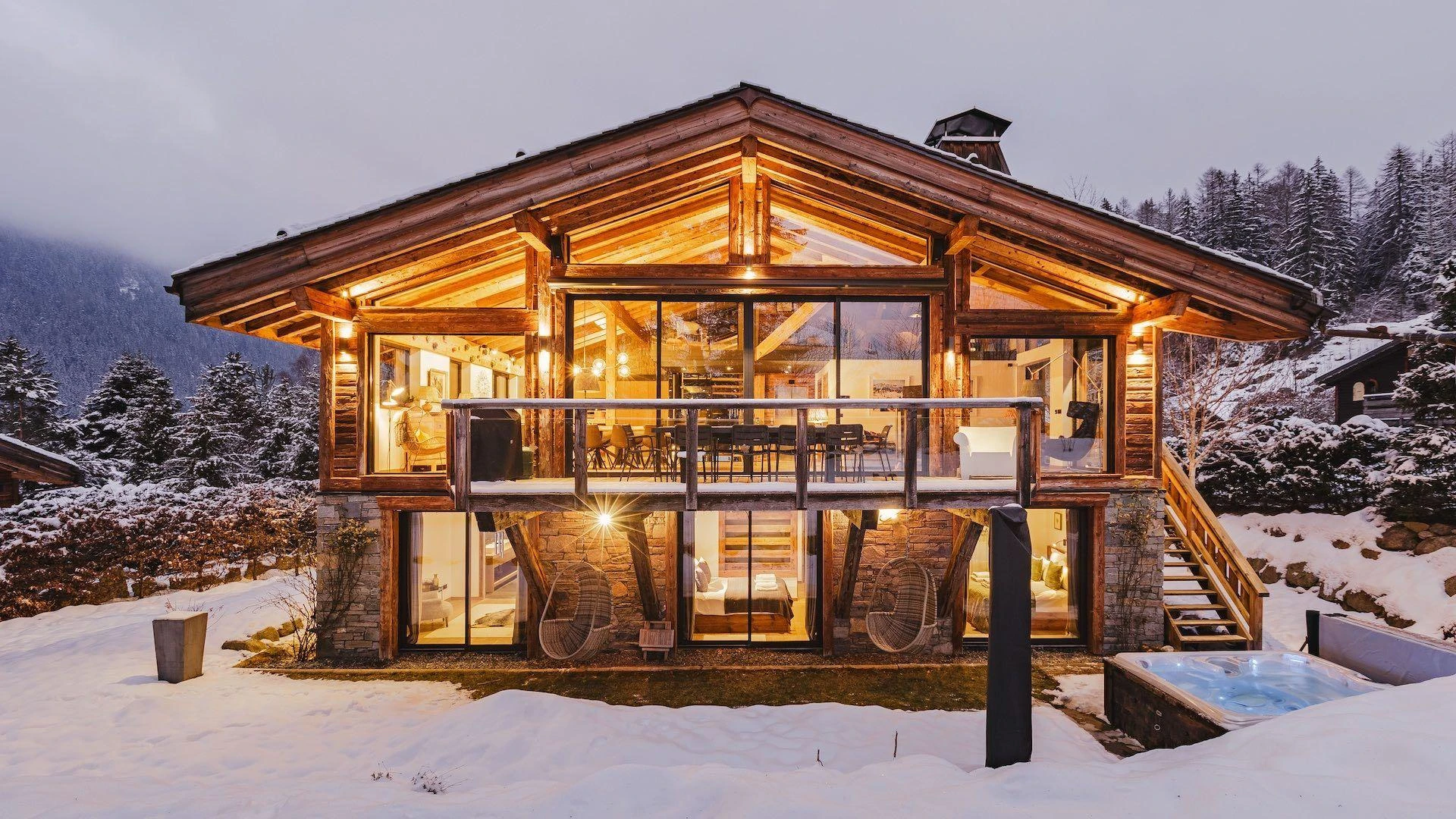
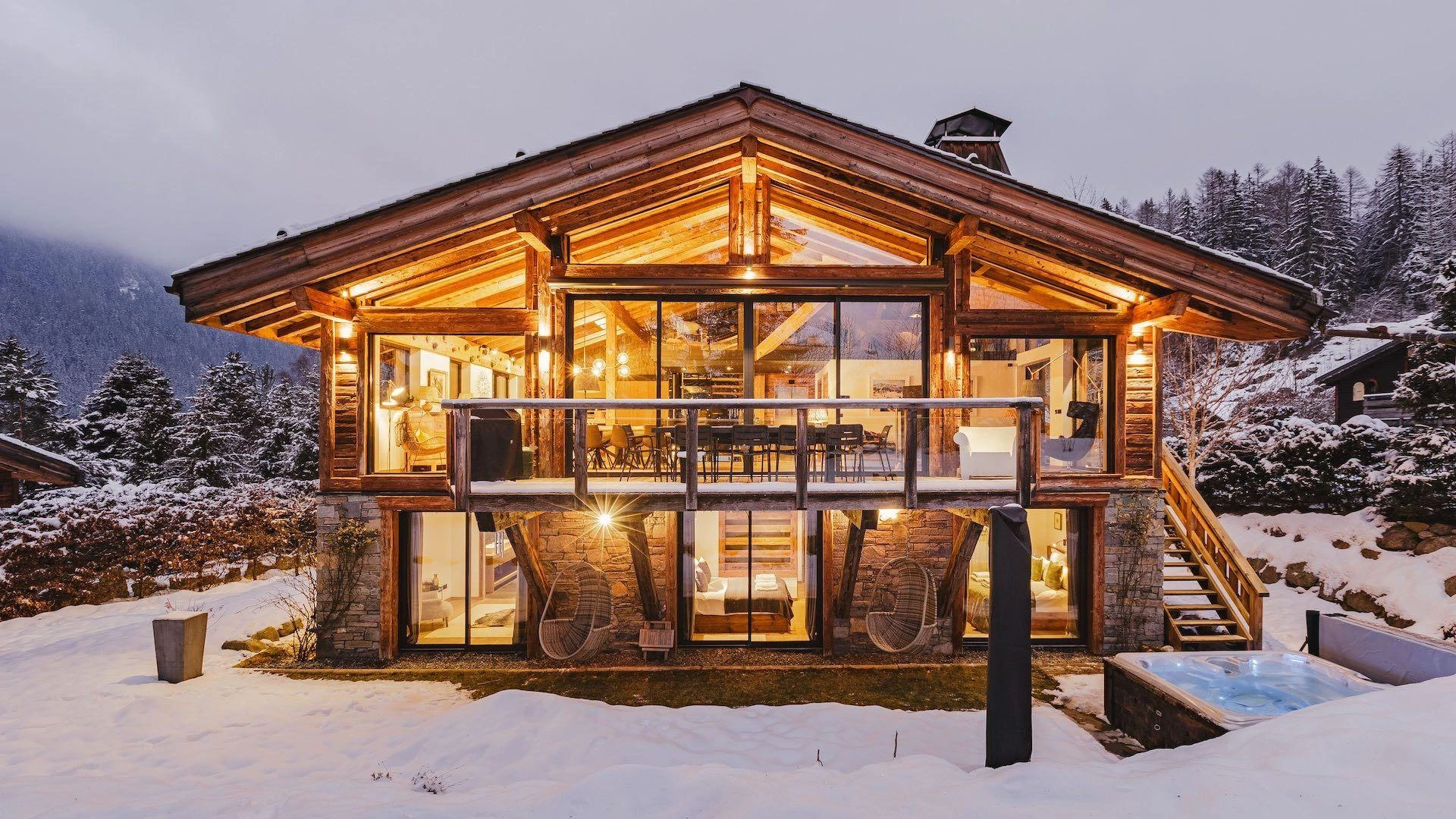
Monitoring, winter maintenance, high-end seasonal rentals, mountain LMNP taxation: the complete guide for chalet owners in Chamonix who want to make their property profitable and protect it while away.
Chalet management · Chamonix · Mont-Blanc · Owner's Guide 2026
Chamonix-Mont-Blanc has more than 800 chalets classified as high-end secondary residences. Most owners stay there only 6 to 10 weeks a year. The rest of the time, the property deteriorates, risks pile up, and rental potential remains untapped. This guide covers the three pillars of effective chalet management: concierge services, security, and seasonal rentals.
1. The risks of an unmanaged chalet in Chamonix
An empty mountain chalet is a vulnerable property. The risks are specific to the alpine environment:
- Snow load — The Chamonix valley receives an average of 7 to 9 meters of cumulative snowfall per season. An uncleared roof can be subject to loads exceeding 400 kg/m², causing structural damage.
- Frozen pipes — Temperatures regularly drop to -15°C in January and February. A frozen pipe can cause water damage worth tens of thousands of euros.
- Break-ins — Secondary homes left unoccupied are prime targets during the off-season. Chamonix is no exception.
- Passive wear — Humidity, mold, rodents, untreated wood: a chalet left closed for 10 months a year ages twice as fast as an occupied chalet.
Key point: A mountain chalet left closed for 10 months a year ages twice as fast as an occupied chalet. Active management is not a luxury; it is asset protection.
2. Chalet concierge services: essential services
2.1. Preventive maintenance
An effective chalet concierge service ensures:
- Regular snow clearing from the roof, access areas, and terraces
- Monthly checks of the pipes, heating system, and electricity
- Scheduled ventilation and dehumidification
- Wood maintenance (cladding, terraces, framework) — biannual treatment
- Monitoring of service contracts (boiler, chimney sweeping, heat pump)
2.2. Access and contractor coordination
The concierge coordinates service providers: gardener, pool technician (if there is an indoor pool), jacuzzi technician, plumber, electrician. They manage keys, alarm codes, and oversee every intervention.
2.3. Preparing your stays
Before your arrival: heating switched on 48 hours in advance, groceries delivered, fresh linens, full cleaning, checking of ski equipment (technical room). On departure: end-of-stay cleaning, set to hibernation mode, draining if closing for a long period.
3. Security: protecting a chalet in an alpine area
3.1. Recommended security system
For a chalet in Chamonix, the standard setup includes:
- Connected alarm system with perimeter detection (outdoor sensors resistant to cold)
- IP video surveillance with remote access and cloud storage
- Freeze sensors on the main pipes (SMS alert if T° < 2°C)
- Connected water leak detectors (automatic shutoff of the water supply)
- Smart heating controls: intelligent frost protection at 8-10°C, remotely programmable temperature increase
3.2. Patrols and human presence
No technology replaces physical presence. We recommend twice-monthly checks in winter (roof inspection, snow accumulation, access routes) and monthly checks in summer (garden condition, pests, wood).
4. High-end seasonal rentals: making your chalet profitable
4.1. The Chamonix rental market in 2026
Chamonix is the most international resort in the French Alps:
- Peak-season rate (Christmas, February) : €5,000 to €25,000 / week for a chalet with 4 to 8 bedrooms
- Summer rate : €3,000 to €12,000 / week (hiking, trail running, mountaineering)
- Optimized occupancy rate : 18 to 24 weeks rented per year
- Estimated gross yield : 4 to 7% depending on standing and location
4.2. Premium positioning
The chalets that rent best in Chamonix share these features: outdoor jacuzzi with Mont-Blanc views, sauna or hammam, ski room with boot dryer, professional kitchen for a private chef, heated garage. Investment in these amenities pays for itself in 2 to 3 seasons.
4.3. Mountain LMNP taxation
The LMNP status (Non-Professional Furnished Rental) makes it possible to depreciate the property and equipment, reducing taxation on rental income to almost zero for 15 to 20 years. Deductible expenses include: loan interest, works, insurance, concierge fees, furnishings.
Key point: Under LMNP real tax regime, a chalet in Chamonix rented for 20 weeks a year can generate €60,000 to €150,000 in gross revenue with effective taxation close to zero for 15 to 20 years thanks to depreciation.
Entrust the management of your chalet
Adopte Une Conciergerie manages high-end chalets in Chamonix, Megève, Courchevel, and the Vosges. Full concierge service, security, premium seasonal rentals.
Discover our rental management
Frequently asked questions
How much does a chalet concierge service cost in Chamonix?
Expect €300 to €800 / month for ongoing management (patrols, preventive maintenance, access management). In full rental management (marketing + welcoming guests + cleaning + concierge services), the cost represents 20 to 30% of rental income.
Can you rent out your chalet and still use it yourself?
Yes. Most owners block 4 to 8 weeks a year for personal use (Christmas, summer holidays) and rent out the rest. A shared calendar with the concierge makes it easy to manage both uses without friction.
What insurance should you have for a chalet rented seasonally?
Mandatory PNO (Non-Occupying Owner) insurance, public liability cover, and holiday insurance for tenants. Budget: €1,500 to €4,000 / year depending on the property value.