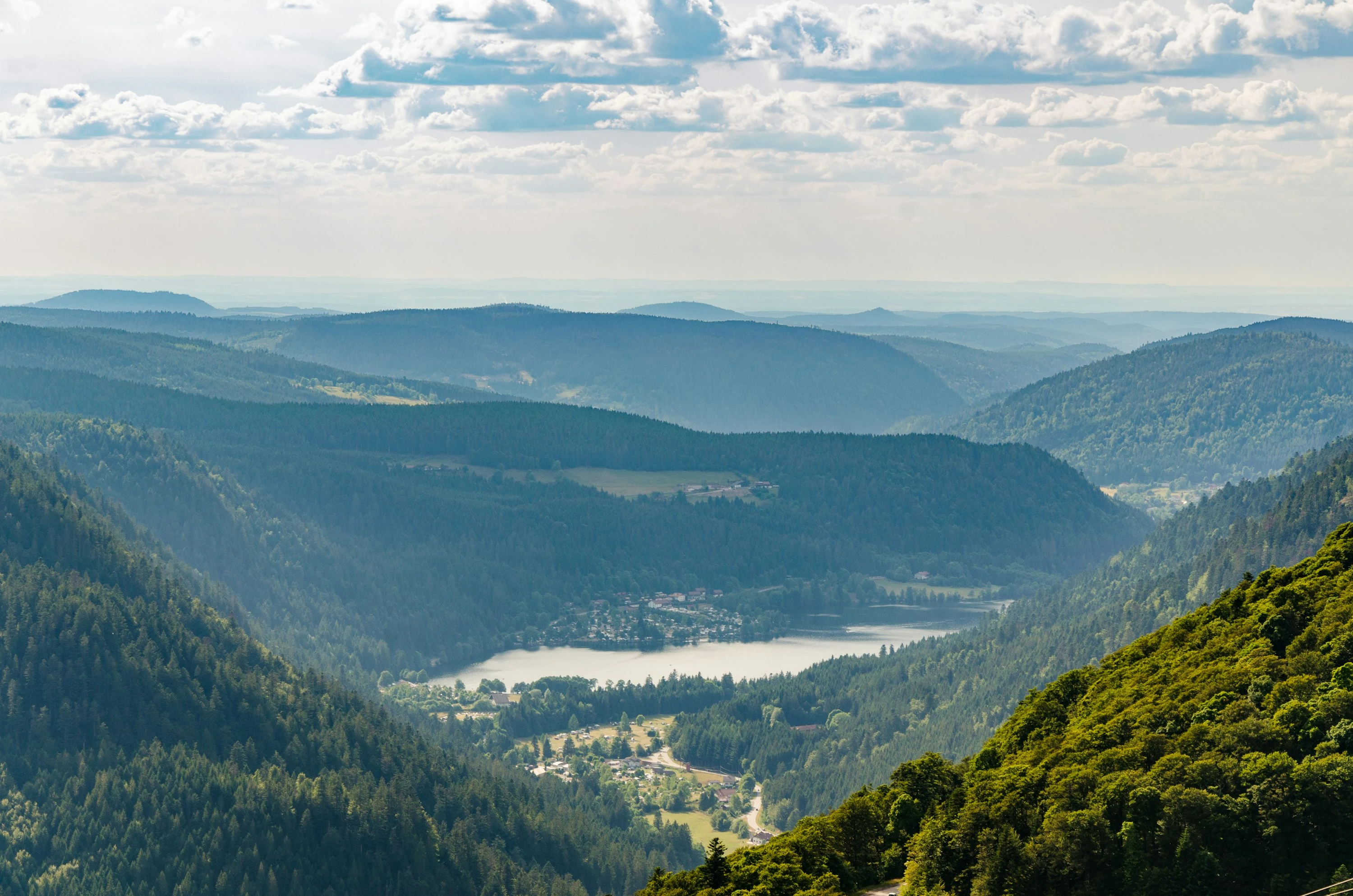
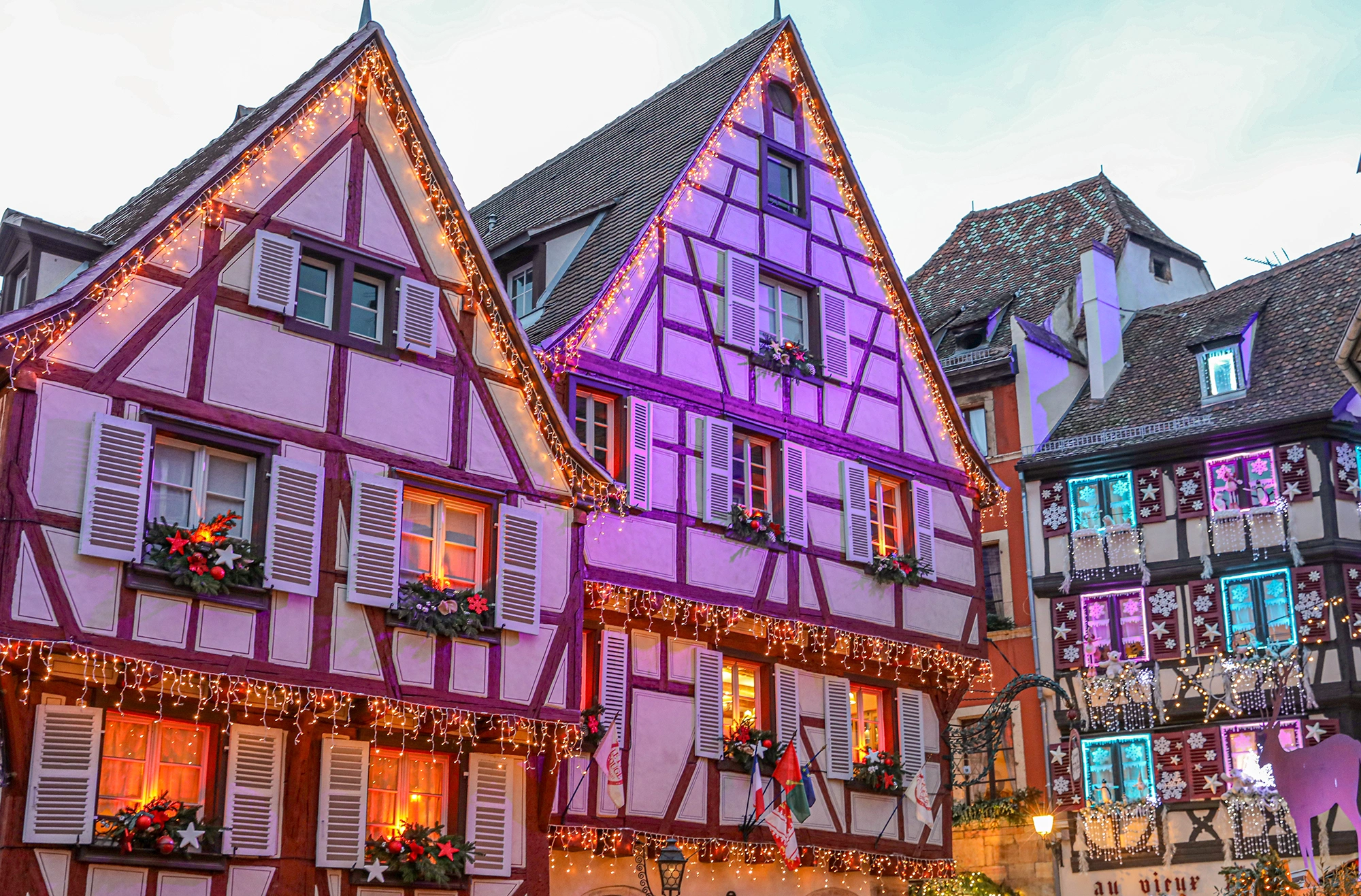
A discreet but measurable phenomenon has occurred in recent years in the mapping of French luxury travel: UHNW clients — those who have already seen it all, who return from Saint-Tropez and Cannes with demonstration fatigue — are turning to Alsace. Not by default. By deliberate choice. Because Alsace offers what the French Mediterranean has gradually lost: peace, cultural density without saturation, and what the sector now calls quiet luxury — luxury that does not need to show itself to exist. This article deconstructs arbitration.
-
Quiet Luxury · Alsace vs Côte d'Azur · Premium Arbitration · 2026
When UHNW customers stop following the crowd and choose depth over surface.
Quiet Luxury
Luxury without demonstration — heritage, gastronomy, viticulture, civil peace
Cultural density
Unterlinden Museum · 51 Grands Crus · Michelin-starred gastronomy · Intact architecture
Arbitration
Superior experience · Lower cost of entry · Zero human saturation
A few years ago, placing Alsace in the same conversation as the Côte d'Azur for a UHNW clientele would have seemed incongruous. Saint-Tropez, Cannes, Monaco, Cap Ferrat — this is where French luxury travel was written. Alsace was beautiful, certainly, but it was a “regional” destination, a prettier Germany, a half-timbered circuit for cultured tourists.
This reading guide is out of date. And it's not an opinion — it's what we observe in the requests we receive, in the profiles of customers who choose Alsace, and in the way these customers explain their choice to us. What we hear, invariably, is a variation on the same theme: "We've already done the Côte d'Azur. We want something real."
What the Côte d'Azur has lost — and what Alsace has not yet lost
The Côte d'Azur remains magnificent. The light, the sea, the Belle Époque architecture, the gardens of the Villa Ephrussi de Rothschild, the Maeght Foundation in Saint-Paul-de-Vence — none of that has disappeared. What has changed is the background noise. The human saturation of July and August, the densification of the hotel offer which has transformed certain sectors into flashy luxury showcases, the inflation of accommodation and catering prices which is no longer correlated to the quality of the experience, the permanent feeling of being in a setting frequented by too many people for the experience to remain intimate.
What the Côte d'Azur offers a UHNW client in high season is confirmation that they have the means to be there. What she can no longer guarantee him is peace. And for a clientele who has reached the UHNW level precisely because they are able to distinguish real value from apparent value, this distinction is fundamental.
Alsace was not subject to this pressure. Its premium tourism has remained on a human scale. Its villages — Kaysersberg, Eguisheim, Riquewihr, Hunawihr — have not been urbanized to absorb a mass tourist flow. Its starred tables have not increased their place settings to the detriment of quality. Its wine estates still receive by appointment, not in formatted “tasting experiences”s for the group. The cultural and gastronomic density is real, not constructed to appear.
The heritage argument: what Alsace has that the Riviera does not have
The Côte d'Azur has a recent history - mainly 19th and 20th centuries, built on aristocratic and bourgeois British and then international tourism. It is a beautiful and documented story, but it is a story of consumption of the territory, not of organic accumulation over several centuries.
Alsace has another temporality. Its villages are medieval and often intact since the 15th century. Its wine-growing fabric goes back thousands of years - certain Alsatian vineyards were cultivated by Benedictine monks before the year 1000. The Unterlinden Museum, with the Isenheim altarpiece by Mathias Grünewald (1512-1516), houses one of the major works of European painting — in a setting renovated by Herzog & de Meuron that rivals the world's great museum institutions. This temporal stratification, rare in western France, is precisely what culturally sophisticated UHNWI clients come for when they have stopped looking only for the sun.
For a collector of American art who has visited the MoMA, Gagosian and Art Basel Miami, the possibility of seeing the Isenheim altarpiece in optimal conditions, then having lunch in a Michelin-starred restaurant whose cuisine incorporates regional heritage, then tasting the afternoon in an Alsatian Grand Cru estate in a private appointment — it is a culturally denser day than any possible day on the Côte d'Azur in high season.
The gastronomic argument: underestimated density
The Côte d'Azur has its Michelin stars. Provence too. But Alsace has a density of stars per inhabitant which is one of the highest in France - a fact that few international prescribers have yet integrated into their mental mapping. The Auberge de l'Ill in Illhaeusern has, for several decades, been one of the most recognized restaurants in Europe. JY's by Jean-Yves Schillinger in Colmar has built a reputation that goes far beyond regional borders. Around these references, a constellation of starred restaurants within a thirty to forty minute radius makes up a gastronomic ecosystem that few French regions, outside of Lyon and the Paris region, can match.
What distinguishes Alsatian gastronomy from Mediterranean gastronomy is not only the quality — it is the register. Alsatian restaurants work with a territory – cereals, cold meats, game, Vosges mushrooms, river fish, vegetables from vegetable gardens – which has nothing to do with the olive oil, tomatoes and lavender of Provence. For a customer who has exhausted the Mediterranean register, Alsace opens up an entire taste territory that he has not yet explored.
The wine argument: Alsatian Grands Crus versus Provençal rosé
The Côte d'Azur has Provençal rosé - Bandol, Cassis, the rosés of Provence which have colonized terraces around the world for ten years. It is a real market phenomenon, supported by remarkable communication. It is not a local phenomenon in the sense that Alsace understands it.
Alsace has 51 Classified Grands Crus. It produces Rieslings — Clos Sainte-Hune from Trimbach, Brand from Zind-Humbrecht, Schlossberg from Domaine Weinbach — which appear in the collections of the world's greatest amateurs and in the cellars of the best starred restaurants on the planet. It produces Gewurztraminers and Pinot Gris from late harvests and selections of noble grains which are, in their register, among the most complex and longest wines in the world. This viticultural depth is radically differentte of what the Mediterranean can offer, and for a serious enthusiast, it constitutes an argument for a stay in itself.
Meeting an Alsatian winemaker — Olivier Humbrecht at Zind-Humbrecht, Jean-Michel Deiss at Marcel Deiss, a representative of Hugel in Riquewihr — is an intellectual and sensory experience that Saint-Tropez rosé, as pleasant as it is by a swimming pool, cannot offer.
The geographical argument: Alsace as a European arbitration destination
The Côte d'Azur is accessible from all over the world — this is one of its assets. But this accessibility is also its limit: everyone comes there, which creates the saturation that UHNWI customers seek precisely to avoid.
Alsace benefits from European accessibility that few destinations at its level of calm possess. Paris by direct TGV (two hours and fifty minutes). Zurich two hours away. Frankfurt at two thirty. Basel-Mulhouse-EuroAirport airport, with its operational business terminal for private jets, fifty minutes from Colmar. This position at the crossroads of four major UHNWI markets — France, Switzerland, Germany, Benelux — without the mass tourist flows that paralyze the Mediterranean in summer, is precisely what makes Alsace a rational choice for the most informed clientele.
For a Swiss client from Zurich or Geneva looking for a prestigious weekend in France, Alsace is a two-hour drive compared to five for the Côte d'Azur. And the experience he finds there — intact heritage, concentrated gastronomy, world-class viticulture, five-star hotels on a human scale — is objectively superior to what he can hope to find in Saint-Tropez in July, for a comparable or lower budget.
The argument of security and tranquility
This is the subject that no one talks about openly but that all premium prescribers understand. Certain areas of the Côte d'Azur have, in recent years, experienced security and cohabitation problems which have degraded the stay experience for customers who pay precisely not to have to manage them. The extreme tourist densification of certain sectors during the summer, incivility, traffic difficulties - all this accumulates in an equation which reduces the quality-experience ratio.
Alsace, and Colmar in particular, is regularly cited as one of the safest French cities. Calm is not a marketing positioning — it is a daily reality. The streets of the historic center of Colmar at midnight, the vineyard paths between Eguisheim and Turckheim at sunrise, the terrace of a Kaysersberg inn on an October evening — these are experiences of peace that the Côte d'Azur in high season can no longer guarantee in the same way.
Quiet luxury as a paradigm: why Alsace arrives at the right time
The concept of quiet luxury — discreet, non-ostentatious luxury, focused on intrinsic quality rather than social signaling — has emerged as the dominant paradigm in the luxury sector since 2022-2023. This is not a passing fad; it is a profound requalification of what the most affluent customers are looking for in their travel.
Alsace is, structurally, a quiet luxury destination. She never tried to be the Riviera. She never focused on volume or demonstration. It has built, over several centuries, a quiet excellence — in its wines, in its gastronomy, in its architecture, in its way of hosting. Today that UHNWI clients have a term for what they are looking for, Alsace appears in their mapping with a clarity that it did not have ten years ago.
This is precisely this moment — the one where international premium demand joins an offer that already existed but was not yet readywritten at the right level — which we support from our roots in Alsace and the Grand-Est.
What this means in concrete terms for a stay
For a UHNW client arriving from America or Switzerland with experience of the Côte d'Azur, the Alsatian stay looks like this: arrival at the EuroAirport on a private flight or a business flight, transfer by prestigious car to Colmar in fifty minutes, installation at the Maison des Têtes Relais & Châteaux in a 1609 building, first night's dinner at Jean-Yves Schillinger's. The next day, day in the vineyards with two or three tastings by private appointment at grand cru estates. The day after, Kaysersberg in the morning, the Unterlinden Museum in the afternoon, dinner in a vaulted cellar with private chef. Not a "tourist activity" in this program. A succession of first-level cultural and sensory experiences, in complete calm, without queues, without the inevitable inconveniences of the Mediterranean high season.
That's Alsace arbitration. And that's what we organize, for a clientele who has stopped trying to be seen and who simply seeks to experience something authentically exceptional.
Ten questions about Alsace as a premium alternative to the Côte d'Azur
Can Alsace really compete with the Côte d'Azur for UHNW customers?
For a UHNW clientele looking for quiet luxury, yes — and in several dimensions, it surpasses the Côte d'Azur. In terms of heritage density: Alsace has no Mediterranean equivalent for the temporal depth of its architectural and wine-growing fabric. In terms of calm: the Alsatian villages and even Colmar offer a tranquility that the Riviera in high season can no longer guarantee. In terms of serious gastronomy: the density of Michelin stars in Haut-Rhin per inhabitant is one of the highest in France. In terms of viticulture: Alsatian Grands Crus have nothing to envy of Provençal rosé for a serious amateur. Alsace does not compete with the Côte d'Azur on sun and sea — it offers something else, and that is precisely what the most discerning customers are looking for today.
Why do American UHNW clients choose Alsace over Paris or the Riviera?
Three converging reasons. The first is density: a stay of four to five days in Alsace offers a concentration of experiences – intact medieval heritage, starred gastronomy, grand cru viticulture, remarkable architecture – that a week in Paris or on the Riviera does not equal in intensity per day. The second is the absence of saturation: for an American client who arrives in Europe in high season and wants to avoid crowds, Alsace is one of the few French destinations to offer seamless access to the best experiences. The third is novelty: an American UHNW client who has already visited Paris, Nice and Saint-Tropez several times is looking for something new in his European travel diary. Alsace is still, for many of them, a discovery.
What is quiet luxury, and why is Alsace an example of it?
Quiet luxury designates an approach to luxury centered on intrinsic quality – workmanship, know-how, authenticity, durability – rather than on social signaling and visible demonstration. This paradigm has gradually established itself as the mark of distinction of the most affluent customers, in reaction to the oversaturation of ostentatious luxury. Alsace is a structural illustration of this: its wines are great not because they are presented in sophisticated marketing, but because the terroir and the work of winegrowers from generation to generation make them world references. Herheritage is beautiful not because it has been restored to please, but because it is intact. Its gastronomy is excellent not because it is fashionable, but because it is deeply rooted in a territory. It’s the very definition of quiet luxury.
Which luxury hotels in Alsace are comparable to the best addresses on the Côte d'Azur?
The comparison is different in its register but equivalent in its level. La Maison des Têtes in Colmar — a five-star Relais & Châteaux hotel in a listed building from 1609 — offers something that no palace on the Riviera can offer: sleeping in an intact historical monument from the 17th century, in the heart of a medieval town, with first-rate French service. The Esquisse Hôtel & Spa Colmar MGallery offers a more contemporary five-star signature. And the Le Chasseur project – a five-star hotel village ex nihilo, opening announced in 2027 – will bring a new dimension to the Alsatian premium offer. What Alsace cannot offer is the swimming pool with a view of the Mediterranean. What it offers instead – the room in a Renaissance building, the vines at the window, the silence – is, for a clientele tired of the Riviera, often more precious.
Is Alsace a destination for premium couples only, or also for families?
Both, but with different configurations. For premium couples — the segment that represents the majority of our requests in Alsace — the density of intimate experiences (one-on-one tasting at a winemaker, private Michelin-starred dinner, room in a historic building, morning walk in the vineyards) is difficult to match. For UHNWI families, Alsace offers the rare advantage of absolute security, immediate natural spaces (Vosges, Black Forest), multi-generational activities (museums, vineyards, markets) and the possibility of renting private villas with swimming pool and staff in a vineyard setting. It is a serious alternative to villa rentals in Provence or Tuscany for families looking for quality without saturation.
How does Alsace compare to Provence for a premium stay?
Provence and Alsace are two territories of gastronomic and heritage excellence, but in radically different registers. Provence offers a Mediterranean aesthetic – lavender, ochre, Luberon, open-air markets, rosés – which is generally better known and more prescribed on the international market. Alsace offers a northern aesthetic – forests, vineyards, medieval villages, cellars, gewurztraminers – which is still a discovery for a large part of the premium international clientele. The main point of distinction for a UHNW clientele: Provence in high season is subject to tourist pressure which has degraded the experience of certain sectors (Gordes, Les Baux, Aix in July-August). Alsace has preserved a human scale which is now rare in France at its level of quality.
What is the best season for a quiet luxury stay in Alsace?
For quiet luxury customers, two windows clearly stand out. Late spring (May to mid-June): exceptional light, vines in bud, very moderate attendance, restaurant terraces open in absolute calm. It is the most qualitative window for pure experience. Autumn (mid-September to mid-October): harvest, golden vineyard landscapes, first new wines, fresh air and often exceptional skies — this is the favorite season for connoisseurs and serious wine lovers. Summer (July-August) is busier but remains well below the levelsMediterranean saturation. The winter of the Christmas markets (six weeks from the end of November to the end of December) is the most magical season — and the most in demand, with planning to be anticipated several months in advance.
Is Alsace accessible for spontaneous stays, or do you have to plan well in advance?
The honest answer is: it depends on the season and the level of requirement. Outside of high season (October to May, excluding Christmas markets), organizing two to three weeks in advance allows access to almost the entire premium offer. In high season (June-August) and during the Christmas markets, five-star accommodation and the most popular tables are booked two to three months in advance. Off-list experiences — private tastings at major estates, access to the Unterlinden Museum outside public hours, privatization of tables — require upstream organization which is our job: it is precisely because we have the relationships on site that we can make possible what an isolated traveler cannot organize alone within the same time frame.
What are the weak points of Alsace compared to the Côte d'Azur for a premium clientele?
Transparency is a value, so here are the real limits. Alsace does not have the sea or the guaranteed sun of the Mediterranean - for a client whose main criterion is relaxation in the sun, the Côte d'Azur remains irreplaceable. The five-star hotel offering is less voluminous than in Nice or Cannes - the Le Chasseur project (2027) will partially change this, but the comparison in number of suites available remains favorable to the Riviera. Alsace also doesn't have the club and nightlife scene that the Côte d'Azur offers in summer — for a young clientele looking for premium nightlife, it's not the right choice. Alsace is the right destination for a client who seeks depth, not spectacle.
How does Adopte une Conciergerie organize a “quiet luxury” Alsace stay for UHNW clients?
Our approach is to build stays around the logic of experience, not the logic of a checklist. For a UHNW clientele who comes to Alsace looking for quiet luxury, this means: a selection of accommodation that corresponds to the desired aesthetic (historic character house, private villa in the vineyards, five stars on a human scale), tastings organized in private appointments at estates which only receive on recommendation, tables which provide the gastronomic experience of Alsace - not necessarily the best known, but the most appropriate for the client's profile, days constructed with unstructured times which are often the best times, and invisible transfer logistics from EuroAirport, Zurich, Frankfurt or Paris. The goal is for the customer to come away having experienced something truly exceptional — and wanting to come back.
Alsace is not the Côte d'Azur. This is precisely why the most savvy UHNWI customers choose it. Quiet luxury is not a positioning — it is a ground truth. And Alsace has been carrying this truth for centuries, long before the luxury sector invented the term to describe it.
Quiet Luxury France · Discreet Luxury Alsace · Premium Destination · Colmar · Wine Route · May 2026
Adopt a Conciergerie — First Luxury Private Concierge in the Grand-Est · Paris Presence · Côte d'Azur · Prague