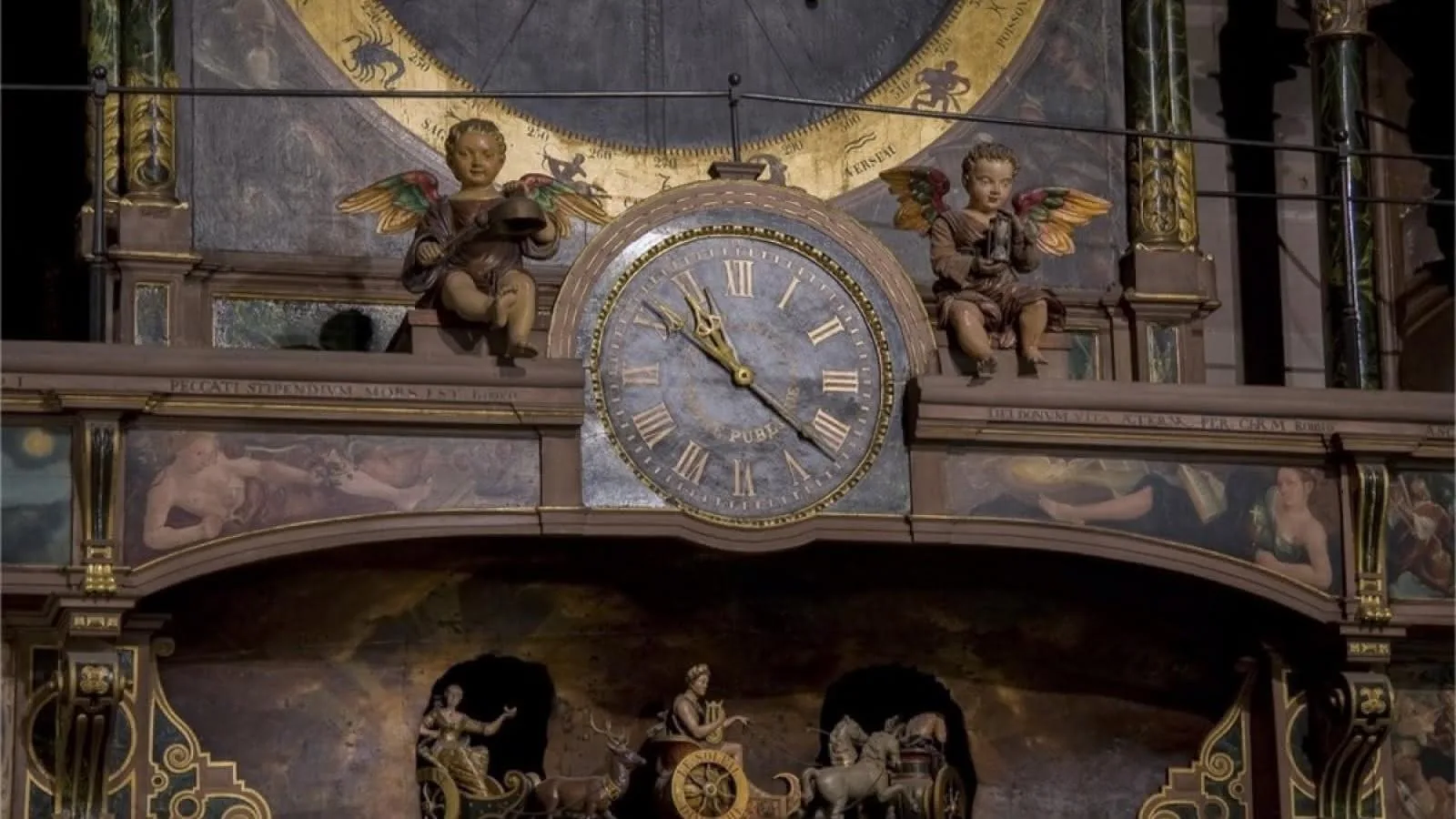
Discover the Strasbourg Cathedral's astronomical clock, a 19th-century engineering marvel designed by Jean-Baptiste Schwilgué.
An Ode to Time and Precision
The Strasbourg Astronomical Clock, fruit of the genius of mathematician and clockmaker Jean-Baptiste Schwilgué, marks the third chapter in the cathedral's temporal history. Through the pages of history, Schwilgué erected a masterpiece, an immortal testament to his clockmaking virtuosity.
Schwilgué's Labor
In 1838, Schwilgué was entrusted with the colossal task of renovating the astronomical clock, a mission he transformed into a quest for perfection. For four years, in his workshop on rue Brûlée, he crafted this new horological incarnation that would mark history.
The Magic of Mechanisms
Schwilgué's clock doesn't just tell world time; it reveals a fascinating complexity:
- A perpetual calendar
- The ecclesiastical computus anticipating movable Christian feasts
- Mechanical calculation of Easter date, a technical feat since 1816
Monumental Heritage
Classified as a "Historic Monument" in 1987, the Strasbourg clock is not just an aesthetic work but a legally protected treasure. This status grants this temporal edifice a place of honor, like the majestic cathedral that houses it.
The Dance of Time
At the heart of the clock resides a mechanical symphony. Beyond indicating official and local time, automata animate the day: the chariot carousel, the apostles blessed by Christ at twelve-thirty, and the four stages of human existence parade by, shaping an infinite dance of time.
Astronomy and Ecstasy
The clock is not simply a guardian of time; it reveals celestial secrets. A celestial sphere and lunar calendar enchant astronomy enthusiasts, revealing the mysteries of the stars.
Discover this Masterpiece with ADOPTE UNE CONCIERGERIE
Our team can arrange an exclusive visit to the cathedral and its astronomical clock, with privileged access to witness the automata parade at 12:30 PM.