Luxury is no longer bought to be seen — it is invested to last. The rise of a "wellness-first" consumer segment among UHNWI clienteles is profoundly redefining what luxury must promise: more quality sleep, measurable longevity, reconnection to nature and precision care; fewer logos, hotel one-upmanship and experiences designed for photography. This structural transformation in the relationship to luxury — which sector specialists call "regenerative luxury" — is not a seasonal trend. It is a paradigm shift that is reorganising the value propositions of concierge services, prestige travel and fashion-wellness collaborations. Adopte une Conciergerie analyses it and translates it into concrete services.
Thought Leadership · Regenerative Luxury · Wellness-First · UHNWI · 2026
Luxury in 2026 is no longer displayed — it is felt. Deep sleep, measurable longevity, authentic nature: the new grammar of prestige places the body back at the centre.
$5.4tn by 2030
Projected global wellness market size — twice traditional luxury on the same projection horizon
72% of UHNWIs
Declare that health and longevity now influence their luxury purchasing decisions (Knight Frank 2025)
+34% in 3 years
Growth of premium wellness travel in the UHNWI segment — most dynamic segment of experiential luxury
There is a precise moment when a cultural trend ceases to be marginal and begins to reorganise markets. For luxury and health, that moment is behind us. The convergence of wealth and self-optimisation — long confined to Silicon Valley and professional sports circles — has gone mainstream in the global UHNWI segment. The fund founder, the corporate lawyer, the family business director, the senior European civil servant: they read Peter Attia, Bryan Johnson and Andrew Huberman. They invest in their sleep, their VO2 max, their nutritional protocol, their cortisol management. And they expect their service providers — concierge services included — to understand and serve this logic.
"Regenerative luxury" is not a variant of the five-star hotel spa. It is a change in the architecture of the value proposition: from visible standing to invisible performance, from ostentatious experience to measurable transformation, from passive comfort to active optimisation. And like all paradigm shifts, it creates winners — those who anticipate — and losers — those who continue selling what their clients no longer want.
Decoding the wellness-first consumer: who are they really?
The wellness-first UHNWI consumer of 2026 is not who luxury brands imagined ten years ago. They have radically restructured their priorities — applying to the care of their body and mind the same analytical rigour as to their wealth management or business leadership. Their characteristics are documented and consistent internationally: they consider health not as an absence of illness but as an optimal performance state to be proactively maintained; they measure — wearables, comprehensive blood panels, genetic testing, heart rate variability analysis; they invest in prevention rather than cure; they are sceptical of superficial wellness marketing — they know the difference between a scientifically documented longevity protocol and a "detox cure" without evidence; and they have the budget to access the best available solutions.
The five pillars of regenerative luxury
Sleep as a performance asset. Sleep has become, in a few years, the most serious luxury marker in the premium segment — not the comfort of a high-end mattress, but the complete architecture of an optimised night: thermally regulated mattress, absolute blackout, air quality control, absence of electromagnetic disruptors, sleep preparation rituals with light therapy and chronobiology protocols. For a concierge service, this means the ability to configure any apartment or hotel room to a client's specific sleep protocols before arrival.
Longevity as a life project. The longevity movement — combining precision medicine, biomarkers, nutritional protocols and periodised exercise in a healthspan extension programme — has moved from laboratory to luxury market with striking speed. Specialist clinics (Longevity Health in Switzerland, NEXT Health in Dubai, Human Longevity Inc. in the US) offer comprehensive assessments (genomics, proteomics, metabolomics) accessible only to UHNWI clientele. "Longevity" stays — three to ten day visits for a full assessment followed by a personalised programme — are the fastest-growing segment of luxury health travel.
Reconnection to deep nature. "Nature bathing" — the Japanese Shinrin-yoku concept extended to all forms of natural environment immersion — has become a central vector of regenerative luxury: not a hotel with a forest view, but genuine immersion — premium bivouac nights with naturalist accompaniment, silent dawn-guided hikes, digital-free treehouse retreats, certified dark-sky astronomical observation programmes. The common thread: radical temporary disconnection from daily hyperconnectivity — which UHNWI clients have, paradoxically, the greatest difficulty spontaneously granting themselves.
Precision care. The democratisation of mass aesthetic medicine has trivialised what UHNWI clients sought in premium care. In response, the segment has shifted toward precision care: those requiring genuine medical expertise, individualised diagnosis and interventions that cannot be standardised — high-level structural osteopathy, integrative functional medicine, whole-body cryotherapy with personalised protocol, photobiomodulation, nutritional IVs adapted to individual biological panels, neurofeedback sessions.
Nutrition as pharmacology. Nutrition has ceased to be a lifestyle subject and become a performance subject in the UHNWI segment: genotype-adapted diets, supervised intermittent fasting protocols, precision anti-inflammatory cuisines, chefs specialised in therapeutic cooking. For an event or travel concierge, this means the ability to brief any chef on a client's precise nutritional constraints — not "gluten-free and dairy-free" but "cyclic ketogenic protocol with eight-hour feeding window, target protein intake 2g/kg, exclusion of industrial vegetable oils."
The fashion-wellness convergence: when luxury houses change register
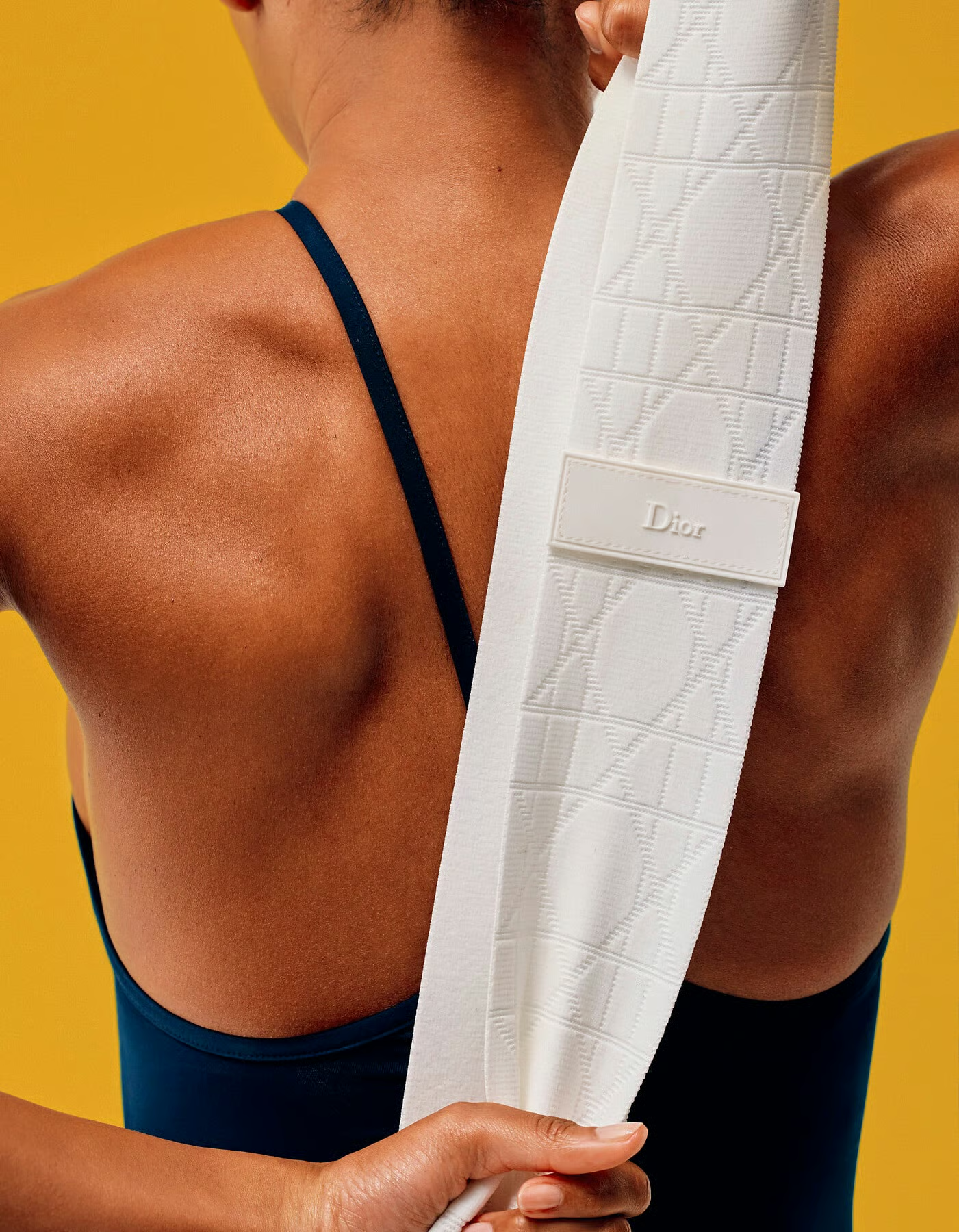
The strongest signal of luxury's transformation by wellness comes from the great houses themselves. Fashion-wellness collaborations — identified by FashionUnited at the start of 2026 as one of the five structural trends of luxury — prove that the sector's most established players have read the change and are addressing it. LVMH has made health and wellbeing one of the group's growth verticals, with investments in precision medicine clinics and premium nutrition brands. Hermès launched sportswear and outdoor equipment lines whose positioning explicitly says: performance, not logos. Lululemon — not a traditional luxury house but a case study — built one of the world's most loyal consumer communities by coherently crossing fashion, performance and wellness.
These moves are not cosmetic. The UHNWI consumer of 2026 is prepared to spend as much on an annual functional medicine programme as on a designer handbag. The competition for their loyalty is playing out on new ground — and brands slow to occupy it are losing wallet share to new entrants who have built their entire value proposition around health and performance.
What this changes for luxury concierge services
Know the protocols, not just the addresses. A concierge that recommends a spa because it is the most beautiful five-star in the city no longer meets wellness-first client expectations. This client wants to know what care modalities are offered, what the practitioners' training is, what biomarkers the stay is meant to improve.
Manage protocol continuity while travelling. A client following a strict longevity protocol at home needs that protocol maintained while travelling — and this is precisely where friction appears. How to maintain a sixteen-hour intermittent fast in a hotel where the buffet breakfast starts at seven? How to ensure a hotel room does not disrupt sleep? How to maintain a zone 2 training routine in an unknown city? These are the questions a wellness-first client asks — and a concierge that anticipates them creates irreplaceable value.
Propose wellness experiences anchored in territory. Regenerative luxury is not relocatable to a generic resort — it must be anchored in a territory. For Adopte une Conciergerie, this means deeply Alsatian wellness proposals: Niederbronn-les-Bains thermal baths with personalised protocol, silent Forêt Noire walks with bilingual naturalist, Vosges medicinal plant cures with certified herbalist, biodynamic Alsatian vineyard immersions. At Adopte une Conciergerie, each experience must be anchored, measurable in its effects, and impossible to standardise — the only proposition that withstands comparison with large spa chains.
Twelve powerful questions on regenerative luxury and wellness-first
Is luxury wellness fundamentally different from traditional high-end spa?
Fundamentally, yes. Traditional high-end spa sells comfort, relaxation and status — a pleasant sensory experience whose effects typically dissipate within hours. Luxury wellness as defined in 2026 by the UHNWI wellness-first segment targets measurable transformation: improved heart rate variability, reduced inflammatory markers, optimised body composition, improved deep sleep quality. These are not marketing promises — they are results clients track with wearables and regular blood panels. A concierge serving this clientele must understand this difference, and stop conflating "premium wellness" with "five-star spa."
What is "regenerative luxury" concretely — and how do you distinguish it from greenwashing?
Regenerative luxury is a value proposition centred on the client's real restoration — physiological, cognitive and emotional — rather than on experience accumulation or status demonstration. A hotel that markets "wellness" and offers a hammam and essential oils is doing marketing. A genuinely regenerative establishment structures its offer around human biology: chronobiology (circadian rhythm-aligned activity programming), air and water quality, anti-inflammatory cuisine with supply chain traceability, trained practitioners (not beauticians with a massage certificate), and measurement devices so clients can observe the effects of their stay. The difference is between a decor and an infrastructure. For an experienced wellness-first client, the distinction is immediately perceptible.
Is the longevity movement accessible to someone outside the "biohacker" world?
Yes — and this is precisely where concierge has a role to play. The vocabulary of longevity can seem reserved for insiders, but the fundamental principles are universally accessible and their quality-of-life impact is documented regardless of initial knowledge level. For a client wishing to enter this logic without immersing in the scientific literature, we recommend entry through three doors: first, a comprehensive functional health assessment (not a standard medical check-up, but one measuring performance and ageing biomarkers); then a sleep coach for one or two weeks (the highest ROI intervention for most profiles); finally a periodised exercise programme with a professional who understands zone 2 protocols and cardiometabolic adaptations. These three entry points are organisable from any major European city, including Strasbourg.
How can a concierge maintain a wellness protocol while travelling?
This is one of the most practical and least well-addressed questions in the sector. What a wellness-first concierge does concretely: briefs the hotel on the client's specific constraints before arrival (room temperature, absolute blackout, minibar removal, filtered water); identifies the most suitable training ground or sports club at the destination; coordinates with the hotel chef or restaurant for meals respecting feeding windows and dietary exclusions; and prepares a client-specific wellness travel kit (melatonin dosed for the time zone, specific supplements, blue-light filtering glasses for evenings, HRV reader for tracking on the road).
Which destinations are genuinely suited to premium regenerative travel in Europe?
Several European territories have developed coherent, high-quality regenerative propositions. The Austrian Alps (Salzkammergut, Tyrol) have a long thermal and cure tradition, with next-generation establishments integrating functional medicine protocols. Switzerland offers Europe's most advanced precision clinics (La Prairie, Clinique La Métairie) for longevity assessments. Portugal — particularly the Alentejo and Algarve with Six Senses Douro and interior retreats — has become one of Western Europe's most coherent regenerative destinations. For Adopte une Conciergerie clients, the Grand Est territory also offers an underexploited regenerative proposition: Niederbronn-les-Bains thermal baths, Forêt Noire and Vosges walks, Alsatian biodynamic wine estates, functional medicine practitioners in Strasbourg and Basel. A well-designed five-to-seven-day Alsatian regenerative circuit rivals in depth of impact with much better-known destinations.
Are fashion-wellness collaborations a structural trend or a passing fad?
A structural trend — for a simple underlying reason: UHNWI wellness-first clients are undergoing a reallocation of their discretionary spending, favouring expenditures that contribute to their health and performance over purely ostentatious spending. Luxury houses wishing to maintain their share of this spending must either integrate into wellness logic (collaborations, dedicated lines, repositioning), or accept losing ground to new entrants like WHOOP, Hyperice, Eight Sleep or Function Health, who have built entire value propositions around performance and health. Fashion-wellness collaborations are not a marketing gimmick — they are the rational response of great houses to a client who has changed their criteria of value. By 2030, we anticipate that houses without a credible wellness dimension to their proposition will see their relevance significantly erode in the UHNWI segment.
How has sleep become a luxury marker in 2026?
Sleep has become a luxury marker because it is simultaneously precious, difficult to obtain at quality, and strongly correlated with the performance markers that the UHNWI wellness-first segment monitors. The sleep science of the past decade has been decisive: Matthew Walker's work redefining popular understanding of sleep, and wearable data (WHOOP, Oura Ring, Apple Watch) giving clients the ability to measure their deep sleep, recovery and nocturnal awakening patterns with laboratory-level precision. A client who observes their deep sleep drop from two hours to forty minutes during hotel travel stays is prepared to pay significantly more for accommodation that solves this problem. It is a demand for measurable performance — exactly what regenerative luxury promises to deliver.
What is "deep nature" in the regenerative luxury context — and how does it differ from ecotourism?
Deep nature in regenerative luxury is an immersion experience targeting documented physiological and neurochemical effects — not a walk in a beautiful landscape. The measured benefits of forest immersion (Shinrin-yoku) include significant cortisol reduction, increased NK (natural killer) immune cells, blood pressure reduction and improved heart rate variability — all documented in Japanese and international scientific literature since the 1980s. Conventional ecotourism sells a landscape and a cultural experience. Regenerative luxury sells a biological intervention in a natural setting, guided by practitioners who understand the mechanisms. The difference is between seeing a forest and using a forest as a therapeutic tool.
Can a luxury wellness stay be designed at home, without travelling?
Yes — and this is a growing service we are developing. "Home wellness" — restructuring the domestic environment to maximise recovery and performance — is in strong growth in the UHNWI segment. This includes: bedroom audit and optimisation (air quality, light, temperature, electromagnetic disturbances), installation of home recovery equipment (infrared sauna, portable cryotherapy, photobiomodulator), setting up a daily wellness routine with appropriate providers (sleep coach, functional nutritionist, high-level osteopath), and food environment organisation (on-subscription at-home chef, precision nutritional preparation delivery programme). These services do not replace immersive retreats — they complement them by maintaining a baseline level of physiological performance between retreats.
Is wellness-first an exclusively male concern or does it have a gendered profile?
The initial media representations of biohacking and longevity (Bryan Johnson, Dave Asprey, Peter Attia) were male-dominated. But market data shows a much more balanced reality. In the UHNWI segment, women aged 35–60 are currently the fastest-growing profile in precision wellness — driven by a convergence of perimenopause/menopause awareness, hormonal optimisation and women's functional medicine (cycle syncing, cyclical nutrition, adapted recovery practices). The fashion-wellness collaborations of great houses explicitly target this profile — Hermès, Dior Beauty, La Prairie, Augustinus Bader: the female wellness-luxury proposition is already more sophisticated and more coherent than the male one. For Adopte une Conciergerie, this translates into a wellness offer adapted to hormonal and lifecycle specificities — not only protocols derived from male sports literature.
How do you choose a quality wellness practitioner without exposure to charlatanism?
This is the most legitimate and most difficult question in the sector — precisely because the wellness market attracts a significant proportion of practitioners with insufficient training or non-validated practices. Selection criteria we apply systematically: first, initial training (a doctor who has completed functional medicine training — IFM-certified in Europe — is a more reliable starting point than an unmedically trained coach); second, before-and-after biomarkers (any serious practitioner measures the effects of their interventions — if a promised result is not associated with objective measurements, it is a warning signal); third, discourse consistency with available peer-reviewed scientific literature; fourth, referral network (we only list practitioners whose efficacy multiple clients have validated over time, not providers on the strength of a commercial dossier).
How does Adopte une Conciergerie integrate wellness-first into its services?
Our wellness-first integration rests on four pillars: protocol knowledge (our team is trained on the fundamentals of functional medicine, chronobiology, sleep and precision nutrition protocols — we understand what our clients ask); a qualified, validated practitioner network (functional medicine doctors in Strasbourg and Basel, certified sleep coaches, high-level osteopaths, specialist nutritionists, Shinrin-yoku-trained naturalists, cryotherapy and heat protocol specialists); a regenerative travel proposition anchored in Grand Est (Alsatian thermal, forest, biodynamic wine and therapeutic gastronomic circuits, structured around biological rhythms); and travel protocol continuity (systematic accommodation preparation to client constraints, food provider coordination, adapted wellness travel kit). Wellness-first is not an add-on module in our offering — it is a filter through which we redesign our entire service propositions.
Regenerative luxury is not a lesser luxury — it is a more demanding one. Harder to deliver, harder to evaluate, harder to standardise. This is precisely what makes it the proposition most resistant to commoditisation in a luxury market that has trivialised too many of its former differentiators. For a concierge wishing to remain relevant to UHNWI clienteles in 2026 and beyond, the question is not whether to integrate wellness-first — it is at what depth.
Regenerative Luxury · Wellness-First · Longevity · Fashion-Wellness · UHNWI · Concierge · Grand Est · May 2026
Adopte une Conciergerie — First Private Luxury Concierge of Grand-Est · Paris · French Riviera · Prague Presence