Premium Destination · Colmar · Alsace · Grand-Est · 2026
The other European capital of prestige travel — intact heritage, starred gastronomy, world-class viticulture.
1228
Year of foundation — a preserved medieval center, classified as a protected area
51 Grands Crus
The Alsace Wine Route — Riesling, Gewurztraminer, exceptional Pinot Gris
2027
Announced opening of the Le Chasseur hotel — first true 5-star ex nihilo
For a long time, Colmar was presented by guides as a picturesque detour on the road between Strasbourg and the Black Forest - the "little Alsatian Venice", the half-timbered buildings, the Christmas market. This presentation continues to work for mass tourism. It has ceased to be the right reading grid to understand what is at stake over the past ten years. Today, Colmar stands out as one of the most discreetly successful prestigious European destinations, and international premium travelers – Americans, British, Koreans, Japanese, Emiratis, Indians, Brazilians – understood this before many European prescribers.
The reason lies in a rare equation. Colmar concentrates, in a compact format that can be covered on foot in a few hours, what UHNWI travelers are now looking for elsewhere: an intact architectural heritage, gastronomy at the highest European level, a world-class wine scene, five-star hotels on a human scale, and daily security that many capitals have lost. All of this, accessible in three hours from Paris, two hours from Zurich, two hours from Frankfurt, and a few minutes from Basel-Mulhouse-EuroAirport airport.
Heritage, but the real thing
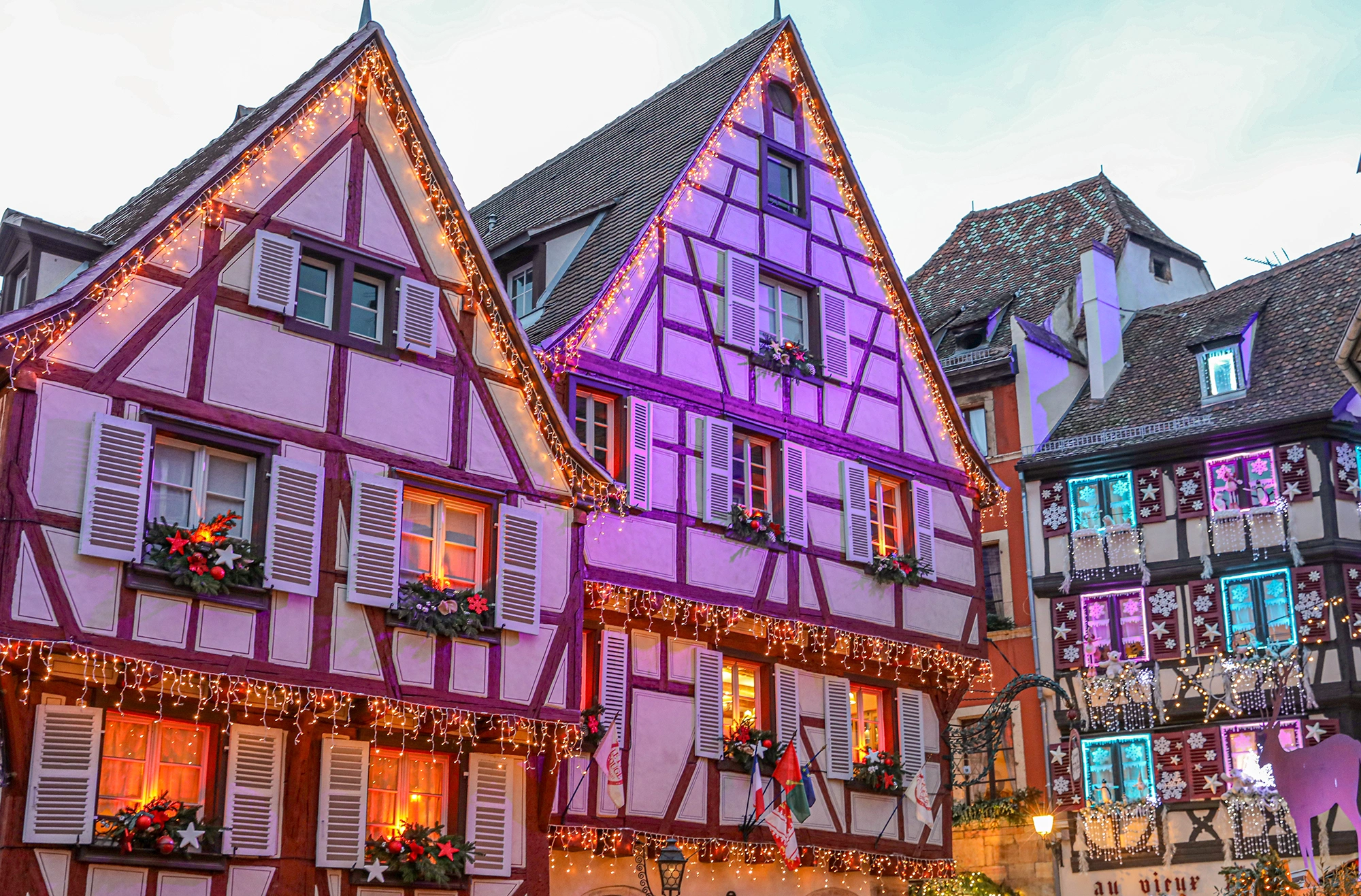
The historic center of Colmar is not a reconstruction. It is a protected area that the city had the intelligence to protect without making it a museum. The Pfister House, the House of the Heads, the Saint-Martin Collegiate Church, the Tanners' Quarter and Little Venice make up an ensemble that premium travelers immediately recognize as one of those "untouched" European places - just like the old town of Salzburg, the center of Bruges or Český Krumlov. This heritage integrity, which has become rare in Western Europe, is what transforms a visit into an experience.
The Unterlinden Museum, since its renovation by Herzog & de Meuron, plays in another category: the Isenheim altarpiece by Mathias Grünewald is exhibited there in museographic conditions which have attracted the attention of the international specialist press. For a demanding cultural clientele — collectors, curators, aesthetes — this is an argument for a stay in its own right, not just onegreat tourist stopover.
Prestigious hotels: an ecosystem that is moving upmarket
The high-end hotel offering in Colmar has long been dominated by La Maison des Têtes, a five-star Relais & Châteaux hotel located in a listed building from 1609. The house embodies what Alsace does best: discreet elegance, French-style service without ostentation, a renowned restaurant, and the permanent awareness of occupying a monument. For many international travelers, it is through this address that they discover that Colmar is a real destination, not a stopover.
The Esquisse Hôtel & Spa Colmar - MGallery has expanded this five-star offering with a more contemporary signature. And the dynamic will accelerate: the Chasseur project — a five-star hotel village ex nihilo whose building permit was validated by the Nancy Administrative Court of Appeal in October 2025 — entered the construction phase in 2026 with an expected opening in 2027. Its ambition: a “hotel village” combining accommodation, catering, well-being, events and ancillary services, with architecture made from noble materials integrated into the landscape. For the international premium market, this is the signal that Colmar is moving from the status of a “stopover town” to that of a “destination” in its own right.
Around this five-star heart has been formed a network of four-star superiors, houses of character and private villas which structures the offer for stays of two to five nights, as a couple, as a family, or in small privatized groups.
Gastronomy: one of the highest rates of Michelin stars per inhabitant in France
The Haut-Rhin department, of which Colmar is the economic sub-prefecture, concentrates one of the highest densities of Michelin stars in France in relation to its population. Around Colmar, in less than thirty minutes by car, premium travelers can access several starred restaurants including Jean-Yves Schillinger's JY's in the very heart of the city, and the Auberge de l'Ill in Illhaeusern — one of the most recognized restaurants in Europe over time. Added to this is a scene of young Alsatian chefs who are reinventing regional cuisine, a tradition of high-end winstubs which has no equivalent elsewhere in France, and a network of private chefs capable of operating in a private villa for a tailor-made dinner.
For international travelers who have already visited Paris, Lyon, Saint-Étienne or Roanne, the Alsatian gastronomic density around Colmar has become a reason for a stay in its own right. This is one of the strongest arguments we bring to our American, Asian and Middle Eastern UHNWI customers.
The Wine Route: a world-class wine heritage
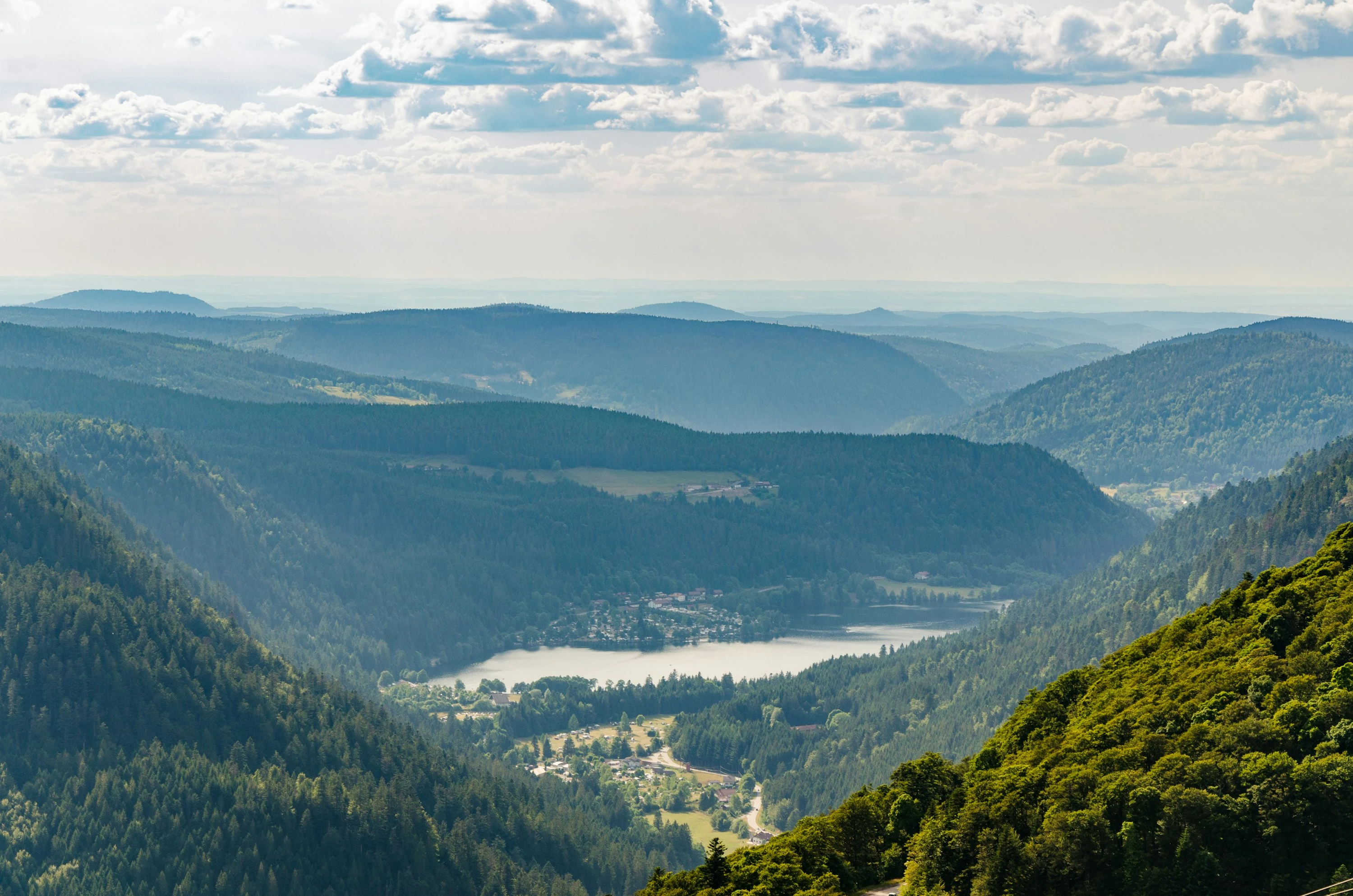
Colmar is the economic capital of the Alsatian vineyard and the natural gateway to the Alsace Wine Route. Alsace produces one of the finest ranges of white wines in the world - Riesling, Gewurztraminer, Pinot Gris, Pinot Blanc, Sylvaner, Muscat - to which are added Pinot Noir, which is making strong progress in quality, and Crémants d'Alsace, which have become a European benchmark. The region has 51 classified Grands Crus, world-famous estates such as Trimbach, Hugel, Zind-Humbrecht, Marcel Deiss, Domaine Weinbach, Marc Kreydenweiss, and a network of winegrowers of character whose meeting, organized correctly, is one of the most memorable experiences that can be offered to a serious amateur.
The wine-growing villages around Colmar — Riquewihr, Eguisheim, Kaysersberg, Hunawihr, Turckheim — are regularly among the "most beautiful villages in France" and constitute, for the international premium traveler, a succtransfer of paintings that few European regions can align with such density. Eguisheim was even elected French Favorite Village in 2013, a distinction which continues to have weight in international prescription.
Access and geographic position: an underestimated asset
A large part of what makes Colmar premium attractive is due to a factor that is mentioned too little: its access. Three hours from Paris by direct TGV, two hours drive from Zurich and Basel-Mulhouse-EuroAirport airport (business terminal, private jets), two hours from Frankfurt and three hours from Munich, Colmar is one of the best connected European cities at the crossroads of four major UHNWI markets: France, Switzerland, Germany and the Benelux. For an Asian or American traveler arriving in Zurich or Frankfurt in business class, the transfer to Colmar is shorter and more comfortable than that to most premium Alpine destinations.