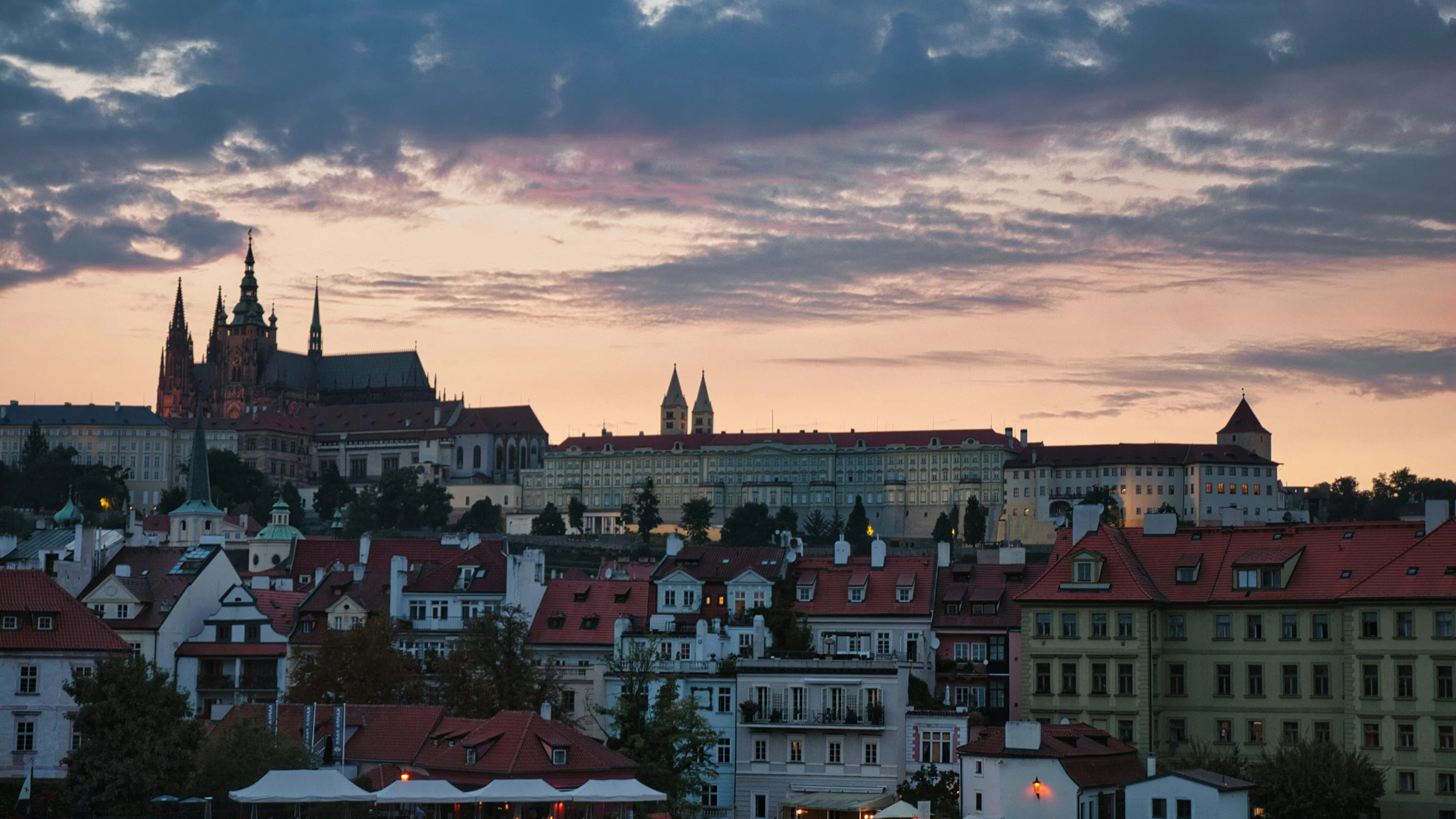
Administrative procedures, residence permit, housing by neighbourhood, Lycée français de Prague, banks, French-speaking doctors, expat networks: everything a French citizen needs to know before relocating to Prague in 2026. By the only French concierge service based in the Czech Republic.
Expat Guide · Prague · Czech Republic · 2026 Edition
4,200 French citizens officially reside in Prague. Until now, no single guide brought together all the procedures, addresses and networks essential for a successful relocation. This one does — written by the only French concierge service on the ground.
Prague is attracting an increasing number of French nationals each year. International executives, digital entrepreneurs, families seeking European quality of life at manageable costs, retirees drawn to the city's architectural beauty — profiles are diversifying, but the questions remain the same. How do you obtain a residence certificate? Where do you enroll your children? Which neighbourhood should you choose? This guide, written by the team at Adopte une Conciergerie — the only French concierge service established in Prague — answers each of these questions.
1. Why Prague in 2026?
The Czech capital combines advantages that few European cities can claim simultaneously. A cost of living 35 to 40% lower than Paris. One of the lowest unemployment rates in Europe (2.7% in April 2026). A central geographic position — Berlin 4.5 hours away, Vienna 3.5 hours, Munich 3.75 hours. And a cultural scene that rivals cities twice its size.
For French entrepreneurs, the Czech Republic offers a 19% corporate tax rate (versus 25% in France), a thriving tech ecosystem around neighbourhoods like Karlín and Holešovice, and direct access to the Central European market — 65 million consumers across Poland, Slovakia, Austria and Germany.
2. Administrative Procedures
EU Citizens: Right of Residence
As an EU citizen, you have the right to reside in the Czech Republic without a visa. For stays exceeding 30 days, you must register with the Foreign Police (Cizinecká policie) within 30 days of arrival. For stays beyond three months, you need a temporary residence certificate (Potvrzení o přechodném pobytu).
Required documents include a valid passport or ID card, proof of accommodation, evidence of financial resources, health insurance covering Czech territory, and two passport photos meeting Czech standards.
3. Housing: Prague Neighbourhoods Decoded
Praha 2 — Vinohrady
The favourite neighbourhood of French-speaking expats. Remarkable Art Nouveau architecture, parks (Riegrovy sady, Havlíčkovy sady), excellent metro access (lines A and C), quality restaurants and a cosmopolitan atmosphere without the tourist crowds. Rents: 28,000 to 42,000 CZK/month for a 3-bedroom apartment.
Praha 5 — Smíchov
Undergoing major transformation. Well served by metro B and trams. More affordable than Vinohrady: 22,000 to 35,000 CZK/month. Close to the Lycée français de Prague. Ideal for families with children at the French school.
Praha 7 — Holešovice & Praha 8 — Karlín
The creative and tech quarters. Former warehouses converted into galleries, coworking spaces and lofts. Home to Microsoft, Oracle and Amazon offices. Rents: 25,000 to 40,000 CZK/month. The go-to neighbourhoods for entrepreneurs and tech professionals.
4. Education: Lycée français de Prague
The Lycée français de Prague (LFP) is accredited by the AEFE and welcomes students from nursery through to the final year of secondary school. Located in Smíchov (Praha 5), it educates approximately 700 students of over 40 nationalities. Tuition fees: approximately 5,800 to 7,200 EUR per year.
5. Healthcare: French-Speaking Doctors
The Czech healthcare system is efficient and accessible. Key French-speaking medical facilities include Canadian Medical Care (Praha 6), Unicare Medical (Praha 6), and Nemocnice Na Homolce hospital. A general consultation costs 800 to 1,500 CZK (32 to 60 EUR).
6. Banking and Finance
Opening a Czech bank account is essential. Recommended banks: Fio banka (free account), Raiffeisenbank (premium service), Česká spořitelna and ČSOB. The local currency remains the Czech koruna (CZK), with no euro adoption planned before 2030.
7. Working in Prague
No work permit required for EU citizens. Average salary in Prague: approximately 52,000 CZK/month gross. Qualified positions in tech, finance and management offer 80,000 to 150,000 CZK/month. Creating a business licence (živnostenský list) takes 3 to 5 working days for 1,000 CZK. Corporate tax rate: 19%.
8. The Role of a Concierge in Your Relocation
Adopte une Conciergerie is the only French concierge service physically established in Prague. Our local team supports dozens of French families and professionals each year: property search, administrative procedures, school enrollment, bank account opening, and connections with French-speaking professionals.
Frequently Asked Questions
Do French citizens need a visa to move to Prague?
No. As EU citizens, French nationals have the right to reside and work in the Czech Republic without a visa. Registration with the Foreign Police is required within 30 days of arrival.
What is the cost of living in Prague compared to Paris?
The cost of living in Prague is 35 to 40% lower than Paris. A well-located 3-bedroom apartment costs 22,000 to 42,000 CZK (880 to 1,670 EUR), a restaurant meal 200 to 400 CZK (8 to 16 EUR), and a monthly transport pass 550 CZK (22 EUR).
Is there a French school in Prague?
Yes. The Lycée français de Prague, accredited by the AEFE, offers the full French curriculum from nursery to the baccalauréat. Located in Smíchov (Praha 5), with approximately 700 students and tuition of 5,800 to 7,200 EUR per year.