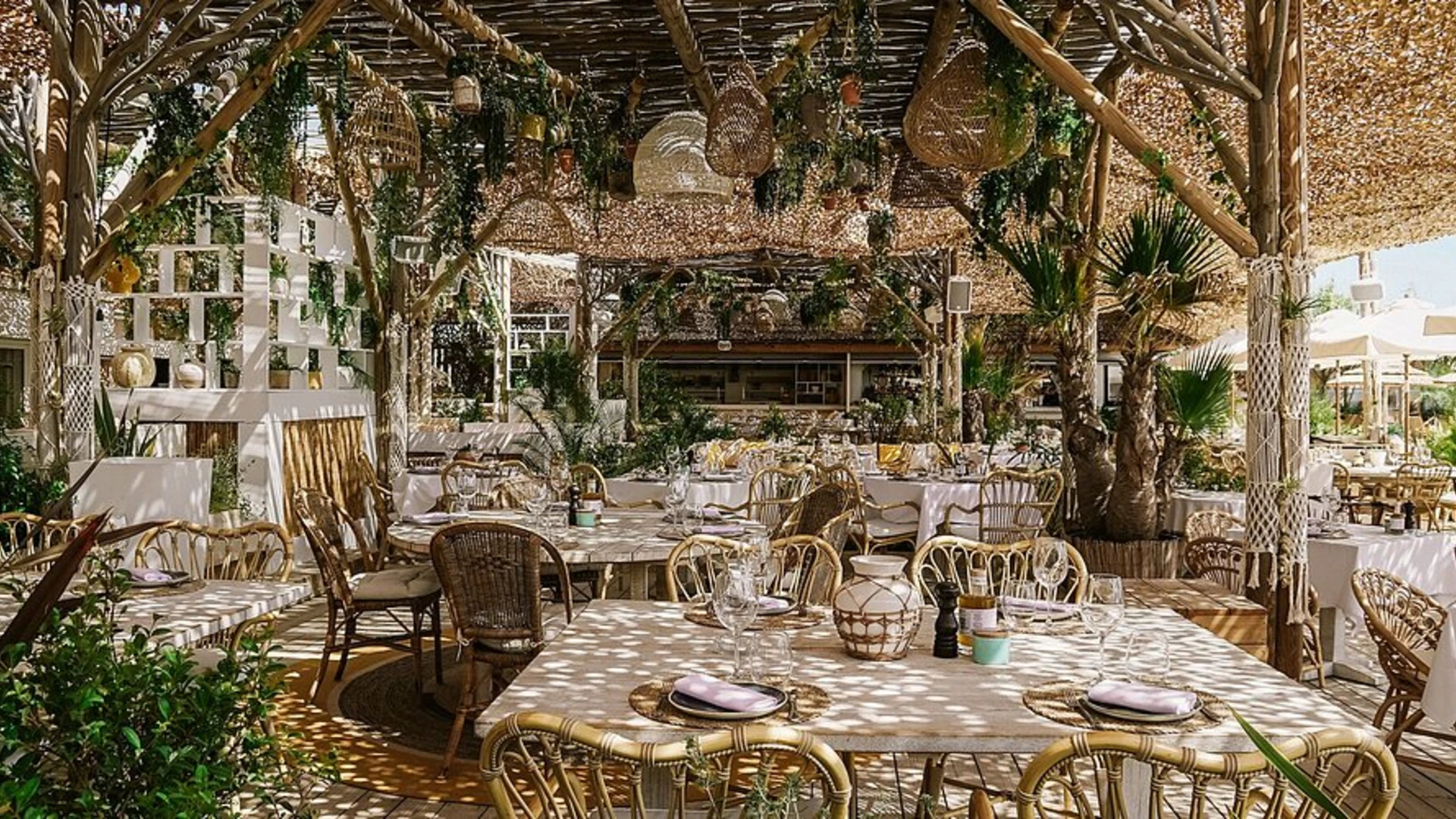
In 2026, regulations require companies to justify the carbon footprint of their events. But an eco-responsible event is not a cheap event: it is a better thought out, more coherent and often more memorable event. Complete guide to organizing with excellence — and how Adopt a Concierge makes it a standard.
-
2026: event eco-responsibility is no longer an option
The professional events sector is undergoing a structural transformation. CSR (Corporate Social Responsibility) is now a regulatory imperative: in 2026, sponsors must justify the carbon footprint of their events, in application of new extra-financial reporting requirements and the rise of the CSRD directive. The reception venues themselves integrate consumption data collection tools, transforming the event space into a non-financial accounting partner.
But beyond the regulatory constraints, the most visionary organizations have understood something that their competitors have not yet integrated: a well-designed eco-responsible event is almost always a better event — more authentic, more consistent with the company's values, more memorable for participants, and often less costly to use.
At Adopt a Conciergerie, we have made sustainable events a standard of service, not a premium option. This guide brings together our operational expertise and the latest data to help you succeed at your next event without compromising on excellence.
The five pillars of an eco-responsible professional event
1. The choice of location: the most impactful lever
The location generally represents 30 to 50% of an event's carbon footprint, when including attendee travel. Three criteria determine a good eco-responsible choice:
- Multimodal accessibility — A site accessible by train from the majority of participants drastically reduces transport-related emissions. For events in Alsace, the position of Strasbourg (1h50 from Paris by TGV, 1h15 from Frankfurt, 45 minutes from Basel) is an incomparable structural advantage.
- Environmental certifications of the location — ISO 20121 labels (sustainable event management), HQE (High Environmental Quality), or labels specific to establishments (biodynamic vineyards, certified organic estates). These certifications guarantee verified practices, not just declared ones.
- Local resource management — Renewable electricity supply, on-site waste management, spring water, wood or geothermal heating. Alsatian biodynamic wine estates, Vosges farm inns and renewable energy castles often combine these criteria naturally.
2. The mobility of participants: carbon position no. 1
Transport represents on average 60 to 75% of the total carbon footprint of an event according to sector studies. It is therefore the most powerful lever – and the most actionable. Best practices in 2026:
- Organize carpooling or collective shuttles from the nearest stations
- Offer accommodation on site or within 15 minutes on foot or by bike to limit daily return trips
- Calculate the transport footprint from the location selection phase, with tools like CLEO Carbone (UNIMEV) or Climeet
- For international events, integrate a hybrid option (quality remote participation) for participants whose journey generates the most emissions
3. Catering: local, seasonal, sustainable
Catering represents 10 to 20% of an event's footprint — and it's often the most visible item to attendees. A committed caterer does not just offer vegetarian options:it works with local producers, avoids out-of-season products, minimizes single-use packaging and manages unsold goods in collaboration with local associations.
In Alsace, the richness of the terroir — market gardeners, biodynamic winegrowers, local breeders, artisanal bakeries — allows for exceptional catering which is, by nature, eco-responsible. This is one of the most concrete advantages of choosing this territory for your professional events.
4. Event supports and logistics: sobriety and circularity
Every material element of an event has an imprint. Current best practices:
- Digital program and media — Event application or QR code to replace paper programs. If paper is essential, choose recycled or FSC certified paper, printed in vegetable offset.
- Reusable signage — Modular supports reusable from one edition to another, rather than specific printing for each event.
- Goodies and corporate gifts — Useless and polluting goodies are a marker of obsolescence. Companies in advance are substituting experiences (domain visit, tasting, local activity) or objects with a long lifespan (bottle, tasting tray, book) for plastic gadgets.
- Floral decoration — Potted plants reusable after the event, flowers from local producers not imported, arrangements made from sustainable dried plants.
5. Measurement and communication: from declaration to proof
An eco-responsible event without measurement is an eco-communicating event — which is not the same thing. Certified measurement tools available in 2026:
- CLEO Carbone — Developed by UNIMEV and Choose Paris Region, this tool precisely measures the carbon footprint of event services and activities. Complies with industry standards.
- Climeet — Covers all emissions sources, from the collection phase to the reduction strategy, with identification of responsible service providers.
- The Event Fresco — Collective awareness tool developed by the REEVE network, adaptable from 6 to 600 people. Ideal for getting teams involved in the process even before organization.
Alsace: territory of excellence for high-end eco-responsible events
Alsace uniquely brings together all the conditions that make it a territory of excellence for sustainable professional events. Its geographical position (European railway crossroads), its heritage of exceptional places (castles, biodynamic wine estates, Vosges farm inns), its irreducibly local local gastronomy, and its Rhineland culture of “doing good” make it the ideal territory for events that refuse to choose between excellence and responsibility.
Our teams at Adopte un Conciergerie exclusively select service providers, caterers and venues that meet our environmental criteria — and which allow your events to be beautiful, memorable and measurable.
Ultra-powerful FAQ — Eco-responsible professional event
What is an event carbon footprint and is it mandatory in 2026?
The event carbon footprint is a quantified measure of all greenhouse gas emissions generated by an event (transport, energy, food, accommodation, waste, material support). In 2026, companies subject to the CSRD directive (Sustainability Reporting)s Companies) must include their event-related emissions in their extra-financial reporting. For companies not yet subject to the CSRD, the carbon footprint remains strongly recommended to prevent the risk of greenwashing and meet the growing expectations of their customers, partners and employees.
What are the most important broadcast positions in a professional event?
In order of importance: (1) participant transportation (60–75% of total footprint), (2) accommodation (10–15%), (3) catering (10–20%), (4) venue energy (5–10%), (5) media and waste (2–5%). This hierarchy implies that the most effective lever is not the composting of waste or reusable cups — it is the choice of location and its accessibility by public transport.
How to choose a certified venue for an eco-responsible event?
Look for the following certifications: ISO 20121 (international standard for sustainable event management), HQE Exploitation (for buildings), Green Globe (for hotels and event venues), or national labels like Clef Verte. For wine and agricultural estates, Organic, Demeter or Biodyvin certifications guarantee verified environmental practices which naturally extend to the organization of on-site events. Always check that certification is up to date — some places display expired labels.
Can we organize a truly eco-responsible seminar without sacrificing the level of service?
Not only is it possible, but well-designed eco-responsible events are often perceived as more qualitative by participants. Local seasonal catering is better than standardized catering from national caterers. A biodynamic winery is a more memorable venue than a generic convention hall. A guided hiking activity in the Vosges generates more team cohesion than karting. The ecological constraint, well interpreted, is a spur to creativity and authenticity.
What is the ISO 20121 standard and should it be required of your event providers?
The ISO 20121 standard is the international reference for sustainable event management. It covers the entire lifecycle of an event — from design to post-event evaluation — and requires engagement on environmental, social and economic impacts. Its certification by a service provider or a location is the strongest guarantee that it is not a declarative approach but a management system verified by a third party. For companies subject to CSRD, working with ISO 20121 certified service providers simplifies reporting.
How to manage the residual carbon compensation of an event?
Carbon offsetting should only be used as a last resort, after having reduced emissions to their minimum. It consists of financing sequestration or emission avoidance projects (reforestation, renewable energies, biogas) to neutralize unavoidable residual emissions. Beware of greenwashing: only projects certified Gold Standard, VCS (Verified Carbon Standard) or Label Bas-Carbone (for French projects) offer solid guarantees. Communication on compensation must always be accompanied by the presentation of the reduction trajectory — compensation without reduction is a posture, not an approach.
What digital tools for measuring event carbon footprints are recommended in 2026?
Toolsreference are: CLEO Carbone (UNIMEV/Choose Paris Region) for professional events, Climeet for complete coverage of emission stations, and the Fresque de l'Événement (REEVE network) for collective awareness of teams. For SMEs and VSEs, the ADEME Diag Décarbon'Action tool allows a simplified diagnosis, with public aid that can cover up to 70% of the cost for eligible SMEs. These tools are complementary: CLEO and Climeet measure, the Fresco raises awareness.
How to integrate the eco-responsible dimension into the invitation and event communication?
Eco-responsible communication around an event must be precise, measured and sincere. Avoid empty formulas ("green event", "we respect the planet") in favor of concrete and verifiable elements: "100% of participants have direct train access", "certified organic caterer whose products come from within a 50 km radius", "carbon assessment carried out by [organization] - results available at the end of the event". The digital invitation is almost always preferable to the printed one - but an invitation card made of recycled paper, printed with vegetable screen printing, can be a meaningful object if the overall approach is coherent.
Are there certified eco-responsible event venues in Alsace?
Yes, and their number has increased significantly since 2022. Demeter or Biodyvin certified biodynamic wine estates (several in the Grand-Est, particularly on the Wine Route), Vosges-certified farm inns, organic farming châteaux, and certain boutique hotels in Strasbourg and Colmar have verified environmental certifications. Our Adopte une Conciergerie network gives you access to these places — including those that do not communicate directly about their event offering.
How to manage waste from a professional event in an exemplary manner?
The waste hierarchy also applies to events: (1) reduce at source (remove unnecessary packaging, bulk purchases), (2) reuse (returnable tableware, tablecloths and reusable decorations), (3) recycle (rigorous selective sorting on site with a specialized service provider), (4) recover (composting of bio-waste, food donations at the end of the event). A zero waste to landfill objective is achievable for most professional events of less than 200 people with rigorous preparation — but it requires to be contractually specified with all service providers.
What is the difference between a “green-washed” event and a truly eco-responsible event?
A green-washed event displays the external signs of responsibility (reusable cups, vegetarianism, wild flowers) without acting on the real levers of impact. A truly eco-responsible event has: (1) chosen its location based on its accessibility by public transport, (2) measured its footprint with a certified tool, (3) defined a documented reduction trajectory, (4) selected its service providers based on verified and not self-declared environmental criteria, (5) communicated its results honestly, including residual emissions. The difference is fundamental — and increasingly visible to informed participants and customers.
How does Adopte une Conciergerie support companies in organizing eco-responsible events?
We select for our clients venues, caterers, transporters and technical service providers whose environmental practices are verified — noenlightened. We coordinate collective mobility logistics, manage food constraints with a view to local sourcing, and support the measurement of the event footprint with our specialized partners. Our added value is to make eco-responsibility an invisible standard: the event is excellent, it is also sustainable — and no one has to choose between the two.
Excellence and responsibility are not mutually exclusive. Your next professional event can be both. Meet our teams on
Adopt a Conciergerie — Conciergerie Entreprise.