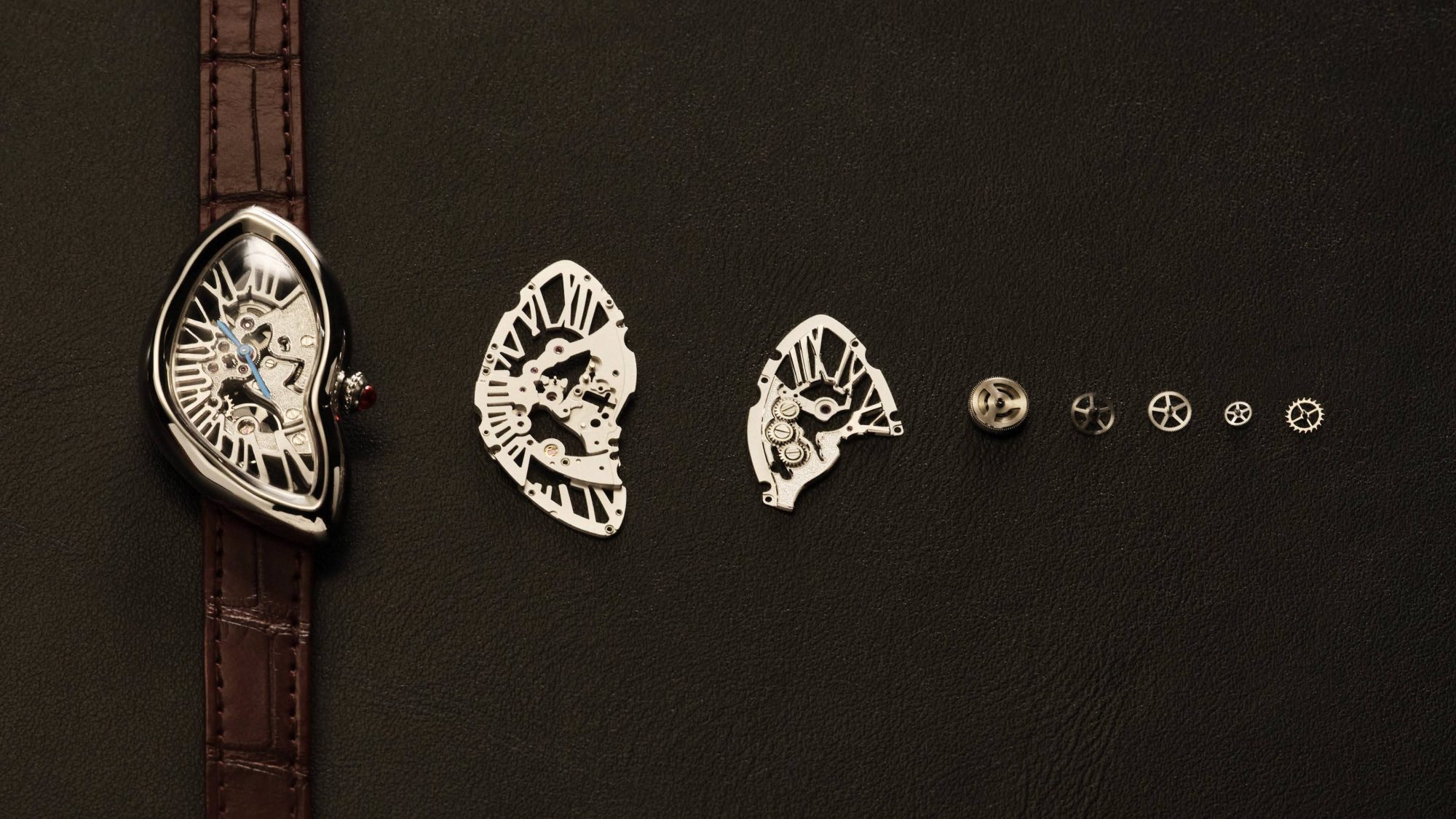
On 21 May 2026, Cartier raised prices across all its universes: watches, jewellery and accessories. The average increase is approximately 6%, with more marked progressions on set pieces, precious metals and mechanical complications. A complete analysis of the French Maison's pricing strategy in a context of soaring raw materials and international trade tariffs.
On 21 May 2026, Cartier revised its prices upwards across all its universes. A measured progression — approximately 6% on average — but differentiated by collection. What it reveals about the Maison's strategy, and what enthusiasts should take from it.
Average increase: ~6%
Effective 21 May 2026 · Watches, jewellery, accessories · Differentiated progression by collection and material
Dual context
Gold +15% year-on-year · Rising platinum · US tariffs on Swiss watches · Sustained diamond demand
Two-speed strategy
Steel icons relatively preserved · Set pieces and precious metals: steepest rises, sometimes +15% on certain models
On 21 May 2026, Cartier raised prices across all its products: from the Santos, Tank and Panthère watches to iconic jewels like the Love bracelet and Juste un Clou, through to high jewellery. The French Maison is no exception and confirms the upward trend consolidating across the luxury universe — as has Rolex, which has regularly raised prices for several years. This global adjustment is inscribed in a context of soaring raw materials and international trade tensions that are redrawing the profitability equation for the major Maisons in the Richemont group.
① Context: why this rise, why now
Cartier is no exception to a structural trend running through the entire luxury sector in 2026. Gold has risen approximately 15% year-on-year — a progression that mechanically translates into the production cost of every Love bracelet, every watch case, every high jewellery piece. Platinum follows a similar trajectory. Diamonds, sustained by robust demand and still-tight supply, are adding substantially to the cost of jewellery complications.
To these cost factors are added the tariffs on Swiss watches exported to the United States, which have become an unavoidable parameter in the pricing equation of the major Maisons in the Richemont group. Cartier, whose watch collections include a significant proportion of Swiss-made movements, is directly exposed to this export cost increase. The 21 May 2026 price revision is partly a pass-through of this structural constraint.
Cartier's 2026 price increases average approximately 6% year-on-year — a measured progression, calibrated not to weaken entry-level segments, while valorising the most elaborate references. In a luxury market where some competitors exceeded 12% annual increases, Cartier maintains a pricing discipline that connoisseurs know to appreciate.
② Jewellery: Love, Juste un Clou, Clash de Cartier
The 21 May increase is not limited to watches. Cartier's jewellery collections, among the world's most coveted, are also affected by this global adjustment. The logic is consistent with the Maison's overall strategy: preserve the accessibility of the most popular bestsellers, and concentrate the steepest rises on set or precious metal pieces.
The Love bracelet, the Maison's absolute emblem, perfectly illustrates this two-speed strategy. Classic models in yellow or rose gold, genuine pillars of the collection, benefit from relative price stability. Diamond-set versions, however, absorb considerably steeper rises: in previous adjustments, the classic Love set with ten diamonds in yellow gold had risen by more than 12%, and medium white gold models had followed a similar trajectory.
The Juste un Clou collection is not spared. The small models and paved versions, already adjusted several times over recent seasons, continue to see prices climb. The small yellow gold bracelet and rose gold set versions recorded double-digit rises in the last pricing cycles.
The Clash de Cartier, spared in certain previous waves, could also be caught by this global movement. In high jewellery, the trend is identical: the most complex, rarest and most heavily set pieces are those recording the steepest price progressions. This is not a surprise — it is the very definition of luxury: perceived value rises with rarity.
③ Watches: Tank, Santos, Panthère, Baignoire
Cartier's watchmaking strategy is legible: protect the accessibility of its most popular icons, and capture more value on pieces whose desirability justifies the increase.
The Tank Must collection, with its SolarBeat models, shows a progression of approximately 6.2%. The Tank Française and Américaine remain in a similar bracket around 6%, confirming the stable pillar role Cartier assigns to this historic line. Higher up the range, precious metal references and mechanical complications absorb more significant adjustments, up to 6.4% on certain Louis Cartier models.
Have a project in mind?
Our experts are ready to create a bespoke experience for you.
The Santos de Cartier, in its skeletonised and ADLC-treated variants, sees prices rise more noticeably, between 5.5% and 6.7% depending on the reference, the premium going to the most technically refined executions. It is the Maison's emblematic watch, and its growing desirability — particularly on the secondary market — fully justifies this dynamic.
The Panthère and Baignoire collections, driven by growing enthusiasm for mini-format watches, are historically those recording the steepest rises, sometimes exceeding 15% on the most set models. These two collections best illustrate the logic of valorising the most desirable pieces: the more diamonds and savoir-faire a watch concentrates, the more the price rise is justified.
Summary table of 2026 watch price increases:
Collection
Estimated rise
Notes
Tank Must / SolarBeat
~6.2%
Stable range pillar
Tank Française / Américaine
~6%
In line with average
Louis Cartier complications
up to 6.4%
Precious metals, high-end mechanics
Santos (skeleton, ADLC)
5.5% – 6.7%
Premium on technical executions
Panthère / Baignoire set
sometimes >15%
Mini format, diamond-paved models
Love bracelet classic (gold)
relative stability
Icon preserved, set versions +12%
④ Buying before 21 May: the right question to ask
The question deserves a direct answer. For someone who has already identified the piece they want, the reasoning is simple: anticipating the increase is achieving an immediate saving. On an automatic Santos Dumont, a gold Tank Louis Cartier, or a diamond-set Love bracelet, the amounts are not negligible.
That said, the great Maisons rarely reverse course. Cartier takes a surgical approach: steel models absorb slightly smaller rises at entry point, while precious metal pieces and complex mechanical movements see the most significant increases. In other words, buying an exceptional reference before 21 May represents an arbitrage whose relevance scales with the entry price.
For the undecided, yielding to calendar pressure is never a good reason to acquire a luxury watch or jewel. Cartier does not lose value. And a piece bought at the wrong moment, under the effect of urgency, remains a piece bought at the wrong moment. The acquisition strategy for a Cartier piece — as for any luxury object of this stature — must remain driven by desire, not temporal constraint.
⑤ What this rise says about Cartier in 2026
Ultimately, this price rise is less a bad news story than a signal. Cartier continues to adjust the perceived value of its collections with a rigour that commands respect. No haste, no outbidding. The Maison knows where it is going, and at what price.
In a luxury market where some competitors exceeded 12% annual increases, Cartier preserves what has made its strength for more than a century: being at once accessible and desirable. A ridge line that few brands hold as well. This pricing discipline — a measured, collection-differentiated, never arbitrary progression — is itself a message to collectors and enthusiasts: Cartier valorises its pieces without ever instrumentalising them as a mere speculation tool.
For luxury market observers, this rise is part of a broader dynamic: after years of aggressive increases at certain competing Maisons, Cartier's relative moderation confirms the Maison is betting on longevity rather than short-term rent. A posture consistent with one hundred and sixty years of history — and with the ambition of one hundred and sixty more.
Questions about the Cartier 2026 price increase
Which Cartier collections are most affected by the 21 May 2026 rise?
The steepest rises concern diamond-set jewellery collections and watches in precious metals with mechanical complications. On jewellery: diamond-set Love bracelet versions (up to +12% observed on the yellow gold ten-diamond Love), Juste un Clou paved variants, and potentially the Clash de Cartier. On watches: the Panthère and Baignoire collections in their set versions can exceed 15% rises. Steel collections — base Santos, Tank Must SolarBeat, Tank Française — display more moderate progressions around 6%, in line with the general average.
Why is Cartier raising prices in 2026?
Several structural factors explain this pricing revision. The gold price rise of approximately 15% year-on-year mechanically translates into the production cost of every precious metal piece. Platinum follows a similar trajectory. Diamond demand, sustained across all markets, weighs on the cost of set pieces. Finally, tariffs imposed on Swiss watches exported to the United States are a structural constraint for all Maisons in the Richemont group, of which Cartier is part. The Maison is partially passing on these cost increases in an annual pricing revision that knowledgeable observers generally anticipate in the first half of the year.
Is it wise to buy a Cartier jewel or watch before the price rise?
For a buyer who has already decided on a specific piece — an automatic Santos Dumont, a gold Tank Louis Cartier, a diamond-set Love bracelet — anticipation is a rational arbitrage: the immediate saving is real, and Cartier never reverses price changes. The impact is all the more significant the higher the entry price. However, rushing into purchasing a piece simply to avoid the rise, without conviction about the piece itself, is a logic to avoid. Cartier pieces hold and appreciate their value over time — the purchase decision must remain driven by the desire to own that precise piece, not by calendar pressure.
Has Cartier's iconic jewellery (Love, Juste un Clou) also been adjusted?
Yes, but in differentiated fashion. The most accessible models — classic yellow gold Love bracelet without diamonds, small yellow gold Juste un Clou — benefit from relative price preservation that protects their entry-point positioning in fine jewellery. Enriched versions — diamond-set Love, paved Juste un Clou, medium and large formats in white gold — absorb considerably more significant rises, sometimes double-digit. This directly translates Cartier's strategy: valorise what is rarest and most crafted, without eroding the accessibility of the icons that form the foundation of the Maison's community.
How does the Cartier 2026 increase compare to other major luxury Maisons?
At approximately 6% on average, Cartier positions itself below certain direct competitors. In recent years, several luxury Maisons — particularly in jewellery and watchmaking — have applied pricing revisions ranging from 8% to 12%, or more on certain flagship references. Hermès, Chanel and Rolex have also proceeded with regular and substantial rises. Cartier's relative moderation reflects a deliberate strategy: maintain the perceived accessibility of its entry-level lines while capturing more value on pieces whose growing desirability justifies it. This approach seeks to preserve the existing collector base while attracting new enthusiasts.
Cartier makes no noise about its price rises. It applies them with the same discreet rigour it brings to creating its pieces. 6% on average, differentiated, measured: this is the signature of a Maison that knows its worth — and has no need to prove it with grand announcements.
Cartier Price Increase 2026 · 21 May Rise · Love Bracelet · Santos · Tank Must · Juste un Clou · Panthère · Baignoire · Richemont · Pricing Strategy · May 2026
Adopte une Conciergerie — First Private Luxury Concierge Grand-Est · Paris · French Riviera · Prague Presence
Alsatian entrepreneur, Alexandre founded Adopte Une Conciergerie with one conviction: true luxury is reclaimed time. He personally leads the most sensitive missions and writes a monthly editorial sharing his vision of exceptional concierge service.