News · Bains Municipaux Strasbourg · European Massage Championship · 23 May 2026
Four Strasbourg practitioners, 250 European competitors, an already prize-winning eight-hand treatment — and one of France's most beautiful wellness establishments as their starting point.
23 May 2026
European Massage Championship in Paris — four Bains Municipaux practitioners against 250 international competitors
8 hands, 1 body
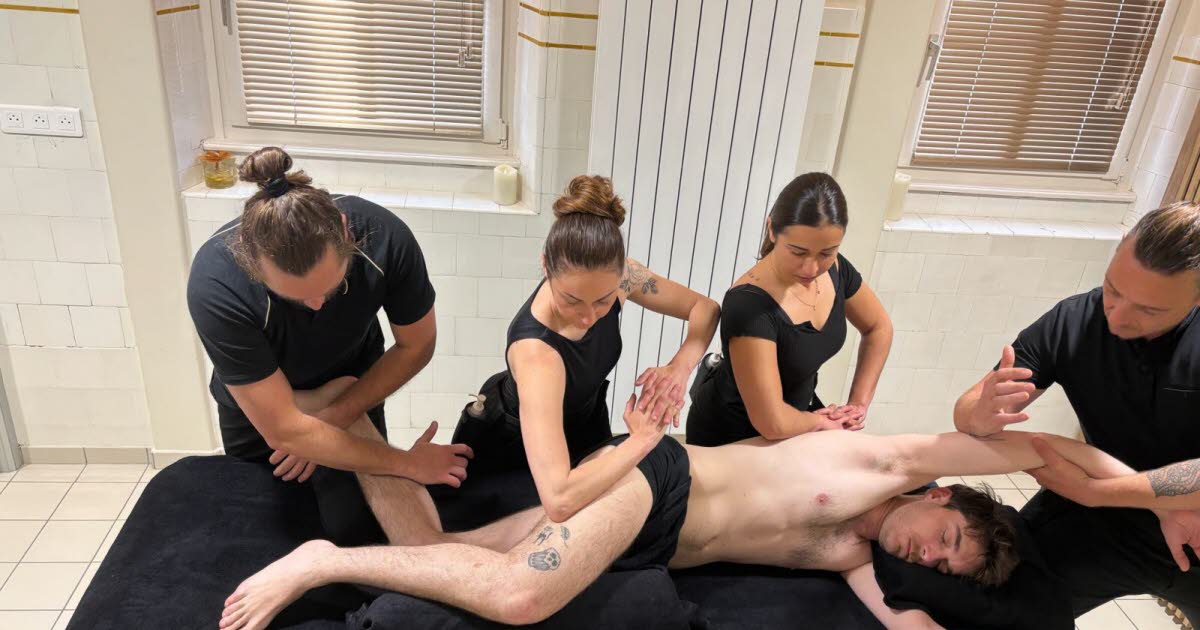
Synchronised massage by four practitioners — innovation prize at the 2025 championship, reinvented for 2026
1905
Year of inauguration of the Bains Municipaux — a classified Wilhelminian heritage housing one of France's most singular wellness establishments
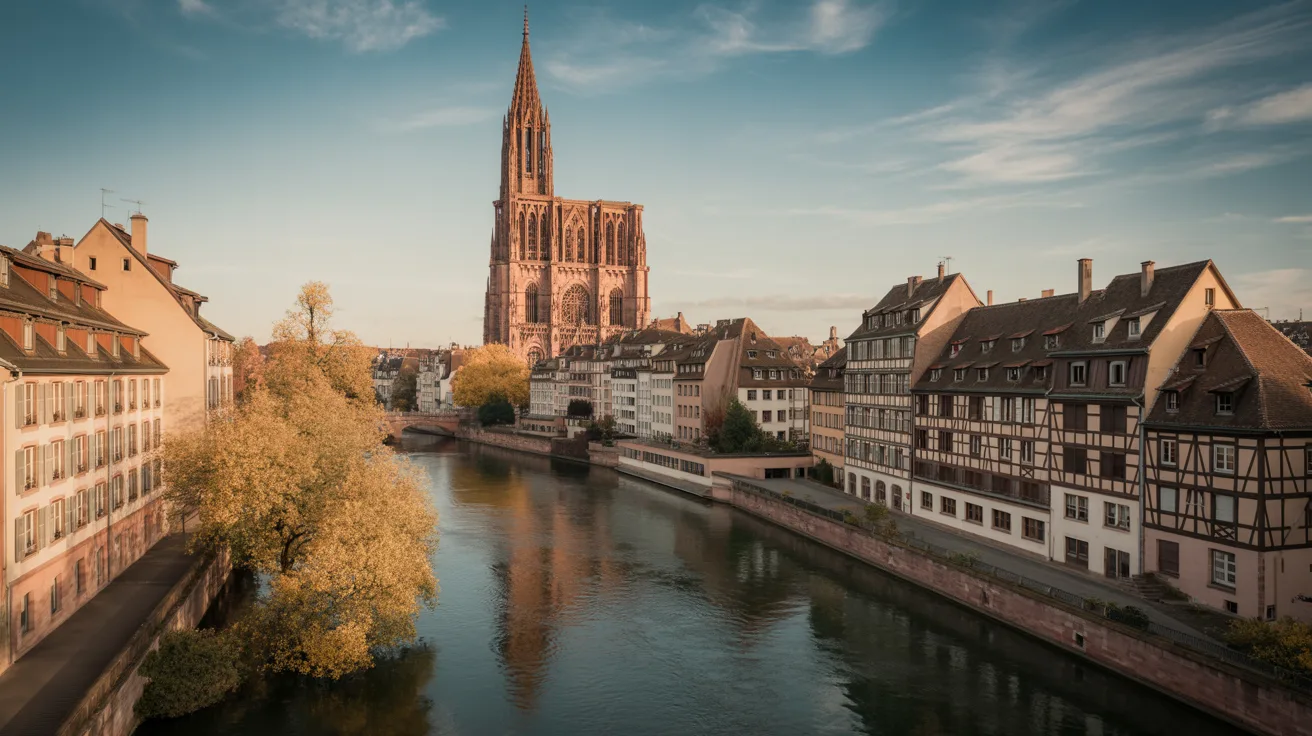
There are establishments that have existed so long, so present in the fabric of a city, that one eventually stops seeing them. The Bains Municipaux of Strasbourg are that for many residents. Opened in 1905 in a monumental Wilhelminian building in the Neustadt district — classified for its exceptional architecture — they have traversed more than a century of Strasbourg urban life without ever closing, without ever declining. And in May 2026, they are about to send four of their practitioners to defend the city's colours — and Alsatian care excellence — on the international stage of the European Massage Championship.
The European Massage Championship 2026: context and stakes
The European Massage Championship is the sector's reference competition in Europe, gathering each year the continent's best professional practitioners across several disciplines: Swedish massage, sports massage, Thai massage, facial treatments and free disciplines allowing teams to present their own creations. This year, 250 masseurs and masseuses from around the world convene in Paris on 23 May for a day of competition whose events combine technique, fluidity, quality of touch and coherence of intention.
The Bains Municipaux de Strasbourg team is not a newcomer to this competition. The 2025 edition had already earned them national and international recognition with their original eight-hand massage — a synchronised care protocol with four practitioners working simultaneously on a single body, awarded the innovation prize. For 2026, after three months of intensive training, they present a revisited version of this protocol — more precise, deeper, with a refined choreography that pushes synchronisation even further.
The fact that four practitioners from a Strasbourg public establishment can rival Europe's best masseurs — many of whom come from high-end private institutes or major international spa chains — says something important about the training level and standards the Bains Municipaux have maintained and developed over the years. This is not an accident: it is the result of an institutional culture that places technical excellence at the heart of its practice.
The eight-hand massage: what it is, and why it is extraordinary
The four-hand massage — two practitioners working in mirror on a single body — is already, in the hands of trained practitioners, an experience of particular depth. The brain, submerged by the double flow of tactile stimulation, enters a state of letting-go faster and more deeply than with a single practitioner. The synchronisation of movements creates a sensation of total envelopment that short-circuits habitual vigilance mechanisms.
The eight-hand massage — four practitioners, four pairs of hands, one body — is another dimension of this experience. It exists in virtually no establishment outside rare prestige venues worldwide, and even less so in a register of competitive technical precision. The difficulty is not only choreographic: it is neurological. Four people must maintain a shared intention, coherent pressure, a common temporality — without the recipient sensing any break, offset or incoherence in touch. When achieved, the effect is that of a single body animated by a common intelligence: an experience that recipients regularly describe as among the most singular of their lives.
The fact that Bains Municipaux practitioners were the first, in the context of this championship, to present this protocol in competitive form — and to have been awarded for the innovation — positions Strasbourg as a vanguard location in high-level massage practice.
The Bains Municipaux of Strasbourg: living heritage
The building, inaugurated in 1905 under the German Empire (Strasbourg was then Strassburg), is a masterwork of Wilhelminian architecture applied to public infrastructure. Vosges pink sandstone facade, faience decoration, glass roofs, historic swimming pools, an interior architecture of elegance that has lost nothing in a century: the Bains Municipaux are one of the rare establishments in France where the architectural setting is itself a wellness experience, before the first treatment even begins.
The establishment has traversed two World Wars, Strasbourg's nationality changes, decades of public infrastructure disinvestment, and successive wellness fashions — hammam, thalasso, spa — maintaining a clear line: genuinely high-quality treatments in a preserved heritage setting, at accessible prices without sacrificing excellence. This hybrid positioning — the best of both worlds between quality public service and luxury care standards — is rare, perhaps unique in France in this format.
What this says about wellness in Strasbourg
The Bains Municipaux practitioners' performance at the European Massage Championship is symptomatic of a Strasbourg wellness ecosystem that deserves to be known — and that constitutes a real argument in the city's value proposition for wellness-first UHNWI visitors and residents. Strasbourg does not have the wellness reputation of Biarritz, the Alps or the Côte d'Azur. But it has something those destinations lack: a density of highly technically qualified practitioners, trained in demanding contexts, accessible in unique heritage settings.