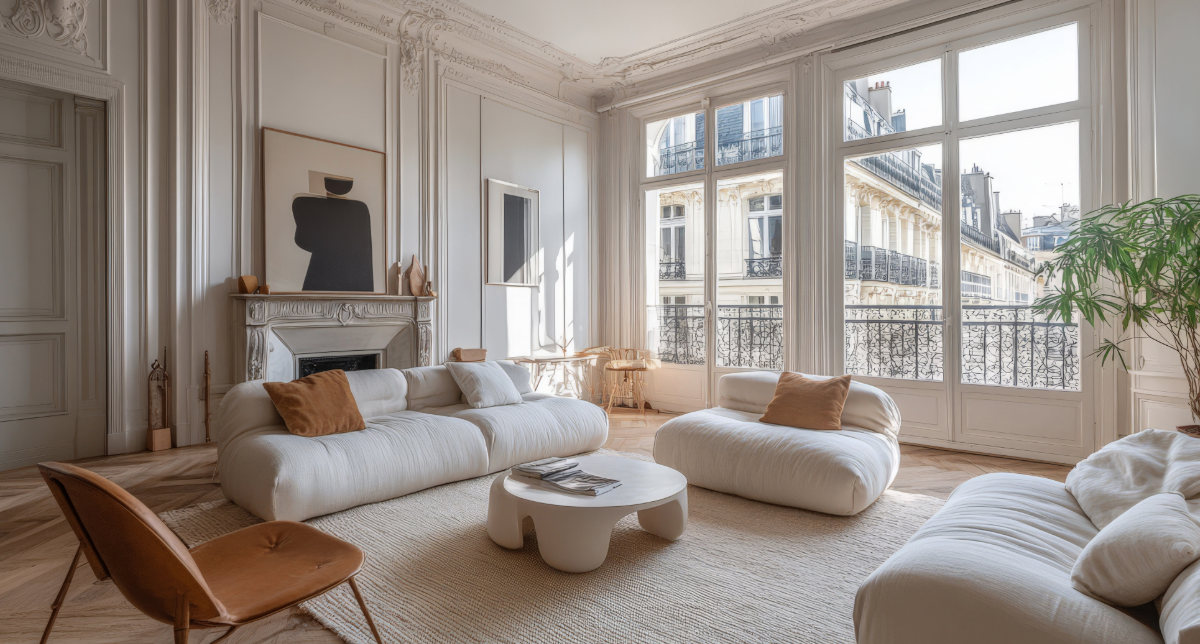
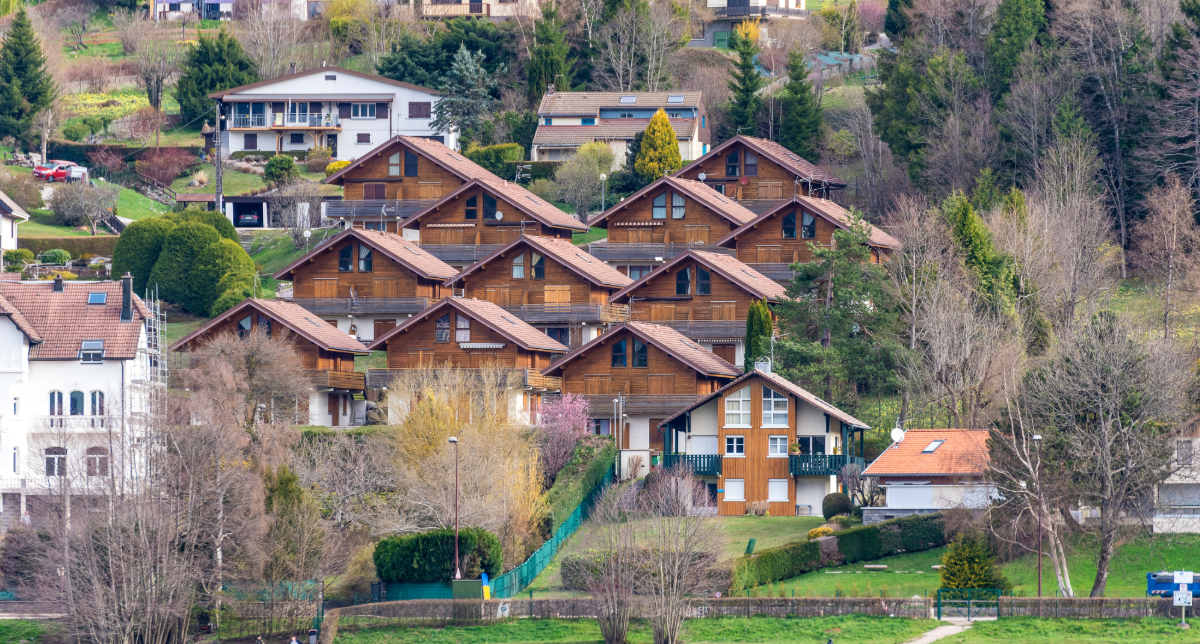
There are in Alsace more than 8,000 declared tourist furnished rentals — and likely as many undeclared. Among them, a tiny minority generates income that truly corresponds to the property's potential. The rest under-perform — through lack of visibility, dynamic pricing, listing quality, or simply because their owner has neither the time nor the tools to properly manage what has become, with the Le Meur law of November 2024, an activity requiring as much legal rigour as commercial acumen. This guide is the most comprehensive available in 2026 on premium rental management in Alsace: from Eurométropole regulation to revenue management strategies, from energy performance to taxation, from distribution to guest services.
Pillar Page · Airbnb Concierge · Premium Rental Management · Alsace · 2026
Airbnb concierge and premium rental management in Alsace — the complete 2026 guide
Legal · Fiscal · Operational · Revenue Management · Strasbourg · Colmar · Wine Route · Vosges · Adopte une Conciergerie
Alsace is one of France's regions where short-term rental is simultaneously most developed and most profitable. Its geography — at the intersection of France, Germany and Switzerland — gives it a cross-border client base that few regions can match. Its cities and territories — Strasbourg European capital, Colmar international tourism gem, Wine Route, Vosges — cover a spectrum of tourist motivations ensuring twelve-month rental demand, with radically different price levels and client profiles by area. The potential is real. What exploits it — or fails to — is management.
The Le Meur Law — what changes for you in 2026
The Le Meur law (no. 2024-1039 of 19 November 2024) is the most significant reform of the short-term rental legal and fiscal framework since the 2018 ELAN law. For unclassified tourist furnished rentals, the micro-BIC fixed allowance falls from 50% to 30%, with the annual revenue ceiling lowered from €77,700 to €15,000. For classified furnished rentals (1-5 stars Atout France), the allowance falls from 71% to 50%, with the ceiling maintained at €77,700 — creating a strong incentive for official classification. Municipalities gain considerably more power to regulate tourist furnished rentals: they can now reduce the maximum primary residence rental duration from 120 to 90 days per year, create regulation zones where prior registration is mandatory, and set geographic quotas. The energy performance certificate (DPE) becomes mandatory for all new short-term rental contracts from 1 January 2025. G-rated properties are already off the rental market. F-rated from 2025, E-rated from 2028.
Strasbourg Eurométropole regulation — what changes for Strasbourg property owners
Strasbourg is one of the French cities that has most actively used available legal tools to regulate tourist furnished rental development — well before the Le Meur law. The Eurométropole has implemented a prior authorisation regime for changes of use of residential premises into tourist furnished rentals in certain zones, and a compensation requirement (create residential space of equal surface in a stressed area for any transformation of a dwelling into a professional tourist furnished rental). For a Strasbourg property owner, the complexity of this regime is one of the reasons professional support is particularly valuable — regulatory error can cost far more than the management fees saved.
Taxation of tourist furnished rentals — micro-BIC versus actual tax regime
The micro-BIC regime applies automatically if your annual rental income is below the applicable ceiling (€15,000 for unclassified, €77,700 for classified after Le Meur law). The actual tax regime (régime réel) allows you to deduct all real expenses: loan interest, co-ownership charges, management fees, insurance, maintenance works, accounting fees, and critically — the decisive advantage — accounting depreciation of the real estate and furniture. Depreciation allows annual deduction of a fraction of the property's acquisition price (generally over 25-30 years for the building, 5-10 years for furniture and equipment), often generating a tax deficit that eliminates all rental income and renders it non-taxable for several years. The actual regime is almost always more advantageous once charges and depreciation exceed the micro-BIC flat allowance.
Dynamic revenue management in Alsace — how to double income without renting more
Revenue management means adjusting rental prices in real time according to demand, rather than fixing a single rate or two static seasonal rates. In Alsace, rental demand follows very marked patterns that revenue management must exploit with precision. European Parliament plenary session weeks (twelve per year) push Strasbourg prices up 30-50%. Strasbourg and Colmar Christmas markets (mid-November to end December) are the year's busiest periods with booking rates exceeding 90% in well-positioned properties. The RevPAR at Easter 2026 in Colmar reached €172 — up 11% vs 2025 (AirDna-ARTGE data). Revenue management tools such as PriceLabs, Wheelhouse or Beyond Pricing analyse real-time territorial booking rate data, direct competitor prices and local events to recommend or automatically apply optimal rates. Their cost (generally 1-2% of revenue, or a monthly flat rate of €20-30 per listing) is recovered multiple times in revenue gains.
Eight fundamental questions on premium rental management in Alsace
Should one classify their tourist furnished rental (1-5 stars Atout France) after the Le Meur law?
The question deserves a nuanced answer, but the trend clearly favours classification. After Le Meur, classified furnished rentals benefit from a micro-BIC allowance of 50% versus 30% for unclassified, with a ceiling maintained at €77,700 versus €15,000 for unclassified. This fiscal difference represents several thousand euros of annual saving for an owner exceeding €15,000 in rental income. The classification procedure — conducted by an Atout France-accredited body — costs €200-400 depending on property size. This cost is recovered within a few weeks of fiscal advantage. The answer is therefore yes in the vast majority of cases.
How does one choose between micro-BIC and the actual tax regime for a tourist furnished rental in Alsace?
The arbitration should be made with your accountant on the basis of your actual figures — but here are the general rules. If your actual charges (loan interest, co-ownership charges, management fees, insurance, works, and especially accounting depreciation of the property and furniture) exceed the applicable micro-BIC flat allowance, the actual regime is more advantageous. For an apartment acquired at €300,000, annual depreciation is approximately €10,000-12,000 — which, combined with operating charges, generally eliminates all rental income and renders it non-taxable for several years. The vast majority of tourist furnished rental investors benefit from opting for the actual regime once their rental income exceeds €15,000-20,000 per year.
What is the best distribution strategy for a premium apartment in Strasbourg?
The optimal distribution strategy for a premium Strasbourg apartment rests on three levels. Volume first — presence on Airbnb, Booking.com and Abritel to capture broad demand and regularly feed the review account. Quality next — optimising on these platforms to appear in the top 10% of results during parliamentary session weeks and Christmas markets, using revenue management to capture price peaks. And retention finally — building a direct client list that books without platform commission after a first stay. For properties in the upper segment (€150+/night), presence on curation platforms like Airbnb Luxe or specialist Alsace premium rental agencies completes the arrangement.
How does one manage Colmar seasonality to maximise annual income?
Colmar presents a very particular seasonality profile requiring a specific strategy. The Christmas market period (mid-November to end December) is the year's busiest — RevPAR reaches record levels, and prices can be set 60-100% above base rate. Spring period — Easter, Ascension, Whitsun — is the second peak, with RevPAR reaching €172 at Easter 2026. Summer (July-August) is an intermediate season where Colmar competes with seaside destinations. And autumn (September-October) is an under-exploited season with regularly progressing booking data thanks to hiking and Wine Route in autumn colours clientele.
What are the insurance obligations for a tourist furnished rental in Alsace?
Standard home multi-risk insurance generally does not cover short-term furnished rental — the policy must be verified and, if necessary, a coverage extension or specific insurance subscribed. Platforms like Airbnb offer host protection (AirCover) covering guest-caused damage up to a certain limit — but this protection does not replace comprehensive professional insurance. Specialist tourist furnished rental insurance covers material damage caused by guests, professional civil liability, loss of rental income in case of disaster, and sometimes guest disputes. Their cost is generally €200-500 per year depending on surface and chosen guarantees.
How long does it take for a well-managed property to reach its full platform potential?
The timeframe to reach a well-managed listing's full potential is generally three to six months after going live. During the first weeks, platform algorithms grant a "boost" to new listings to generate their first bookings and reviews — a period to seize by offering prices slightly below market to maximise initial bookings and reviews. Once ten reviews are acquired at above 4.7/5, the listing begins appearing in natural search results and capturing organic demand. After thirty positive reviews, the listing is generally in the first half of results in its segment — and it is there that revenue management can be adjusted upward to optimise revenue without sacrificing occupancy rate.
What is the difference between entrusting your property to Adopte une Conciergerie and to a generalist Airbnb concierge?
The difference lies in two dimensions. Territorial anchoring first: Adopte une Conciergerie has been anchored in Grand Est for several years. We know the Alsatian micro-markets — the parliamentary session weeks pushing Strasbourg prices, Colmar Christmas markets, Wine Route harvests, Vosges events — and we integrate them proactively into our revenue management. A Paris-based or nationally franchised generalist concierge lacks this precise market knowledge. Service dimension next: our luxury private concierge positioning translates into guest service quality — welcome baskets, personalised recommendations, attentive reception — and owner relationship quality — commented monthly reporting, open dialogue on optimisation decisions. It is a service built for properties that deserve better than standard management.
Can Adopte une Conciergerie manage a property in Colmar or on the Wine Route from Strasbourg?
Yes — and this is an essential dimension of our territorial coverage. Our management scope covers all of Alsace — Strasbourg and the Eurométropole, Colmar and the Alsatian wine country, the Wine Route from north to south, the Sundgau, and the Vosges. For properties outside Strasbourg, we have networks of local service providers — cleaning teams, craftspeople, guest service providers — allowing us to deliver the same operational management quality as in the Alsatian capital. Owner communication and commercial management (revenue management, guest response, platform management) are centralised and independent of the property's location.
Short-term rental in Alsace is one of France's best real estate yield opportunities — provided it is managed with the legal rigour, fiscal precision and service level it requires. This is exactly what we do.
Airbnb Concierge · Premium Rental Management · Alsace · Strasbourg · Colmar · Wine Route · 2026
Adopte une Conciergerie — First Private Luxury Concierge of Grand-Est · First Corporate Concierge