Short-Term Rental · Strasbourg · Alsace · Property Owner Guide · 2026
One of France's most profitable Airbnb markets outside Paris — provided you master its three performance levers.
×3 to ×5
Price multiplier between low season and Christmas Market for the same apartment
85%+
Occupancy rate achievable on well-managed premium properties in high season
6 peaks/year
European sessions, Christmas Market, music festival, trade fairs, ICCA congresses
In France's short-term rental market, there is a category of cities that investors systematically underestimate in favour of Paris and the Côte d'Azur. Strasbourg is the most striking example. European capital, seat of the European Parliament, Council of Europe and European Court of Human Rights, a city of 290,000 with a UNESCO World Heritage-listed Grande Île, an international airport, and one of the continent's most-visited Christmas markets: the demand fundamentals are structural, enduring, and sufficiently diversified to absorb the slow periods.
For a property owner seeking to optimise Airbnb revenues, Strasbourg is a market that does not forgive approximation. Seasonality here is brutal — the price gaps between a Wednesday in January and a Christmas Market weekend rank among the widest in France. Competition is heterogeneous — hundreds of poorly optimised listings coexist with a handful of professional operators capturing a disproportionate share of the best bookings. Reading this market, modelling it, and positioning your property in the premium segment is what separates an owner generating 60% of their asset's potential from one extracting 90% or more.
Understanding Strasbourg's demand: six distinct flows
The first task of a serious property owner is to map the demand sources in their market. In Strasbourg, there are six, and they do not share the same booking profiles, price tolerance, or quality expectations.
The European institutional flow is the most structuring. The European Parliament's plenary sessions — around a dozen per year, each drawing thousands of civil servants, lobbyists, journalists and service providers — saturate Strasbourg's hotel supply and push well-located apartment prices regularly above €200–300 per night for a one-bedroom in the city centre. These dates are public, anticipable twelve months out, and form the backbone of any serious dynamic pricing strategy.
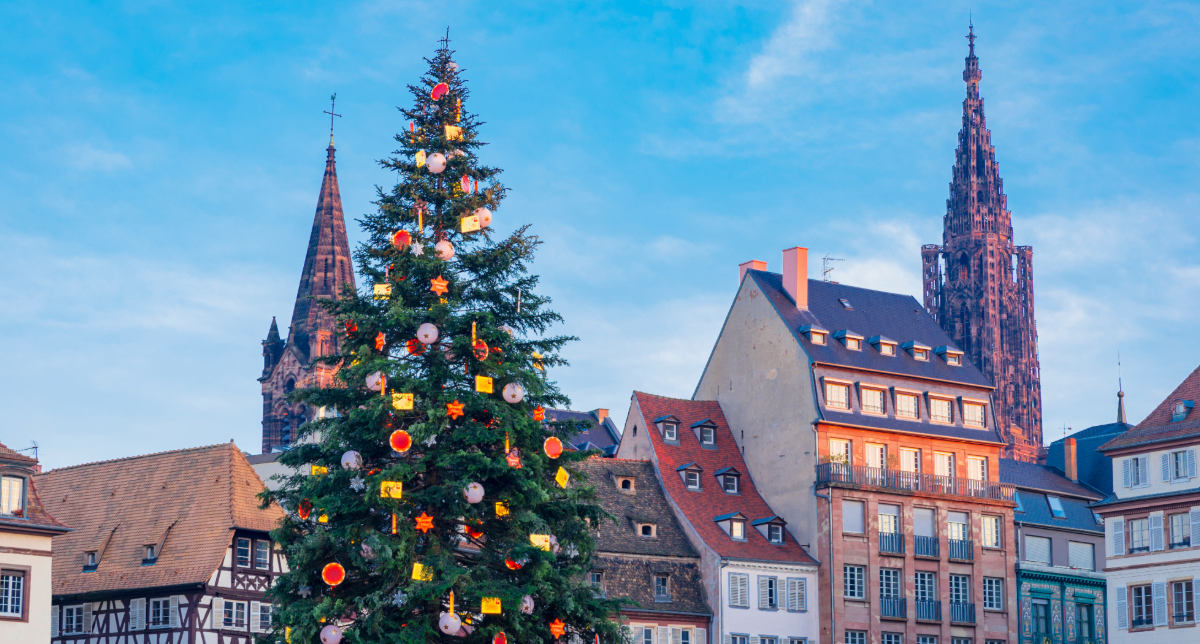
The Christmas Market is the absolute event of the Strasbourg calendar. Over six weeks, from late November to late December, the city receives two to three million visitors. For well-positioned owners, this period can single-handedly represent 30–40% of total annual revenues. Prices achieved during this window — with a two-to-three-night minimum stay — reach levels few French markets equal outside Paris and Alpine resorts during school holidays.
The cultural and heritage tourism flow generates continuous traffic, with peaks linked to the Strasbourg International Music Festival, major exhibitions at the Museum of Modern and Contemporary Art, jazz and film festivals. This segment is less predictable than the institutional flow but consists of high-spending travellers sensitive to property quality.
Business and congress tourism is the fourth pillar. Strasbourg regularly ranks among France's most active ICCA congress cities. These three-to-five-night midweek stays, with a business traveller profile, prioritise connectivity, cleanliness and functionality — and they accept higher prices than leisure tourists if these criteria are met.
Short-break Alsatian tourism (families from Paris or Switzerland for a weekend, couples on a short escape) and long-duration institutional and student tourism (visiting researchers, institutional interns) complete the picture. These two segments pull prices down but maintain occupancy in the inter-season.
Dynamic pricing: lever n°1, systematically under-exploited
Dynamic pricing is the primary performance gap between amateur owners and professional operators on Airbnb in Strasbourg. Most owners set a base price and manually add a few surcharges on known periods (Christmas Market, New Year). This is insufficient — and expensive.
A serious dynamic pricing system rests on three pillars. The first is the event database: all European Parliament plenary sessions, all major ICCA congresses, all cultural festivals, all French and Alsatian bank holiday weekends, all trade fairs (the European Fair in September, in particular). These dates are integrated into the pricing calendar with multiplier coefficients calibrated by event type and booking history.
The second pillar is real-time competition monitoring. Tools such as AirDNA, PriceLabs or Wheelhouse allow daily tracking of competitor pricing within a 500-metre to 1-kilometre radius. When competitors raise prices at D-30 for an event, the signal is clear: demand is there, and it is time to raise yours too — or to have already done so at D-60.
The third pillar is minimum stay management. In high demand, imposing two-to-three-night minimums on event weekends protects against single-night bookings that block the calendar and split revenues. In low demand, opening to single nights fills the gaps. This mechanism, well calibrated, can generate 10–15% additional annual revenue without touching the displayed price.
Strasbourg's seasonality: a calendar to master absolutely
Strasbourg is one of the French markets where seasonality is both the most pronounced and the most legible — a genuine opportunity for owners who take the time to analyse it. The annual structure in RevPAR terms breaks down as follows.
December is the uncontested king month. The six weeks of the Christmas Market, combined with the year-end holidays, make this the most profitable period of the year for any correctly positioned property. Prices can reach three to five times January's rates on the same listing. The golden rule: close these dates to all non-premium bookings (minimum stay, high price floor) by July at the latest.
Plenary session months (January, March, April, May, June, September, October, November — each with one or two sessions) constitute the secondary peaks. An apartment within 10 minutes' walk of the European Parliament, well equipped for professionals (fast Wi-Fi, desk, quality coffee), can command rates 40–80% above its base price during these three-to-five-day windows.
July and August are the trickiest months. The institutional flow is absent (sessions suspended), leisure tourism is present but competition is maximum. This is where a clear positioning (families? couples? international clientele?) and quality photography make the difference in Airbnb rankings.
January, February and November outside the Christmas Market are the slow months. The objective here is not price maximisation but maintaining a reasonable occupancy rate (60–70%) to smooth annual revenues. Opening to longer stays (7+ nights, with a discount) attracts researchers, interns and long-assignment professionals who efficiently fill these troughs.
Premium positioning: why budget is the worst calculation
There is a widespread mistaken belief among owners entering Airbnb: lower the price to get bookings. This is a losing strategy in Strasbourg, and here is why.