Acquisition Guide · Alsace Wine Route · Classified Villages · Winemakers' Houses · 2026
Buying on the Wine Route means entering a living heritage. This guide is for those who want to do it well.
Buying a house on the Alsace Wine Route is not an ordinary real estate decision. It is a long-term patrimonial decision, guided by values that the standard real estate market struggles to measure: the beauty of the setting, the irreplaceability of the location, the historical depth of a built fabric that has survived centuries, and the structural rarity of a land stock constrained by vines, ramparts and heritage classifications.
The five villages — portrait by portrait
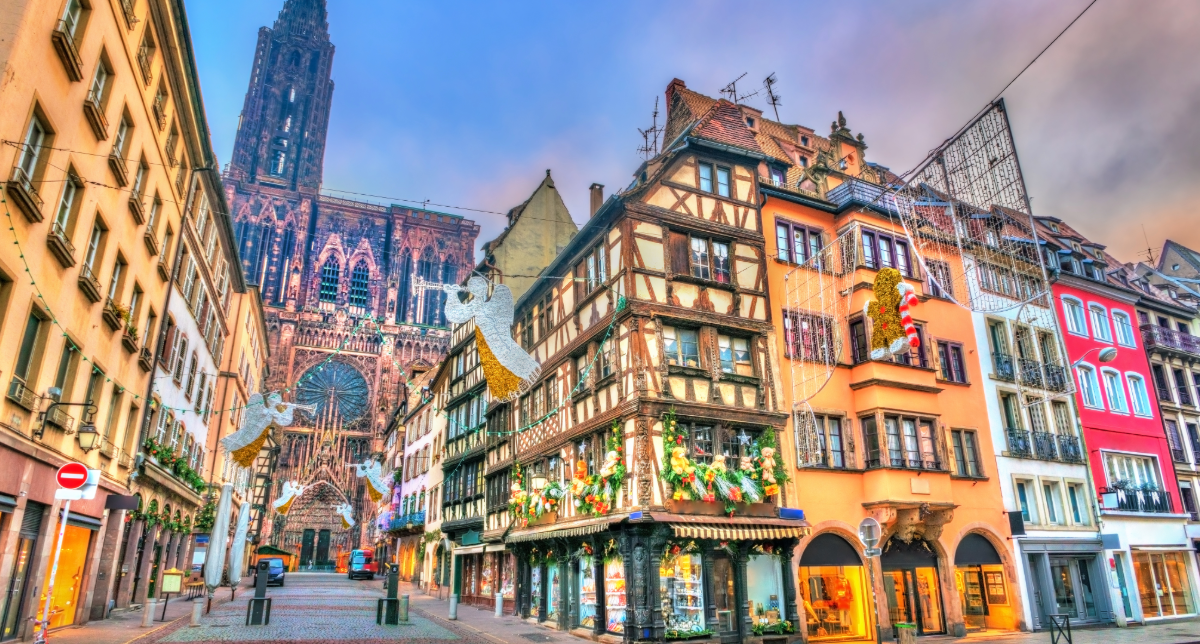
Riquewihr, classified "Most Beautiful Villages of France", has intact 13th-century ramparts encircling a village of half-timbered houses seemingly frozen at the Renaissance. Its Grand Crus Schoenenbourg and Sporen produce Rieslings of mineral precision and Gewurztraminers of exceptional aromatic complexity. Real estate prices range from €350,000-600,000 for typical winemaker's houses (150-200 m²), with exceptional properties reaching €800,000-1.2 million.
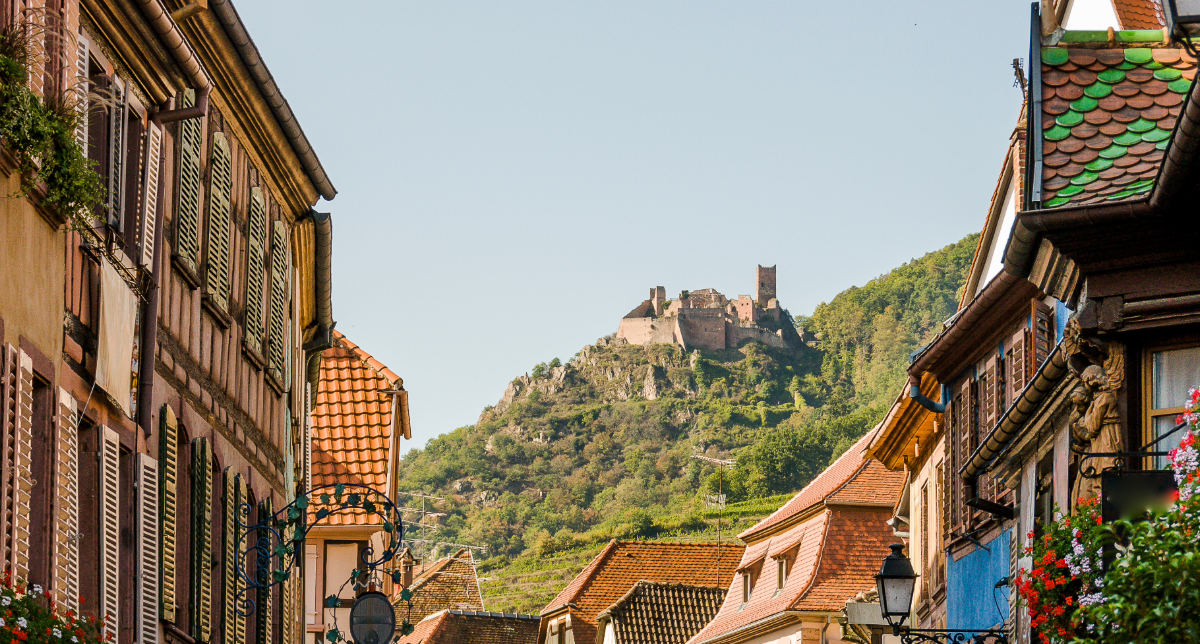
Ribeauvillé, classified "Most Beautiful Villages of France", is the historical capital of the Ribeaupierre lordship, dominated by three ruined castles. Its Grand Crus Geisberg, Kirchberg de Ribeauvillé and Osterberg produce world-reference Rieslings. A 200-250 m² bourgeois house with vineyard and castle views negotiates between €400,000 and €700,000.
Eguisheim, classified "Most Beautiful Villages of France", is organised in concentric circles around its octagonal château. Considered the cradle of Alsatian wine, its Grand Crus Eichberg and Pfersigberg produce celebrated Gewurztraminers. The prime tourist location (under 10 km from Colmar) generates rental yields among the highest on the Wine Route. A restored winemaker's house of 130-180 m² negotiates between €280,000 and €480,000.
Kaysersberg-Vignoble, classified "Most Beautiful Villages of France" and birthplace of Albert Schweitzer, combines a fortified medieval bridge, an imperial 13th-century castle, and the Schlossberg Grand Cru in Kientzheim — one of Alsace's most internationally renowned, its Rieslings featuring in the world's finest cellars. A character winemaker's house in the historic heart ranges from €350,000 to €650,000.
Turckheim, classified "Most Beautiful Villages of France" and uniquely maintaining its medieval night watchman tradition, hosts the Brand Grand Cru — 58 hectares of granite and gneiss producing Rieslings, Gewurztraminers and Pinot Gris of exceptional complexity. The Wine Route's most accessible entry point for classified village buyers, with houses from €220,000-550,000.
The off-market reality on the Wine Route
On the Alsace Wine Route, off-market is not the exception — it is the norm for exceptional properties. Winegrowing families holding houses in the historic hearts of Riquewihr or Kaysersberg for generations do not list them on property portals. They transfer through their notary, through a neighbour who knows an interested buyer, or through a trusted intermediary recommended by someone they have known for years. For an outside buyer, accessing this market requires a territorially-anchored intermediary — someone who knows the winegrowing families, has built relationships with local notaries, and can be informed of sale intentions before they materialise. This is precisely what Adopte une Conciergerie does, with years of direct relationships in Grand Est's notarial and viticultural networks.
Eight essential questions on buying a winemaker's house on the Wine Route
What is the difference between a winemaker's house and an ordinary Alsatian house — and why does it matter for purchase?
A winemaker's house was conceived and built for a viticultural operation: it typically includes a vaulted cellar on one or more levels (for winemaking and storage), working spaces on the ground floor (press room, vat room), living quarters on the upper floor, and often outbuildings (barn, agricultural shed, wine storage building). For the buyer, these characteristics create both an opportunity (living volumes superior to what the price suggests, valorisation potential through renovation) and specific constraints (cellars may require significant structural works, working spaces must be converted to living spaces within rules respecting their original character). The distinction between a winemaker's house and a bourgeois Alsatian house is therefore a purchase criterion in its own right.