+33 3 56 89 46 53Mon–Sat 9am–7pm
Contact us
Private islands, wine estates, rare assets: why the ultra-wealthy are reinventing their relationship with property in 2026 — and what this means for every discerning investor
REAL ESTATE

Private islands, wine estates, rare assets: why the ultra-wealthy are reinventing their relationship with property in 2026 — and what this means for every discerning investor

April 23, 202610 min read

Since 2022, the world has changed gear. Geopolitical tensions, financial market instability, growing fiscal pressure on large fortunes and the hypervisibility of the digital age have profoundly reoriented the patrimonial strategies of the ultra-wealthy — the UHNWI, some 510,000 individuals worldwide with a net worth exceeding 30 million dollars. The most striking trend of 2025-2026: a flight toward real estate assets combining absolute rarity, spatial control and decoupling from financial markets. Private islands are the most extreme form. But they reveal something deeper about how smart capital is positioning itself today.

Analysis · Ultra-Luxury Real Estate · UHNWI · 2026 · Sources: Barnes · Knight Frank · Bilan.ch

Private islands, rare assets and new refuges — How the ultra-wealthy are reinventing their relationship with property in 2026

510,000

UHNWI worldwide in 2025 (Barnes)

+5.2%

Growth in UHNWI numbers in 2024 (Knight Frank)

72%

Of UHNWI are entrepreneurs (Barnes 2026)

34%

Plan to acquire outside their home country (Knight Frank)

There is a moment in every major period of instability when the largest fortunes no longer seek to grow — they seek to resist. That moment has been with us since 2022. Wars, global supply chain reorganisation, trade tensions between major powers, fiscal instability in several Western countries, and above all: the hypervisibility of large fortunes in the social media era, which has made discretion not merely desirable but necessary.

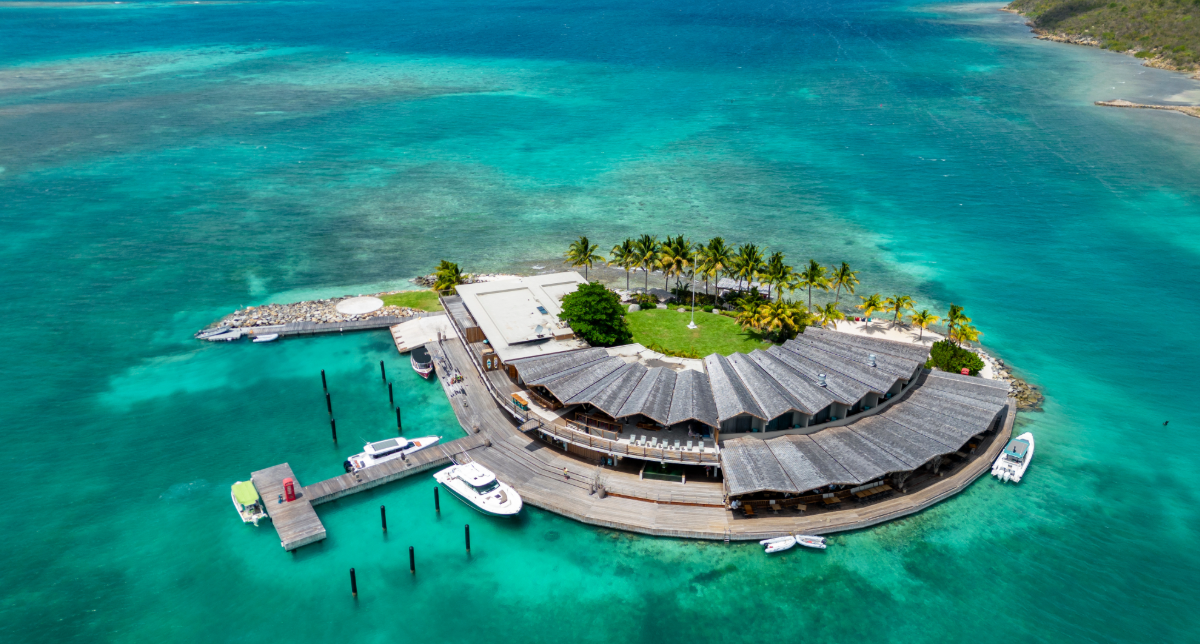
The trend that best embodies this recomposition is spectacular in its form but deeply logical in its nature: the acquisition of private islands by UHNWI. From west coast American tech billionaires to Gulf family offices to European entrepreneurs seeking sovereign frameworks, the private island market saw unprecedented demand in 2025. But this phenomenon, however publicised, is merely the visible tip of a much deeper transformation in how patrimonial capital is positioning itself in 2026.

The private island phenomenon — beyond the fantasy

Buying a private island is not an eccentricity. It is a patrimonial, security and fiscal strategy. Analysis of actual buyer motivations in 2025 reveals three converging dimensions.

The first is confidentiality as a strategic asset. In a world where digital surveillance is structural, every movement traceable, and online presence imposed by algorithms, physical separation guarantees a level of personal space control that no urban property can offer — however high the security, however restricted the access. A private island, accessible only by sea or air on transport modes its owner controls, is a confidentiality infrastructure as much as a residence.

The second is infrastructural autonomy. The most forward-thinking UHNWI understood, before others, that dependence on public networks is a risk. Private islands acquired since 2022 are equipped with solar and wind systems, desalination plants, vertical farms, independent satellite telecommunications. They are designed to function without the global supply chain — precisely in the scenarios where that chain breaks.

The third is absolute rarity as a safe haven. A private island cannot be reproduced. It cannot be built elsewhere. Its value rests on the very impossibility of its substitution — the same logic that sustains Burgundy Grand Crus, Venetian palazzi or the half-timbered houses of Alsace's classified vineyards. In a world where infinite reproduction devalues everything that can be reproduced, the irreplaceable becomes the ultimate asset.

What this says about the luxury real estate market more broadly

The private island phenomenon is the most extreme expression of a trend running through the entire ultra-luxury property market in 2026. UHNWI — whose numbers reached 510,000 worldwide in 2025, up from 77,000 in 2005 according to Barnes — have profoundly shifted their acquisition criteria. Rental yield is no longer the primary criterion. Rarity, location quality, discretion and long-term safe haven value are now the four pillars of any patrimonial acquisition decision at this level.

The UHNWI selection criteria in 2026, according to the Barnes ranking, revolve around three dimensions: quality of life, security and taxation. The cities that are gaining ground in their preferences are those that combine a superior overall experience — infrastructure, culture, high-level services, stability — not just financial capitals.

There is an angle that Parisian analysts generally omit from their reports on UHNWI preferences: the prestige French countryside. Not Paris — Paris is on every map, in every report, in every UHNWI strategy. But the France of exceptional wine estates, character properties in Alsace, Lorraine châteaux, half-timbered houses on the Wine Route — this France is structurally under-explored by foreign investors, precisely because it is only accessible through local trust networks.

Grand-Est presents exactly the characteristics that sophisticated patrimonial investors seek in 2026: irreplaceable properties in their architecture and terroir, prices still competitive compared to comparable markets (Burgundy, Provence, Tuscany), a unique geographic position at the crossroads of five major economies, and structural discretion — Grand-Est is not a mass tourism destination, it is a connoisseurs' destination.

For a UHNWI European investor seeking to anchor part of their patrimony in an exceptional French asset — a domain with classified Alsatian Grand Cru, a property with Vosges views, a Lorraine manor house — the question is not whether such properties exist. They do. The question is how to access them in a market where 80% of prestige transactions occur off-market, where sellers are not looking for buyers in national agency catalogues, and where territorial knowledge is the only key that opens the right doors.

This is precisely the key that Adopte une Conciergerie holds. As the first private luxury concierge of Grand-Est, we are the natural entry point for any investor — French or foreign — seeking to position a patrimonial acquisition in the region.


Have a project in mind?

Our experts are ready to create a bespoke experience for you.

Request a free quote

The refuge philosophy in 2026: from the island to Alsace

It would be tempting to oppose the "extreme refuge" — the private island, the New Zealand bunker, the Swiss Alpine property — to classical patrimonial investment. It is a false opposition. What unites the billionaire buying a Fiji island and the investor acquiring a wine estate on the Alsace Wine Route is the same logic: owning something that money alone cannot buy. Something that exists in limited quantity, whose value does not depend on financial markets, and whose enjoyment provides something neither a Paris apartment nor a share portfolio can offer.

The difference is one of scale and profile. The private island at $50 million is for the 0.001% of UHNWI. The Alsatian wine domain with classified Grand Cru, acquired at €1 to €3 million in the finest appellations, is accessible to a serious patrimonial investor — and its appreciation potential, combined with its irreplaceability and the absence of equivalent outside Alsace, makes it an asset whose deep logic is not so different from what makes Richard Branson buy an island in the Caribbean.

Eight questions on rare real estate asset investment and Adopte une Conciergerie consulting

Why are UHNWI turning to rare real estate assets rather than financial markets in 2026?

Several converging factors explain this realignment. First, financial market volatility since 2022 — equities, bonds, crypto — reminded many large fortunes that tangible assets present a fundamentally different risk profile. Second, growing fiscal pressure in several Western countries creates an incentive to position patrimony in assets that do not depend on national fiscal policies — an island in the Pacific or a wine estate in Alsace does not disappear in a tax reform. Finally, the absolute rarity of certain real estate assets — which can be neither reproduced nor replaced — creates a structural decoupling from financial markets that is precisely what large fortunes seek in periods of uncertainty. According to Barnes, the number of UHNWI worldwide reached 510,000 in 2025, up from 77,000 in 2005 — a multiplication of more than six in twenty years. Competition for the rarest assets is mechanically intensifying.

Are Alsatian or Lorraine wine estates truly comparable to "refuge" assets for a UHNWI investor?

The comparison is more solid than it appears. A domain with classified Alsatian Grand Cru — Schlossberg, Rangen, Brand, Sommerberg — shares several fundamental characteristics of a top-tier refuge asset with a private island. Absolute rarity: a Grand Cru is a controlled appellation of delimited surface that cannot be extended. Irreplaceability: the terroir of an Alsatian Grand Cru cannot be reproduced elsewhere — that is precisely its definition. Decoupling from financial markets: the value of an exceptional wine domain does not follow stock market cycles. And use value: the owner enjoys an exceptional living environment, a production with documented worldwide reputation, and an asset whose patrimonial transmission is structurally valued.

How does one access the off-market prestige property market in Grand-Est?

Grand-Est's finest properties — wine domains with Grand Crus, Lorraine manor houses, character Alsatian properties — are not on public property platforms. They are transferred between people who know or trust each other, through notaries, patrimonial lawyers and local intermediaries who know both vendors and potential buyers. Adopte une Conciergerie occupies precisely this position in the Grand-Est ecosystem: we are the trust network that connects both sides of this invisible market. Our role is not to manage a listing portfolio — it is to know, ahead of everyone else, which properties will become available, and to be able to introduce a serious buyer before the transaction becomes public.

Which rare real estate assets in Grand-Est present the strongest patrimonial profile in 2026?

Four categories stand out for their combination of rarity, documented appreciation and international desirability. Wine domains with classified Grand Crus on the Alsace Wine Route — Schlossberg in Kaysersberg, Rangen in Thann, Brand in Turckheim, Sommerberg in Niedermorschwihr — whose stock is finite and whose reputation is worldwide. Authentic half-timbered houses in iconic villages — Eguisheim, Ribeauvillé, Riquewihr — which are unique in France for their architecture. Character properties in Lorraine — Nancy private mansions, Moselle châteaux with grounds, Vosges manor houses — at still very competitive prices versus Alsatian markets. And properties with panoramic Vosges views or overlooking the vineyards — whose supply is structurally constrained by topography and whose international demand grows steadily.

What is the recommended acquisition procedure for a foreign investor wishing to purchase a prestige property in Alsace?

Our support covers the entire process. Upstream: analysis of the buyer's profile and patrimonial strategy, criteria definition, identification of matching properties including off-market. Pre-visit due diligence: title verification, mortgage situation, planning compliance, actual condition assessment, works estimation. Legal coordination: introduction to a specialist notary or lawyer depending on transaction complexity. Fiscal accompaniment: in coordination with an international tax law specialist for foreign buyers — particularly on the applicable bilateral tax treaty and IFI impact. Renovation coordination if needed. And post-acquisition management: property supervision, maintenance during owner absences, letting if desired.

How is Grand-Est better positioned than other French regions for an international patrimonial investor in 2026?

Three structural advantages that few French regions can combine. Geographic accessibility: Grand-Est is under two hours' flight from London, Zurich, Frankfurt, Amsterdam and Brussels — accessible from any major European city without connecting. Convergence of unique heritages: no other French region simultaneously combines classified Grand Crus, irreplaceable half-timbered architecture, world-class decorative arts heritage (Nancy), and European capital status (Strasbourg). And still competitive prices: an Alsatian wine domain with Grand Cru remains accessible at levels far below comparable assets in Burgundy or Bordeaux — a valuation gap that reflects lower international media exposure, not lower intrinsic quality. For the discerning investor, this gap is an opportunity.

Does the UHNWI trend toward "refuge" assets mean the classic prestige property market is declining?

No — it means it is segmenting. The prestige property market is structuring itself ever more clearly around two categories. "Standardised luxury" assets — Parisian Haussmannian apartments, Côte d'Azur villas, Alpine chalets in established resorts — which remain sought-after but whose prices already fully reflect their desirability. And "rare and irreplaceable" assets — private islands, exceptional wine estates, unique architectural properties, assets with history and anchoring that cannot be reproduced — which capture growing UHNWI demand precisely because their value rests on what money alone cannot create. It is on this second segment that Adopte une Conciergerie positions its expertise.

Can Adopte une Conciergerie support an investor in acquiring a rare real estate asset outside Grand-Est or outside France?

Yes — with the same honesty we apply in all our consulting. Our maximum territorial expertise is Grand-Est. This is where our network is deepest, our knowledge of players most direct, and where we create the strongest added value. For acquisitions outside Grand-Est — in France (Burgundy, Provence, Brittany) or internationally (Prague, Lisbon, Swiss Alps, Côte d'Azur) — we mobilise our trusted partner network: specialist lawyers, local patrimonial agents, notaries, international tax specialists. We coordinate without claiming the same depth as in our anchoring territory. This transparency is our standard — and the reason our clients trust us on the most significant decisions of their patrimony.

The difference between a Fiji island and an Alsatian Grand Cru is not a matter of nature — it is a matter of scale. In both cases, what one buys is something that money alone cannot manufacture. And that is precisely where true patrimony begins.

First Private Luxury Concierge of Grand-Est · International Real Estate Consulting · Rare Assets

Adopte une Conciergerie — Consulting & Rare Asset Acquisition · Grand-Est & International · 2026

Sources: Barnes Wealth Report 2026 · Knight Frank The Wealth Report · Actual Immo (Feb. 2026) · Bilan.ch · MySweetImmo · Paul Parker Properties · Visual Capitalist · BuyAPrivateIsland.com

Related Services

Discover our services related to this article

Real Estate ConsultingAudit, portfolio management and bespoke advisoryDiscoverPrivate ConciergePremium property management servicesDiscover
Learn more

Related Articles

Ready to take action?

Contact our team for personalized, no-commitment guidance.