On 2 May 2026, Euronews published data from the Knight Frank Prime International Residential Index 2026: in more than half of the 100 global cities tracked, prestige property prices rose more than 3% in 2025. Prague leads the European ranking at +14.6%. Tokyo explodes at +58.5%. Dublin, Madrid, Lisbon and several capitals post double-digit growth. And while standard markets remain under pressure, prime real estate follows a radically different logic — sustained by accelerated global wealth creation. What these data say about the market — and what they mean for Grand Est.
Market Analysis · Prestige Real Estate Europe · Knight Frank Wealth Report 2026 · Euronews · 2 May 2026
Europe's luxury housing boom: which cities are driving the surge in prime property prices?
+58.5%
Tokyo — global leader 2025 (Knight Frank PIRI 2026)
+14.6%
Prague — European leader 2025 · Top 5 globally
+25.1%
Dubai — 2nd globally · Asia-Pacific demand
> 50%
Of 100 tracked cities posted +3% in 2025
There is a phrase in the Knight Frank Wealth Report 2026, cited by Euronews on 2 May, that summarises better than any figure what the prestige real estate market is currently experiencing: "In many markets, prime residential property has pulled away from the broader housing sector, underpinned by the strength of wealth creation." This decoupling is the defining event of 2025 — and it explains why today's published data defies the intuition of standard real estate market observers.
The global ranking: Tokyo, Dubai, and the surprise of Prague
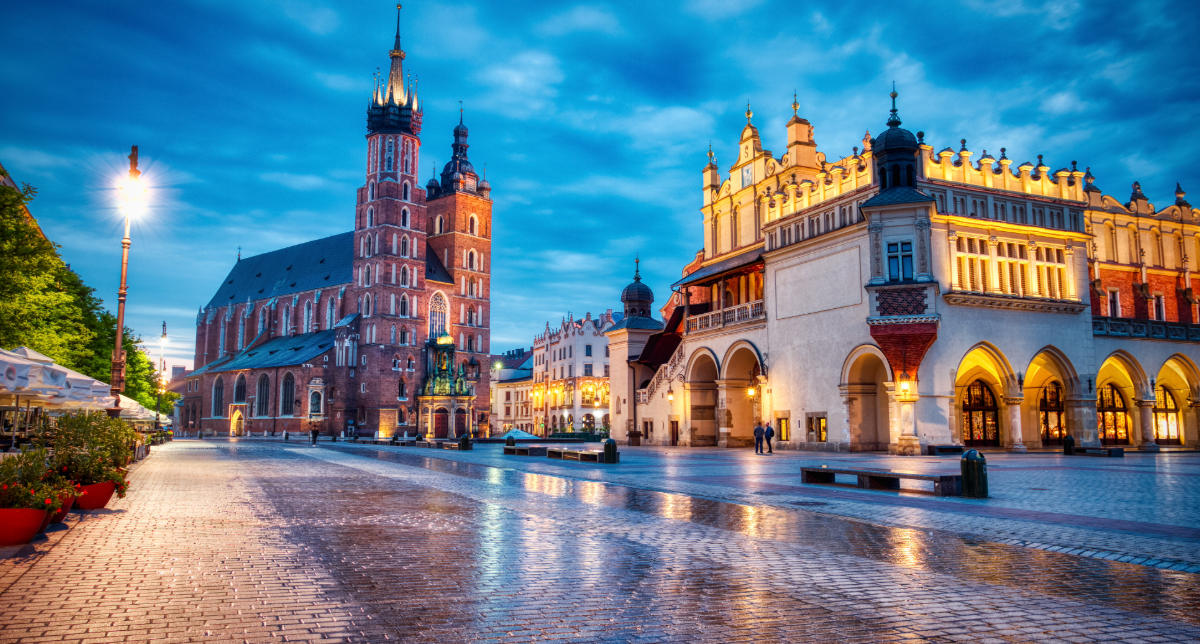
The Knight Frank Prime International Residential Index tracks 100 global cities, 47 of them in Europe. For 2025, the results are unambiguous. Tokyo leads at +58.5% — extraordinary growth fuelled by new-build scarcity, structurally low interest rates and powerful inbound demand from Asia-Pacific clientele. Dubai comes second at +25.1% — though this data predates the US-Israeli strike on Iran and Tehran's response to Gulf countries. Manila and Seoul complete a top 4 with growth of around 15-20%. And then there is Prague: the Czech capital posts +14.6% — making it Europe's highest-performing city and fifth globally. This figure reflects a structural dynamic professionals know well: Prague is one of the most attractive capitals in central Europe for UHNWIs, offering exceptional architectural heritage, high quality of life, competitive taxation, and prices still far below western European major capitals.
Europe: over half of cities at +3% — with strong internal divergence
Of the 47 European cities tracked, over half recorded annual prime price growth above 3% in 2025. The Euronews-Knight Frank analysis cites Madrid, Lisbon, Milan, Dublin and Geneva as key European growth drivers. Madrid benefits from Latin American, North American and Middle Eastern investor influx combined with very constrained prime supply. Lisbon — despite golden visa debates — maintains very strong international attractiveness with prices up 15% year-on-year. Milan benefits from the 2026 Winter Olympics infrastructure investments and the dynamism of Fashion and Finance in Brera, Porta Nuova and Quadrilatero della Moda. Dublin sustains its growth driven by Big Tech European headquarters concentration. Geneva remains the reference refuge for global fortunes seeking geopolitical and fiscal stability.
Liam Bailey's quote — and what it implies
Liam Bailey, editor of the Knight Frank Wealth Report, formulated the analysis with precision: "While mainstream markets remain exposed to wider economic pressures, the pace at which wealth is being generated is helping to keep demand for luxury property more resilient, even against recent volatility in debt costs." What the geography of the ranking implies implicitly is that this is also a decoupling between the markets UHNWIs choose and those they avoid. Prague, Madrid, Lisbon, Milan, Dublin, Tokyo, Dubai: these are cities the world's great fortunes have decided to inhabit. This collective choice is self-reinforcing — the more a city attracts, the more it develops the infrastructure that attracts further. And this movement does not stop when interest rates rise, because UHNWI buyers do not borrow. They buy.
What these data mean for Grand Est and for Adopte une Conciergerie
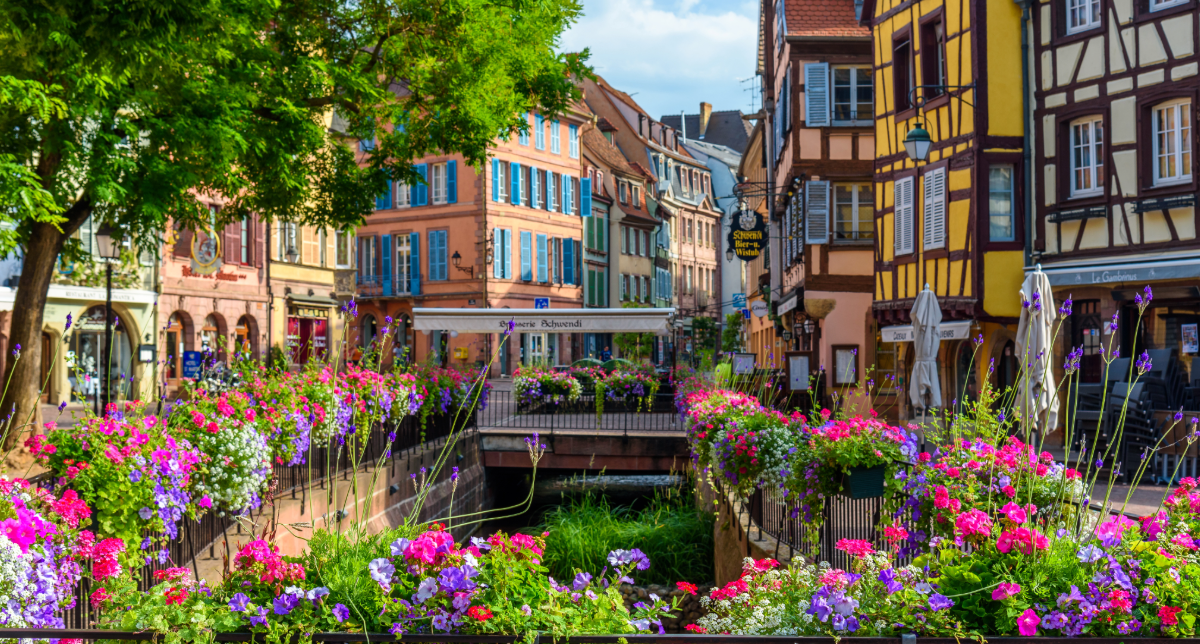
The migration dynamic feeding Prague, Madrid and Lisbon also benefits, in France, regional markets offering what capitals cannot: the irreplaceability of the terroir, the authenticity of historic built fabric, the unique combination of European institutions and quality of life. The average price in Strasbourg's Orangerie district is €5,070/m² in April 2026, with exceptional properties reaching €6,491/m². In a European perspective, these prices do not resist comparison — they invite it. A UNESCO Neustadt Wilhelmian apartment, with its high ceilings and generous proportions, in Strasbourg, costs less than a comparable apartment in any top-10 European city in the Knight Frank Index. For a UHNWI buyer who knows their markets, this is a window of opportunity that European price convergence will gradually close. Adopte une Conciergerie — Grand Est's first private luxury concierge — is positioned to accompany buyers who understand these dynamics before the market has fully priced them in.
Eight questions on Europe's luxury property boom in 2026
What is the Knight Frank Prime International Residential Index and how reliable is it?
The Knight Frank Prime International Residential Index (PIRI) is one of the most cited and respected global indices for tracking prestige real estate price movements. It follows 100 global cities, 47 of them in Europe, focusing on the prime segment — defined as the top 5% of each market by value. The index is published annually in the Knight Frank Wealth Report, itself one of the reference publications on global wealth and UHNWI behaviours. Its methodology is based on real transaction data and partner agent databases in each tracked city. It is used by wealth managers, family offices and major financial institutions to analyse the international real estate allocation of UHNWI clients.
Why did Tokyo surge +58.5% in 2025 while other markets remained moderate?
Tokyo's progression is a specific phenomenon resting on three simultaneous factors. New-build apartment scarcity in central Tokyo, combined with very strict construction regulatory constraints, created supply pressure without global equivalent. Structurally low interest rates in Japan — very different from European and American trajectories — maintained local buyer solvency. And finally, massive inbound demand from Asia-Pacific clientele — particularly Chinese, Singaporean and Korean — which discovered or rediscovered Tokyo as a premier patrimonial destination. These three combined factors produced a progression that is not representative of the general trajectory of the global prime market — it is a documented, circumscribed exception linked to the specificity of the Japanese real estate market.
Why is Prague Europe's top-performing city in 2025?
Prague combines several characteristics making it a prime market of choice in 2026. Its architectural heritage — Baroque, Art Nouveau, Art Deco — is of comparable richness to the finest European addresses but with prices still far below those of major western European capitals. Its taxation is competitive at European scale. Its quality of life — cultural infrastructure, gastronomy, mobility — is excellent. And critically, its position in the European digital economy — accelerated by the presence of many technology companies that have established hubs there — has generated a local UHNWI class whose purchasing power has progressed very significantly. Add to this an influx of German, American and Middle Eastern fortunes that have discovered Prague as an alternative to Munich, Vienna or Zurich for central European patrimonial anchoring.
How does France position itself in the European 2026 ranking?
France does not appear at the top of the 2026 Knight Frank ranking, primarily because Paris — which represents most of the French prime market in international statistics — underwent a marked correction between 2022 and 2024 and is in a progressive stabilisation phase. However, several French markets have outperformed the national average: Paris 7th arrondissement posted +50% transaction volume according to Engel & Völkers and Breteuil, driven by American and Middle Eastern clientele. The Côte d'Azur maintained record price levels. And regional prestige markets — Strasbourg, the Alsace Wine Route, Nancy — have shown significant resilience sustained by cross-border and institutional demand.
What distinguishes the prime market from the standard real estate market in 2026?
The decoupling between prime and standard markets is the most important structural fact of the current real estate cycle. The standard market is sensitive to credit rates — most of its buyers are borrowers whose purchasing power depends directly on rate levels. The prime market is much less sensitive — a very large proportion of top 5% buyers purchase in cash or with patrimonial structures that do not depend on local credit rates. The standard market is influenced by local economic conditions — employment, purchasing power, inflation. The prime market is influenced by global wealth creation — which has continued to progress significantly despite geopolitical uncertainties, according to Liam Bailey. And the standard market suffers from regulatory pressure on energy-poor properties, while prime properties, often renovated and well-maintained, are less exposed to this issue.
How does this European dynamic translate for investors seeking a 2026 entry opportunity?
Market timing on prime markets is always a question of temporal perspective. In markets that have already progressed most — Prague, Madrid, Lisbon — prices have caught up part of their gap with western European major capitals but remain significantly below Paris, London or Geneva for comparable properties. Entry opportunity there is still present but narrowing. In French regional prestige markets — Strasbourg, the Alsace Wine Route, Nancy — prices remain very competitive at European scale, and international demand is only just beginning to discover them significantly. This is the logic of the wave: capitals first, then exceptional regional markets offering the same asset quality at more accessible prices. This wave is arriving in Grand Est. The time to be positioned is now.
What buyer profiles are fuelling Europe's prime property boom in 2026?
Knight Frank data and observations from major specialist agencies identify several distinct profiles. American UHNWIs, whose near dollar-euro parity increased purchasing power by 10-15% compared to previous years — particularly active in Paris, Madrid, Lisbon and the Côte d'Azur. Gulf fortunes — Emiratis, Saudis, Qataris — diversifying patrimonies toward Europe in a regionally unstable geopolitical context. Central European fortunes — particularly Czech, Polish, Hungarian — whose wealth creation has been exceptionally rapid over the last decade and who anchor in the finest addresses of their own capitals. And Asian buyers — Chinese, Singaporean, Korean, Japanese — who have rediscovered Europe as a diversification patrimonial destination after a period of uncertainty linked to domestic policies in their countries of origin.
Is Adopte une Conciergerie well-positioned to accompany these international buyers in the Grand Est market?
Yes — and this is precisely the purpose of our positioning. We are Grand Est's first private luxury concierge, with territorial anchoring covering Strasbourg, the Alsace Wine Route, Nancy and Lorraine, the Vosges and the entire region. Our direct relationships with specialist notaries, patrimonial lawyers, winemakers and owners of exceptional properties give us access to an off-market that national and international platforms do not show. For an American buyer who has read the Euronews article and wonders which still-affordable European city deserves their attention — the answer is Strasbourg, and we are the interlocutor who can transform this intuition into a concrete acquisition, from the first conversation to the final signature.
Prague +14.6%. Madrid, Lisbon, Milan accelerating. European prime property has decoupled from the rest of the market. The question is no longer whether the wave will reach regional prestige markets. It is whether you are positioned before it arrives.
Luxury Property Boom · Europe · 2026 · Grand Est · Patrimonial Consulting
Adopte une Conciergerie — First Private Luxury Concierge of Grand-Est · First Corporate Concierge
Sources: Knight Frank Prime International Residential Index 2026 · Knight Frank Wealth Report 2026 · Euronews (2 May 2026) · MeilleursAgents (April 2026) · Engel & Völkers France · Breteuil Real Estate · Investropa (Portugal, 2026)