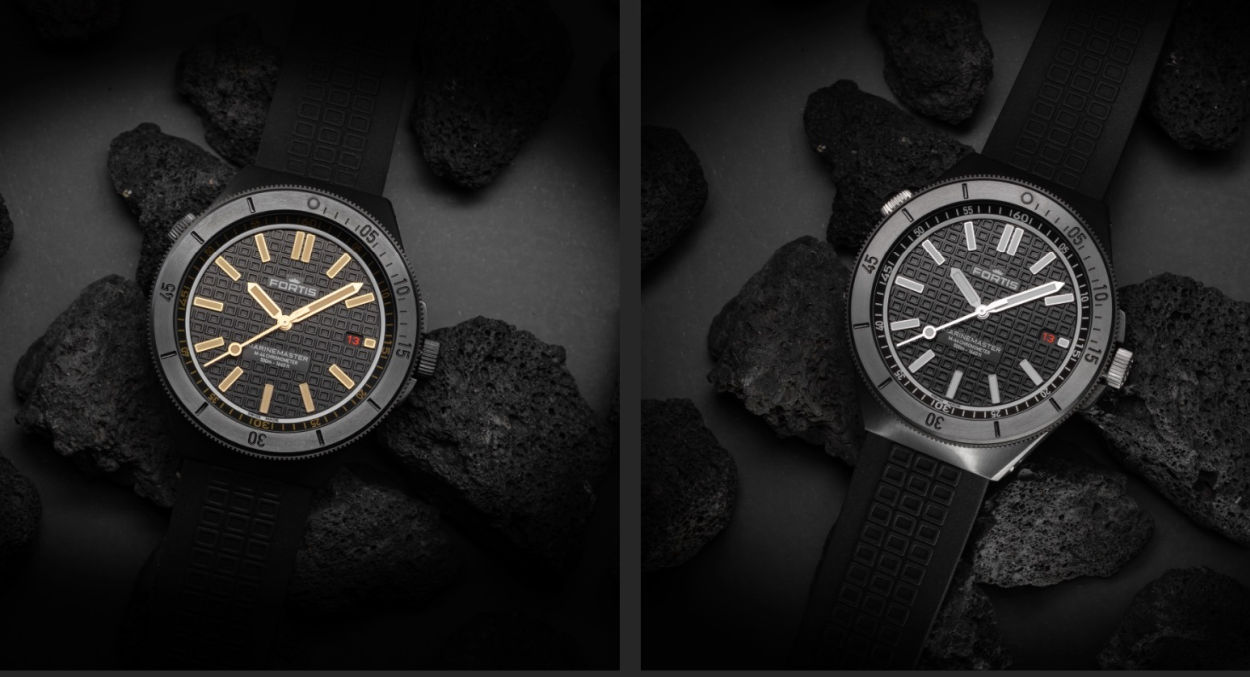
The era of the 44mm statement case announcing its presence across the room is over. Ultra-chic horology is now worn between 36 and 38mm — dimensions that demand ultra-thin movements of extreme precision and demonstrate a level of technical mastery that larger cases can never equal.
There was a period — roughly 2005 to 2020 — when the 44mm case was the unwritten standard of masculine achievement. Thick, imposing, visible at a distance, it signalled success to the room before its wearer had spoken a word. That aesthetic of ostentation now belongs to a previous cycle.
The new generation of collectors — younger, more international, often from the worlds of technology or finance — has adopted the opposite position: the watch must slip under the shirt cuff. It announces nothing. It has no need to. Those who know, know.
At Adopte une Conciergerie, we serve clients whose watch collection is the most personal expression of refined taste — and who seek access that boutiques and waiting lists cannot offer.
Why 36–38mm is technically more demanding than 44mm
Building a large case is, paradoxically, simpler. The available volume permits more accessible mechanical complications, comfortable power reserves, and immediate legibility. A 36mm case in solid gold with a 2.5mm manufacture ultra-thin movement is, in watchmaking engineering terms, a challenge of an entirely different order. The baseplate must be redesigned from scratch. The bridges are engraved at a scale only a microscope fully reveals. Precision adjustment in five positions requires watchmakers whose expertise is transmitted across generations. And the slightest assembly defect results in precision drift that the compact case cannot absorb.
The manufactures that have understood this moment
A handful of names dominate this segment with a conviction and consistency that commands genuine respect: Piaget with its unmatched ultra-thin heritage, Vacheron Constantin reviving the proportions of the 1950s in its "Historiques" collection, A. Lange & Söhne with calibres of architectural purity that tolerate only compact formats, and Richard Mille exploring the same paradox in a resolutely contemporary aesthetic. What unites them: none seeks to be seen from across the room. They seek to be recognised up close — by someone who has taken the time to understand.
FAQ — 36–38mm watches and ultra-thin movements
Does a 36mm case suit all wrists?
For a wrist circumference of 16 to 18cm — the majority of men and many women — a 36 to 38mm case is proportionally ideal. Above 19cm, one can consider 39 to 40mm without losing the elegance of the compact format.
What precisely distinguishes an ultra-thin movement from a standard one?
An ultra-thin movement — generally under 3mm total height — imposes radical engineering constraints: flat mainspring barrel, millimetric bridges, miniaturised regulating organ. Its manufacture requires micron-precision machinery and specialist watchmakers whose skill set is vanishingly rare. The entry price for an ultra-thin manufacture movement typically begins well beyond €20,000.
Are these watches sound investments?
The pieces from great manufactures in compact cases — particularly historical references reissued in limited series — have demonstrated remarkable appreciation potential. A Vacheron "Historiques" or a Lange "Saxonia" in solid gold, in excellent condition, consistently sells above its boutique price after a few years of ownership.
How does one access the most sought-after pieces without a waiting list?
The finest pieces have no official waiting list — they are simply never offered at the counter. They pass through private channels, direct relationships with manufactures, and pre-empted allocations well before any public presentation. These are precisely the channels in which we operate on behalf of our members.
Can Adopte une Conciergerie assist with acquiring a rare piece?
Yes. We facilitate access to manufacture pieces outside conventional distribution, and support our members in the evaluation, negotiation and authentication of collector's pieces at every price point.
The finest watches are not noticed. They are appreciated. Access exceptional pieces at Adopte une Conciergerie.