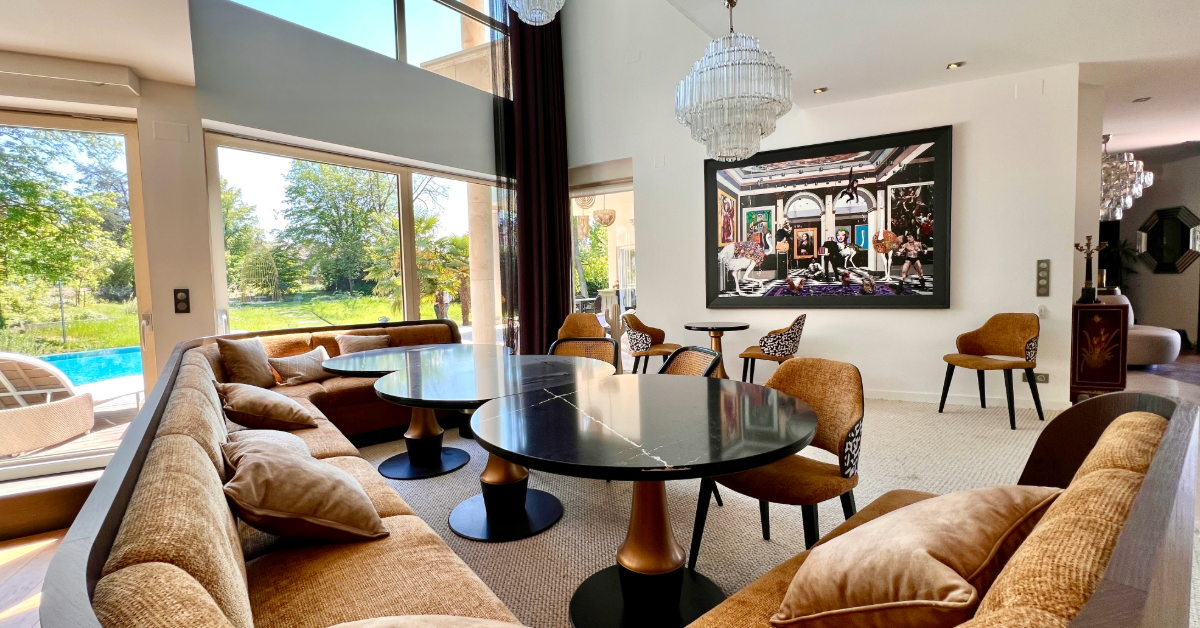
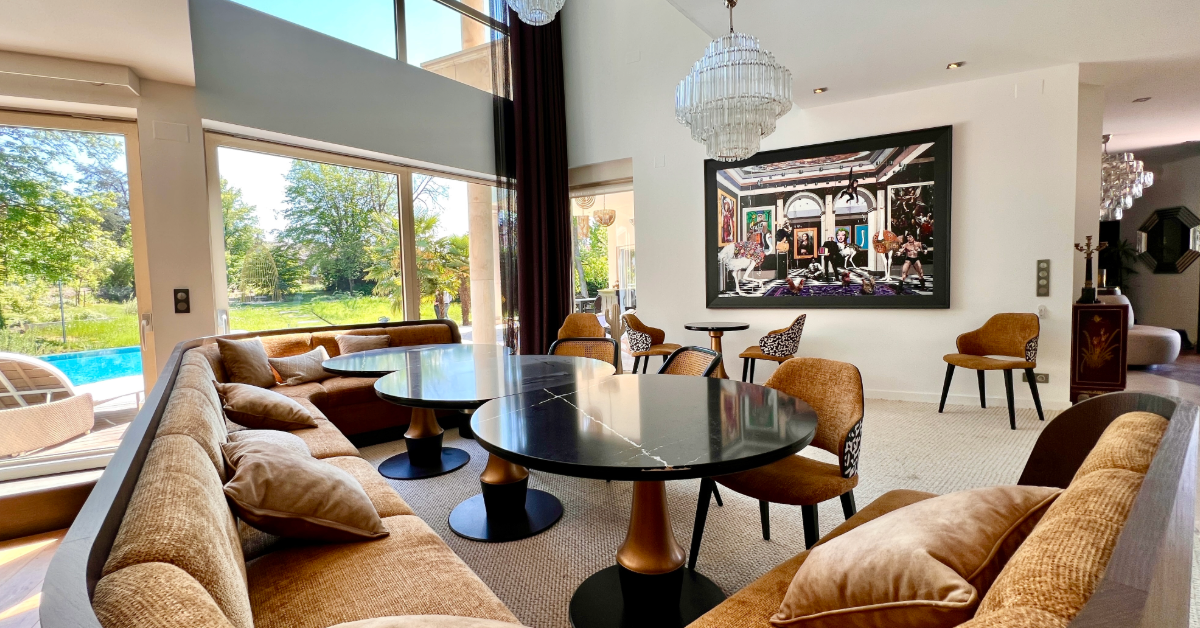
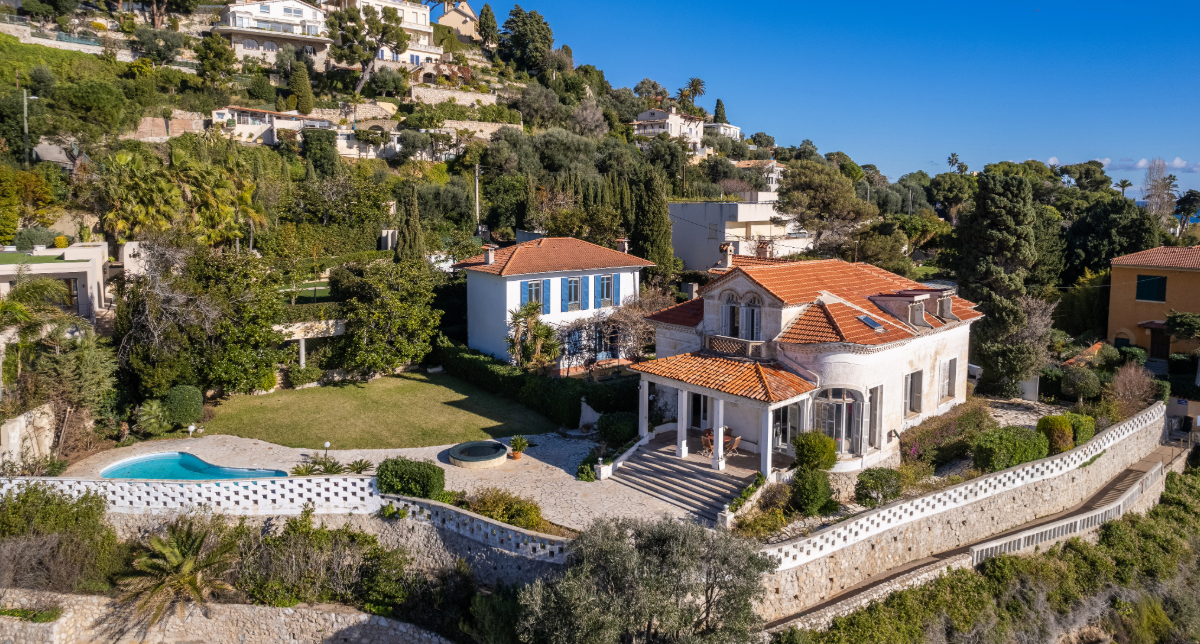
Grand Est is one of France's most complex regions to apprehend as a prestige real estate market — and one of the most underestimated at European scale. Three exceptional built heritages, a unique geographic position at the crossroads of five countries, structural cross-border demand, and prices still highly competitive compared to Paris, Lyon or the Côte d'Azur. In 2026, it is also one of the markets recovering most clearly, with rare segments that never really corrected.
Real Estate Market · Grand Est · 2026 · Verified Data
€5,070
Avg. price Orangerie district, Strasbourg (MeilleursAgents, April 2026)
€3,728
Avg. apartment price Strasbourg (March 2026)
6–7%
Gross rental yield Grand Est (Patrimoine Magazine 2026)
3.3–3.7%
20-year mortgage rate, early 2026 (Pretto)
Grand Est offers something few French regions can simultaneously provide: a concentration of historically exceptional built heritages, a geographic position at the crossroads of Germany, Switzerland, Luxembourg, Belgium and Italy — five major economies within two hours — and prices that have not yet reached the scale of France's or Europe's major metropolises. For an informed buyer, this is a rare equation.
Understanding this market means understanding that there is not one real estate market in Grand Est. There are at least five, each obeying very different logics, addressing distinct buyer profiles. It is precisely this complexity that creates the best opportunities — and explains why locally anchored players with embedded networks, like Adopte une Conciergerie, play a role no national platform can reproduce.
Strasbourg: Grand Est's most international market
Strasbourg is the only French city simultaneously housing the European Parliament, the Council of Europe and the European Court of Human Rights. This institutional reality generates a structurally permanent demand for premium housing, fed by European officials, diplomats, international lawyers and executives of major companies orbiting these institutions.
The Orangerie and Contades districts — often described as Strasbourg's "little Neuilly" — form the core of the premium market. Average prices in the Orangerie district reach €5,070/m² in April 2026 (MeilleursAgents), ranging from €3,573 to €6,491/m² depending on precise address. The UNESCO Neustadt offers buildings of incomparable architectural quality — high ceilings, ancient parquet, generous proportions — within a €3,500 to €5,000/m² range depending on floor and condition.
The Wine Route: a heritage and viticultural market of exception
Over 170 kilometres from Marlenheim to Thann, the Alsace Wine Route is one of France's most singular real estate markets. New construction on the Route des Vins is prohibited or tightly controlled — which means the stock of quality wine estates cannot grow. A classified Grand Cru domain (Schlossberg, Rangen, Brand, Sommerberg…) does not lose value. It appreciates with the vineyard, with the terroir's reputation, with global demand for Alsace wines. For a patrimonial investor, it is an asset class uncorrelated with financial markets, whose value rests on the irreplaceability of the place.
Lorraine: character properties at still sovereign prices
Nancy, former capital of the Dukes of Lorraine, carries one of France's richest 18th-19th century architectural heritages — Art Nouveau villas, private mansions, bourgeois residences — at prices still below Strasbourg: €1,500 to €3,200/m² depending on district and property type (MeilleursAgents 2025). Lorraine's interior — Metz, Épinal, the Moselle and Meuse valleys — contains character residences accessible at levels unmatched in terms of quality-to-heritage ratio anywhere in France.
10 questions every prestige buyer or seller should ask in Grand Est
1. Which Strasbourg districts have the highest prices per square metre in 2026?
The most valued sectors in Strasbourg in April 2026 are Orangerie (€5,070/m² average according to MeilleursAgents), Contades, UNESCO Neustadt and the Grande Île. Apartments in these sectors vary between €3,573 and €6,491/m² depending on address, floor, condition and specifications. The Wacken district, a business district in development, is already approaching €5,000/m² and constitutes a medium-term appreciation opportunity.
2. Why are Alsatian wine estates considered rare patrimonial assets?
Three converging reasons. First, absolute rarity: new construction on the Alsace Wine Route is prohibited or tightly controlled — the stock of quality wine estates cannot increase. Second, worldwide vineyard reputation: a classified Alsatian Grand Cru benefits from an internationally recognised controlled designation, whose value appreciates with global demand for Alsace wines. Third, non-correlation with financial markets: a Wine Route estate does not follow stock market cycles, making it an interesting patrimonial diversification asset for UHNWIs.
3. What is the difference between the prestige real estate markets of Alsace and Lorraine?
In Alsace, and particularly in Strasbourg and on the Wine Route, prices are structurally supported by international and cross-border demand and by the presence of European institutions. In Lorraine, prices remain below Alsace, with character residences — private mansions in Nancy, châteaux in Moselle, Art Nouveau villas — accessible at levels very competitive compared to other major French regions. Lorraine offers long-term appreciation opportunities for patrimonial acquirers with a 10-year or longer investment horizon.
4. What is the impact of cross-border employment on Strasbourg's real estate market?
Cross-border employment is one of the most structural drivers of Strasbourg's premium market. Frontier workers employed in Basel (45 minutes), Zurich (1h15), Frankfurt (1h) or Luxembourg earn above-French-median salaries but wish to reside in France for quality-of-life, fiscal or family reasons. These buyers have superior acquisition capacity and seek premium properties in the best-positioned districts. Strasbourg's position — 45 minutes from Basel, 1h15 from Zurich, 1h from Frankfurt — has no European equivalent in any other French city.
5. How does the energy performance certificate (DPE) influence prestige property values in Grand Est in 2026?
Very directly. According to the Conseil Supérieur du Notariat, a G-rated property suffers an average 12% discount compared to an equivalent D-rated one. In 2025, F and G-rated properties were already banned from renting. In 2028, E-rated ones will follow. This creates a specific opportunity: character properties with poor energy ratings but exceptional location and architecture can be acquired at a real discount, then valorised after thermal renovation.
6. What is an off-market property and how does one access them in Grand Est?
An off-market property is sold without ever appearing on public listing platforms. In the prestige segment, a significant share of the best transactions conclude off-market: vendors prefer discretion, avoid the stigmatisation of a property that "sits on the market", and wish to select their buyer. In Grand Est, high-value heritage properties — châteaux, wine estates, architect villas — are almost systematically transferred off-market. Access passes through a trusted relational network: notaries, patrimonial lawyers, local family offices, and specialised players like Adopte une Conciergerie, embedded in this network for several years.
7. What are the rental yields in Grand Est in 2026?
Grand Est offers some of France's most attractive gross rental yields. According to Patrimoine Magazine (2026), gross rental yields in bare rental reach 6 to 7% in the region, versus 2 to 4% in major metropolises like Paris or Lyon. In Mulhouse, the buy-vs-rent payback period is only 19 months — one of France's shortest. In Strasbourg, average rent reaches €15.5/m² for apartments (March 2026, MeilleursAgents), with rental pressure sustained by 60,000 students and European institutional demand.
8. What types of prestige properties are found in Grand Est that exist nowhere else in France?
Four typologies unique in France. The authentic Alsatian half-timbered house — multi-coloured timber-frame structure, flat tiles, interior courtyard — with no aesthetic equivalent elsewhere. Wilhelmian apartments in Strasbourg's UNESCO Neustadt — German-era construction (1871–1918), generous proportions, ornate facades, quality now unobtainable in new-build. Nancy Art Nouveau villas — sculpted floral facades, sinuous ironwork, coloured glass — unique in France by their density and quality. And Champagne wine estates with their chalk-hewn cellars, classified vineyards and master houses — a combination of viticultural and real estate asset with worldwide renown.
9. How does Adopte une Conciergerie accompany prestige property acquisition in Grand Est?
Our support covers the entire process. Upstream: identification of the property matching your profile and patrimonial strategy, including in the off-market circuit. Pre-visit due diligence: property title and ownership chain, mortgage situation, planning compliance, energy performance certificate and works estimation, fiscal situation. Negotiation: we work exclusively in the buyer's interest, with no vendor mandate. Notarial and legal coordination through to signing. Post-acquisition: property management, renovation supervision if necessary, event rental management during owner absences. We are the single point of contact across the entire Grand Est territory for acquirers seeking comprehensive support.
10. What are the prospects for prestige real estate in Grand Est for 2026–2028?
Three converging trends support positive prospects. First, rate stabilisation: mortgage rates around 3.3 to 3.7% over 20 years in early 2026 (Pretto), restoring visibility to buyers. Second, European patrimonial migration: geopolitical tensions in the Middle East and instability in certain markets have accelerated UHNWI capital flows towards central Europe and France — including Grand Est, ideally positioned between Europe's major wealth zones. Third, the scarcity of exceptional properties: in a market where quality supply is structurally limited and new prestige construction is rare, the most singular properties have not corrected and will continue to appreciate.
Grand Est is not a real estate region like the others. It is a territory where history built in stone, wood and sandstone addresses that are no longer made. And those addresses do not correct — they wait for the right buyers to find them.
Prestige Real Estate · Grand Est · Off-Market · adopteuneconciergerie.fr
Sources: MeilleursAgents (April 2026) · Propriétés de Charme / Propriétés Clovis (2026) · Pretto Grand Est Rates (April 2026) · Patrimoine Magazine (2026) · Notaires d'Alsace-Moselle · Conseil Supérieur du Notariat · Bouygues Immobilier