Strasbourg is one of Western Europe's most undervalued prestige property markets. European capital, top-tier university city, UNESCO World Heritage-listed Grande Île and Neustadt, exceptional rail and air accessibility, solid Alsatian economic base: all the fundamentals of durable asset value are present. Yet price per square metre in premium districts — Orangerie, Contades, historic Neustadt — remains significantly below Lyon, Bordeaux or Marseille for comparable, or superior, building stock. For the UHNWI buyer seeking a European heritage asset, a prestige pied-à-terre, or premium rental investment, this differential is an opportunity whose window will not remain open indefinitely. This guide maps the market, its districts, its prices, its off-market mechanics, and what you need to know before buying.
Prestige Property · Strasbourg · Alsace · UHNWI Buyer Guide · 2026
One of Europe's most undervalued heritage property markets — two UNESCO listings, six European institutions, and prices that have not yet caught up with the fundamentals.
€5,500–9,000/m²
Prestige segment range in Orangerie and Contades districts in 2026
2 UNESCO sites
Grande Île (1988) and Neustadt (2017) — two protected perimeters of exceptional building stock
6 EU institutions
European Parliament, Council of Europe, ECHR — enduring institutional rental demand
In the geography of European prestige property, there are markets that UHNWI buyers discover a decade too late. Strasbourg is one of them. While France's major metropolises — Paris, Lyon, Bordeaux — saw their prestige prices soar during the 2010–2020 decade, the Strasbourg market progressed more modestly, widening a valuation gap that does not reflect the city's real fundamentals. In 2026, this gap is beginning to close — but it remains wide enough to justify the interest of a buyer who knows how to read a market before it is fully discovered.
This guide addresses the serious buyer: one who wants to understand districts before visiting apartments, who seeks off-market access before properties reach agencies, who wants to know actual prices rather than asking prices, and who wishes to structure their acquisition in a fiscally optimised way. Adopte une Conciergerie accompanies this type of buyer from its Grand-Est base — with the ground-level knowledge and prescriber network this market requires.
Why Strasbourg, why now
Strasbourg's fundamentals as a prestige property market are solid and multiple. The city is first a unique European institutional capital: seat of the European Parliament, Council of Europe, European Court of Human Rights, European Pharmacopoeia, European Administrative Tribunal and International Institute of Human Rights. This institutional concentration generates enduring and creditworthy rental demand — EU civil servants, diplomats, lawyers, lobbyists — that secures the rental yield of premium properties near the Wacken district.
Strasbourg is also a leading university city: the University of Strasbourg, formed by the merger of three historic universities in 2009, has 55,000 students and employs thousands of researchers. Two Nobel Prizes in Chemistry since 2016. This academic fabric feeds quality demand — long-term tenants, discerning profiles — that coexists with European institutional demand.
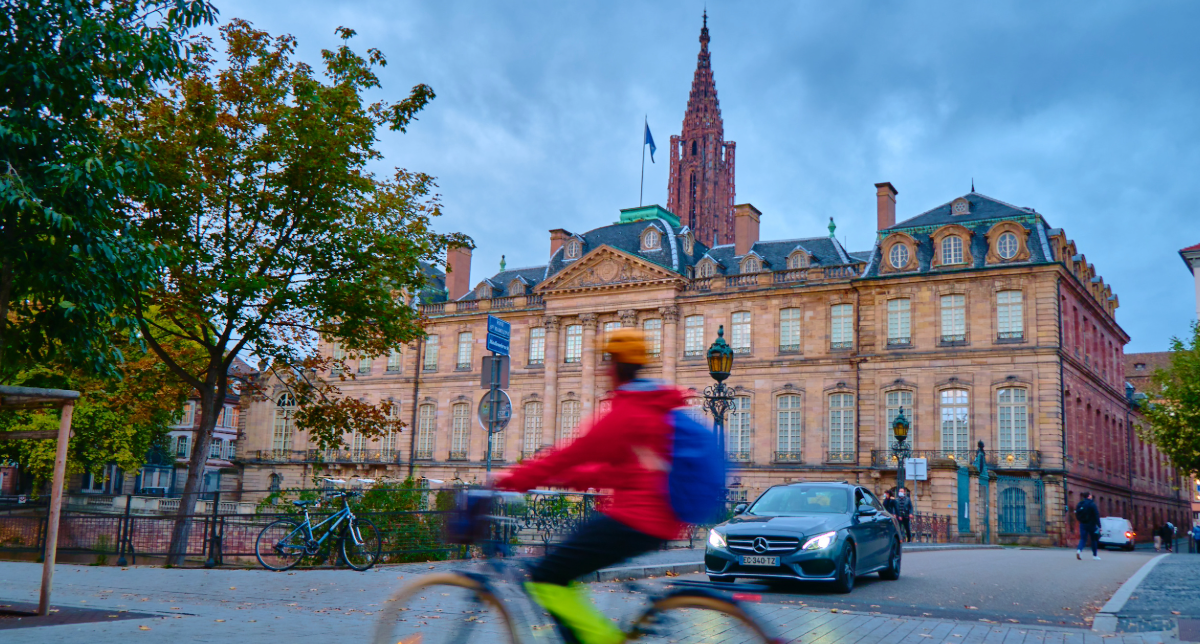
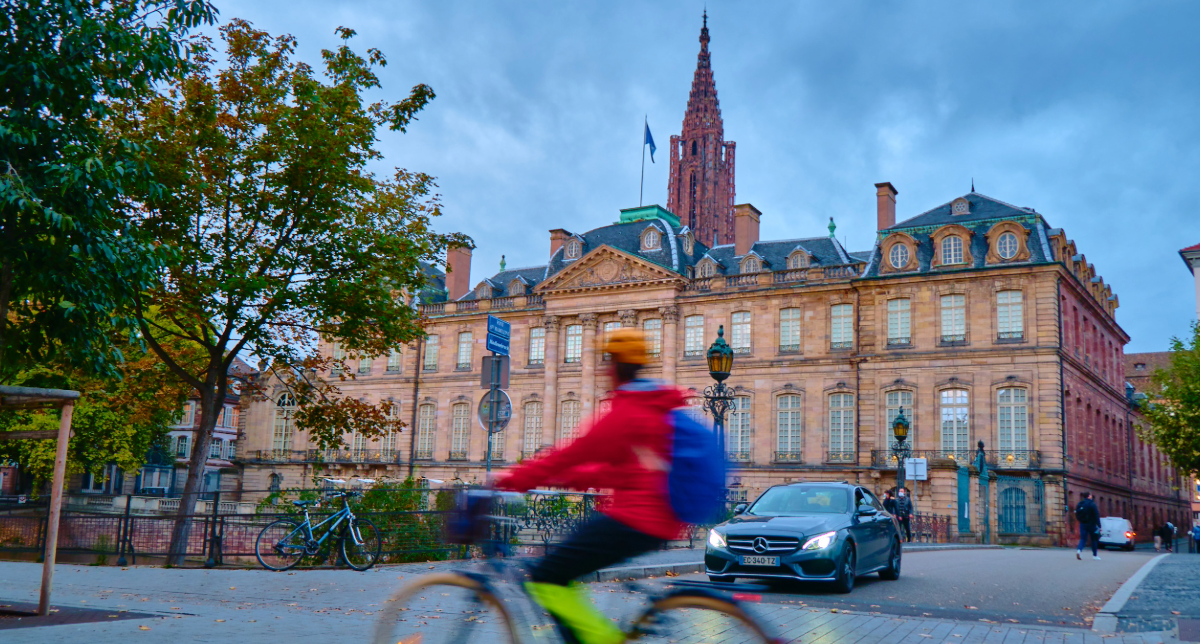
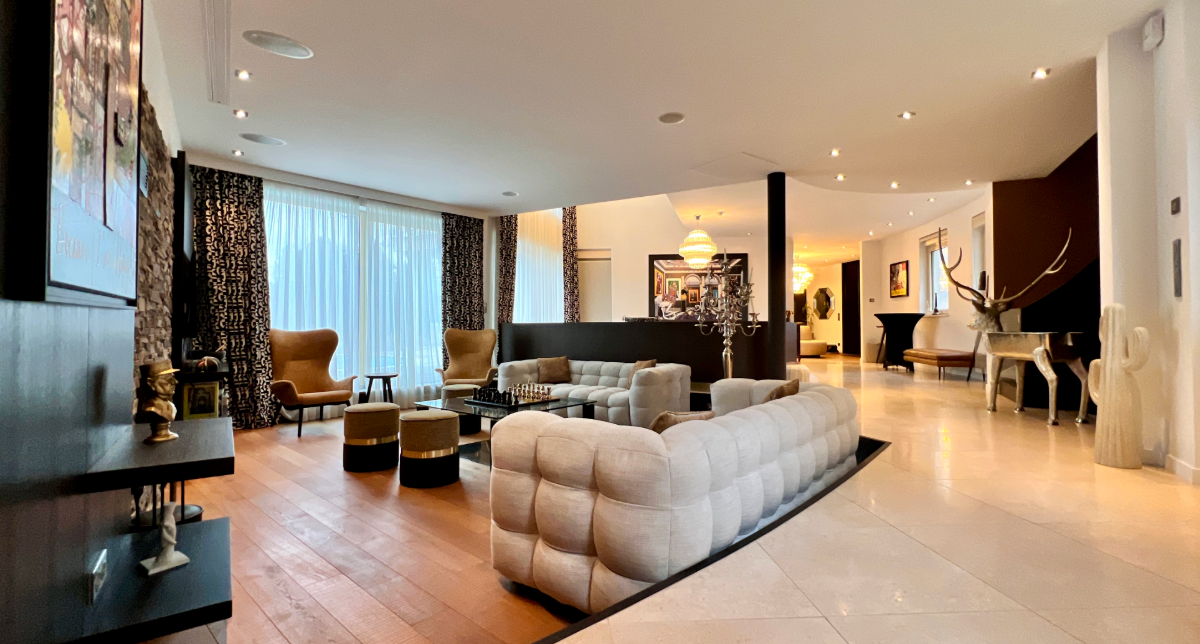
The built heritage is the third fundamental. The Grande Île, UNESCO World Heritage-listed since 1988, is one of Western Europe's finest medieval urban ensembles. The Neustadt — the Wilhelminian imperial quarter built between 1871 and 1918, UNESCO-listed since 2017 — offers a stock of Haussmann and Neo-Renaissance properties of architectural quality that Paris does not offer outside its most prestigious arrondissements, at prices with no comparison. A 200 m² Neustadt apartment in a mansion building with period parquet, 3.5-metre ceilings and views over the Contades Park trades between €900,000 and €1.4 million in 2026. In Paris's 8th or Lyon's left bank, the equivalent would cost two to three times as much.
Accessibility is the fourth argument. Paris–Strasbourg in 1h47 by TGV. Zurich two hours' drive, Basel 45 minutes, Frankfurt two hours thirty. Strasbourg-Entzheim international airport serves the main European capitals directly. For a Parisian buyer seeking an Alsatian pied-à-terre, or a Swiss or German buyer seeking a French residence, Strasbourg checks every accessibility box.
Premium district mapping: where to buy in 2026
Strasbourg's prestige market concentrates in five distinct areas, each with its own buyer profile, price level and specific liquidity.
The Orangerie district is the most sought-after and least visible. Located alongside the Parc de l'Orangerie — Strasbourg's largest park — this quiet residential quarter groups early 20th-century private mansions, villas from the 1900–1930 period, and a few 1970s–1990s prestige buildings. Construction density is low, plots are large, gardens numerous. This is where diplomats, EU institution directors and long-established wealthy Alsatian families live. Properties here are rarely listed publicly — most transactions occur privately, through notarial and buyers' agent networks, without reaching public portals. Prices for a 300–500 m² villa with garden range from €1.5 to €3.5 million depending on condition, plot and view. Prestige apartments in the district's few buildings reach €6,500–9,000/m².
The Contades district is the more urban counterpart of the Orangerie. Flanking the Parc des Contades and the Great Synagogue, it concentrates the city's finest Haussmann and Wilhelminian buildings, with large apartments of 150–300 m², Versailles parquet, marble fireplaces and exceptional ceiling heights. It is the reference district for the buyer seeking a large prestige apartment in the heart of Strasbourg, ten minutes' walk from the European Parliament and fifteen from the Cathedral. Prices range from €5,500 to €8,000/m² for a perfectly renovated property. A 200 m² apartment in a fine Wilhelminian building on the park represents a 2026 acquisition of €1.1–1.6 million.
The historic Neustadt broadly — including boulevard de la Victoire, avenue de la Paix, and streets Sellenick, Wimpheling and Schiller — offers the best value for money in the prestige market. The stock is vast (the Neustadt covers nearly 80 hectares), properties are of exceptional architectural quality, and prices remain below the Contades district for often larger volumes. It is the recommended district for a buyer seeking to maximise floor area for a given budget, or for an investor combining personal use with rental yield. Prices range from €4,500 to €6,500/m² depending on the street, floor and condition.
The Grande Île and Cathedral quarter constitute Strasbourg's absolute heritage core. Available properties are rare, heterogeneous, and their value is as much heritage as residential. A penthouse in a listed half-timbered building is not an ordinary property: it is a unique architectural object, subject to Listed Monument constraints for works, but carrying incomparable symbolic and heritage value. Prices can reach €10,000–12,000/m² for the rarest addresses, with more limited liquidity than the Neustadt.
The premium near-periphery — Robertsau, Wacken, upper Cronenbourg — offers less visible but highly coherent opportunities for buyers seeking space: contemporary villas on wooded plots, renovated Alsatian houses with pools. These properties trade between €600,000 and €2 million and offer a calmer residential setting than the centre, with direct proximity to European institutions for Wacken and to the Robertsau forest for that exceptional natural district.
The off-market: the reality of prestige transactions
One of the Strasbourg prestige market's most important characteristics is the proportion of transactions that never reach public portals. In Paris, an estimated 20–30% of properties above €2 million sell off-market. In Strasbourg, on the segment above €800,000, this proportion is likely even higher — through vendor discretion (established Alsatian families, inheritances, estate settlements), absence of pressure to sell quickly, and the density of the Alsatian notarial network which prefers to resolve transactions before any publicity.
Accessing this off-market requires three things: an active notarial network in the premium segment — Strasbourg notarial offices handling succession and family heritage sales are the first informed of an intention to sell, sometimes 18–24 months before a property reaches the public market; a network of independent agents and buyers' agents specialised in prestige districts; and a capacity for rapid decision: off-market properties sell quickly, often without counter-offer, to buyers whose financing and legal structuring are ready. Adopte une Conciergerie activates this network for its buyer clients in Strasbourg.
Price analysis by district and property type (2026)
Grand prestige apartments (150 m²+): Orangerie/Contades: €5,800–9,000/m². Central Neustadt (avenue de la Paix, boulevard de la Victoire): €4,800–6,800/m². Grande Île (listed buildings): €6,000–10,000/m² depending on rarity. Peripheral Neustadt (Cronenbourg, Robertsau): €3,800–5,200/m².
Private mansions and villas (500 m²+ with garden): Orangerie (pre-war villas on large plots): €2.5–4 million. Robertsau (contemporary wooded villas): €900,000–1.8 million. Wacken (institutional proximity): €1.2–2.5 million.
Penthouses and piano nobile floors: A top-floor duplex with terrace and Cathedral or Orangerie Park views represents the rarest property type in the Strasbourg market. These properties — of which the supply counts in single units each year — can reach €1.2–2.5 million for 150–250 m², i.e. values of €7,000–12,000/m² approaching the standards of secondary European capitals (Vienna, Munich, Amsterdam).
Valuation dynamics: catalysts to watch
Several structural factors support Strasbourg prestige market appreciation through 2026–2030: the continuing progression of the Neustadt's UNESCO profile among international buyers (Swiss, German, American, Asian); the development of the Wacken European business district generating structural upward rental pressure on adjacent residential quarters; ongoing rail investment (Paris–Strasbourg target time of 1h30, strengthened Rhenish axis connections); and the Franco-Swiss interest rate differential and strength of the Swiss franc, which continue directing Swiss heritage buyers towards Alsatian French property at 50–70% of comparable Swiss prices.
Legal and tax structuring of the acquisition
For a French resident buyer, direct personal ownership is simplest but not always optimal for estates above €5 million (IFI wealth tax applies above €1.3 million net). An SCI family holding allows property demembrement, generational transmission via successive gifts, and rental income management under the real tax regime. For properties generating premium rental income, LMNP status with real tax regime (accounting depreciation of the property) offers significant fiscal optimisation in early years.
For non-resident European buyers (Swiss, German, Belgian), direct personal ownership is possible and common. Bilateral tax conventions determine rental income and capital gains taxation — a point to verify with a specialist tax lawyer by country of residence. For non-European buyers (American, Emirati, Asian), additional constraints include FATCA reporting obligations, enhanced KYC checks by French notaries, and sometimes restrictions in certain geographic zones. Acquisition via a French-law structure (SCI, holding) is generally recommended. Transfer taxes ("notary fees") in France are approximately 7–8% of the acquisition price for existing properties — for a €1.2 million apartment, this represents €85,000–95,000 in unavoidable ancillary costs.
Premium rental investment: yields and strategies
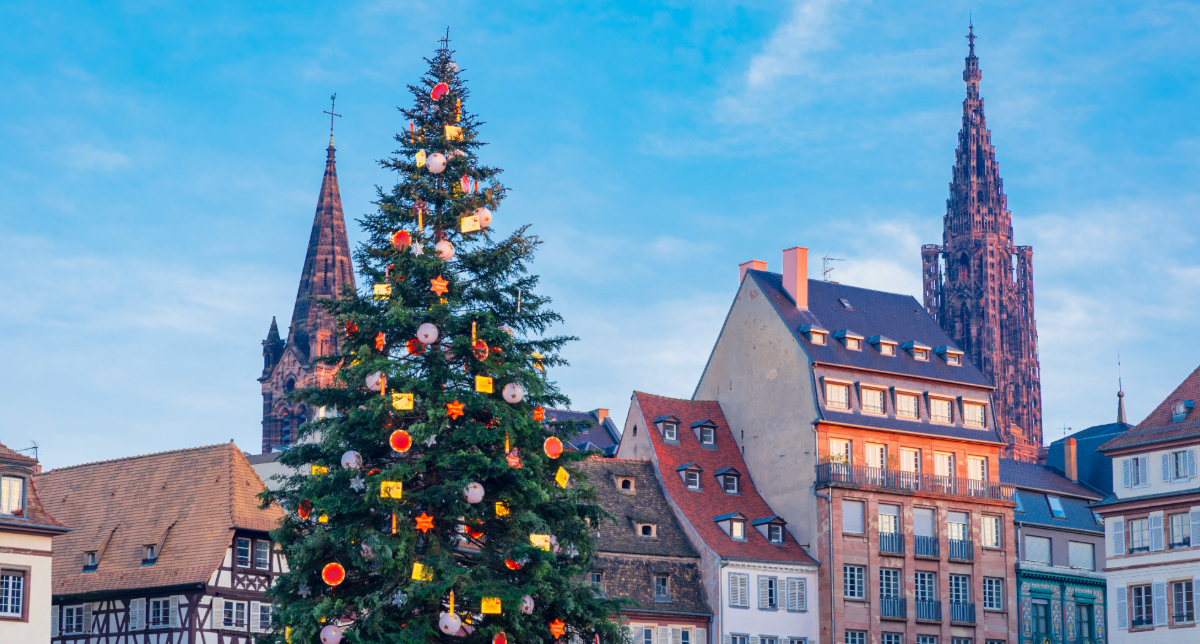
For buyers combining personal enjoyment with rental income, Strasbourg offers an attractive and defensive yield profile. Gross yields observed in the prestige market range from 3.2% to 4.8% depending on property type and rental strategy. Short-term furnished rental on well-located Neustadt or Grande Île properties generates gross yields of 4.5–5.5% annually for professionally managed properties, supported by Strasbourg's exceptional seasonality (Christmas Market, European Parliament sessions). Long-term furnished rental targeting EU civil servants, visiting researchers and senior executives generates 3.5–4.5% gross with significantly higher tenant quality and stability — a 120 m² Contades apartment rents at €2,000–2,800/month to this clientele. Long-term unfurnished rental offers the simplest management and lowest yield (2.5–3.5% gross) but the most straightforward fiscal framework.
Twelve questions from UHNWI buyers about luxury real estate in Strasbourg
Why is Strasbourg undervalued relative to its fundamental value?
Primarily for reasons of visibility and image. Strasbourg did not benefit from the same international media profile as Bordeaux (the trend city of 2010–2015) or Lyon (recognised as France's leading city outside Paris by many rankings). Its prestige property market has remained confidential, fed mainly by local networks, with few international buyers outside Swiss and German cross-border clientele. This confidentiality is beginning to dissipate, driven by the Neustadt's 2017 UNESCO listing, the growing visibility of European institutions post-Brexit, and increasing international attention to "under-discovered" heritage markets in Western Europe.
What are the best buildings in the Contades and Orangerie districts?
In the Contades, the most prestigious buildings are those on the great Wilhelminian avenues framing the Parc des Contades (rue Fischart, avenue de la Forêt-Noire, boulevard Clemenceau), with their large 150–300 m² apartments featuring original Versailles parquet and marble fireplaces. In the Orangerie, the offer is more diffuse — a few prestige 1970s–1980s buildings on the park's edge, and primarily the market of early 20th-century private mansions and villas, most of which never reach agencies. Building-by-building knowledge of these districts is what differentiates a ground-level buyer's agent from a simple estate agent.
Is the Neustadt truly a solid heritage investment?
Yes, for several converging reasons. The 2017 UNESCO listing officially recognised an internationally undervalued heritage. The associated regulatory protection limits new construction and densification, mechanically supporting prices of existing stock. The construction quality of Wilhelminian buildings (60 cm thick walls, solid wood floors, stone-carved staircases) ensures durability and comparatively advantageous maintenance costs versus 1960s–1980s construction. And the rental demand from the European institutional clientele — naturally attracted to these spacious apartments and character buildings — secures yields.
How to concretely access the Strasbourg off-market?
Through two main channels. First, the notarial network: Strasbourg notarial offices managing Alsatian family successions and estates are the first to know of a selling intention — a search mandate entrusted to an actor known to these offices opens access to pre-commercialisation properties, sometimes 6–12 months before potential public listing. Second, the network of buyers' agents and prescribers active in the premium segment who maintain direct relationships with prestige district property owners. Adopte une Conciergerie operates both channels from its Grand-Est base.
What total budget should I plan for a €1 million acquisition in Strasbourg?
For a property listed at €1 million, the total budget to plan is approximately €1.08–1.09 million, including: net seller price (variable depending on negotiation), transfer taxes and notarial fees (approximately €74,000–80,000 for a €1M existing property), and any buyers' agent or concierge fees (3–5% VAT-inclusive, depending on whether borne by seller or buyer). If renovation works are planned in a listed building or heritage protection zone, budget a 15–30% cost premium versus unconstrained property, and authorisation delays of up to 12 months. These renovation costs are however deductible or depreciable depending on the chosen tax regime.
What are the main pitfalls to avoid when buying prestige property in Strasbourg?
Four recurring pitfalls. First, buying into a financially troubled co-ownership: some Wilhelminian buildings have high maintenance charges and voted major works (facade, roof, lift) — careful reading of the last three AGM minutes and the maintenance log is essential. Second, underestimating ABF heritage constraints: in Historic Monument perimeters or in protected sectors, all works (including windows, ventilation, exterior paint colours) are subject to the Heritage Architect's approval, with real delays and cost premiums. Third, neglecting the Energy Performance Certificate: F or G-rated properties face increasing rental restrictions and mandatory renovation obligations. Fourth, paying a premium for "renovated" status without verifying renovation quality: surface renovations in prestige apartments often conceal outdated electrical, plumbing and heating installations.
Is it possible to obtain a mortgage in France as a non-resident?
Yes, under conditions. French banks grant property loans to non-residents for French acquisitions, generally with slightly more restrictive conditions than for residents: higher deposit required (30–40% of the price), slightly higher rates, and partial French banking domiciliation requirement. For Swiss and German buyers, several cross-border banking institutions (CIC Est, Banque Populaire d'Alsace, Crédit Mutuel) have specific expertise in these arrangements. For non-European buyers or those with significant liquid assets, financing in own funds with structure optimisation (holding, SCI) is often simpler and faster than seeking French bank financing.
How does Adopte une Conciergerie accompany UHNWI buyers in Strasbourg?
Our Strasbourg property accompaniment covers the entire acquisition cycle: project definition and target property profile, activation of the off-market network (partner notaries, specialist buyers' agents, pre-commercialisation property owners), selection and presentation of qualified opportunities, visit accompaniment with critical building and district analysis, technical expert coordination (surveyor, architect, old building specialist for Wilhelminian properties), negotiation conduct, introduction to tax lawyers and accountants for acquisition structuring, and follow-through to authentic deed signature. For buyers who subsequently wish to rent the property, we ensure the transition to premium rental management from the same interface.
Strasbourg is a city whose prestige property market has not yet caught up with the value of its fundamentals. The double UNESCO listing, European institutional concentration, rail accessibility and quality of Wilhelminian building stock compose a solid heritage dossier that the best-informed buyers are beginning to arbitrate in Strasbourg's favour. The off-market, the Orangerie and Contades districts, and the historic Neustadt buildings are the three territories to master for acquiring at the highest level. It remains to have the right network to access them.
Strasbourg · Orangerie · Contades · Neustadt UNESCO · Off-market · UHNWI · Prestige Property · May 2026
Adopte une Conciergerie — First Private Luxury Concierge of Grand-Est · Paris · French Riviera · Prague Presence