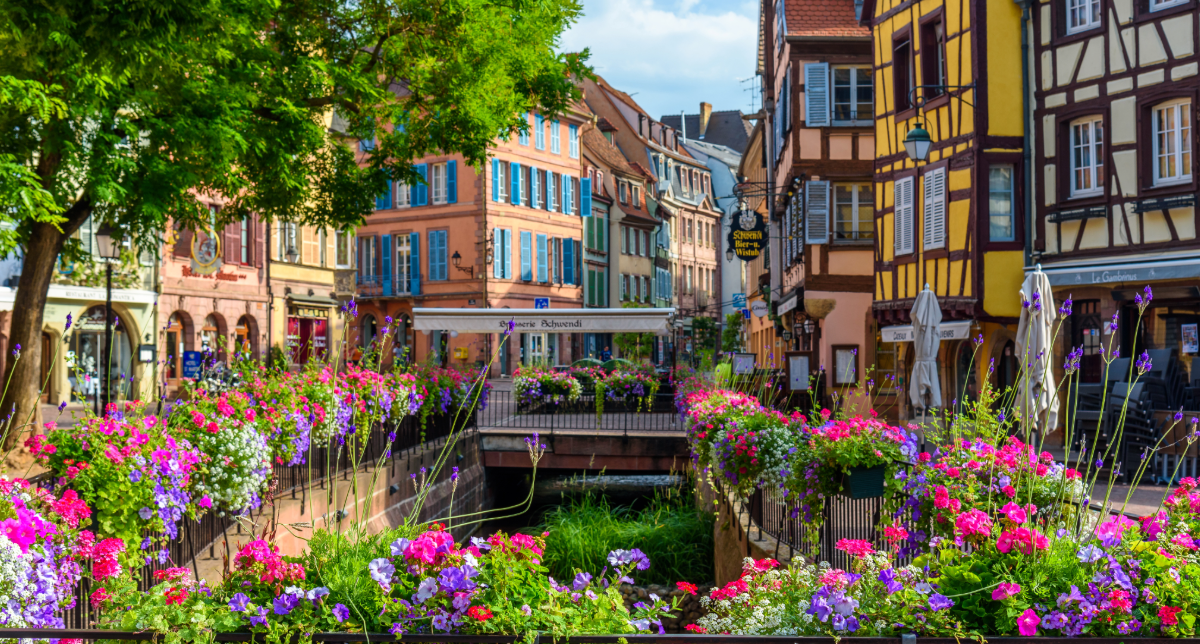
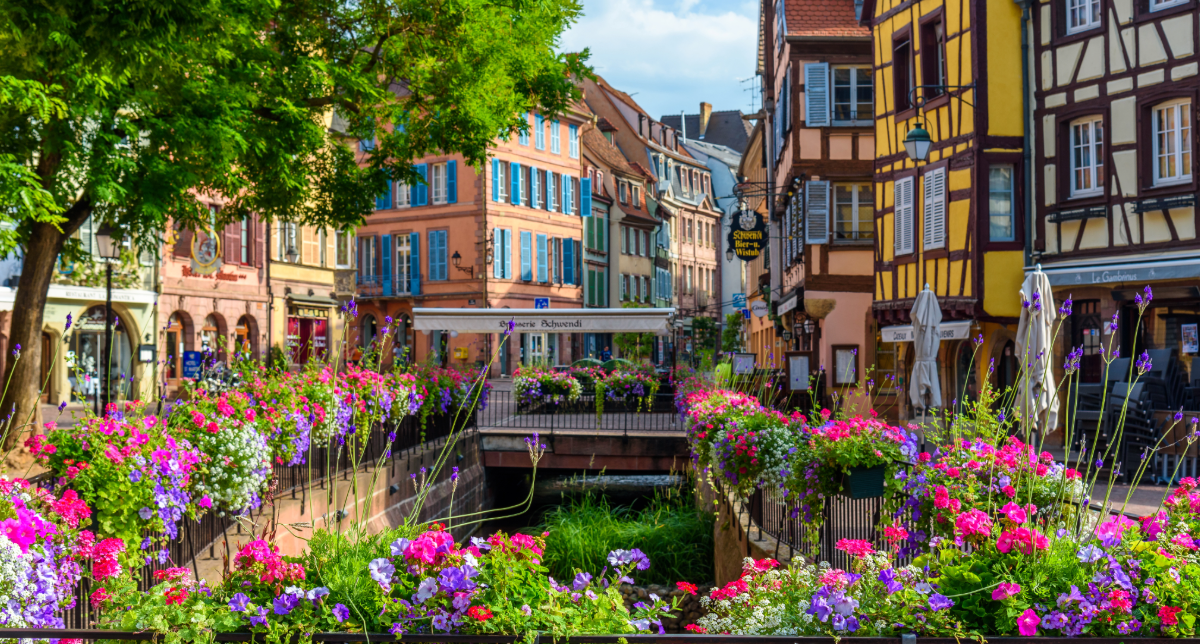
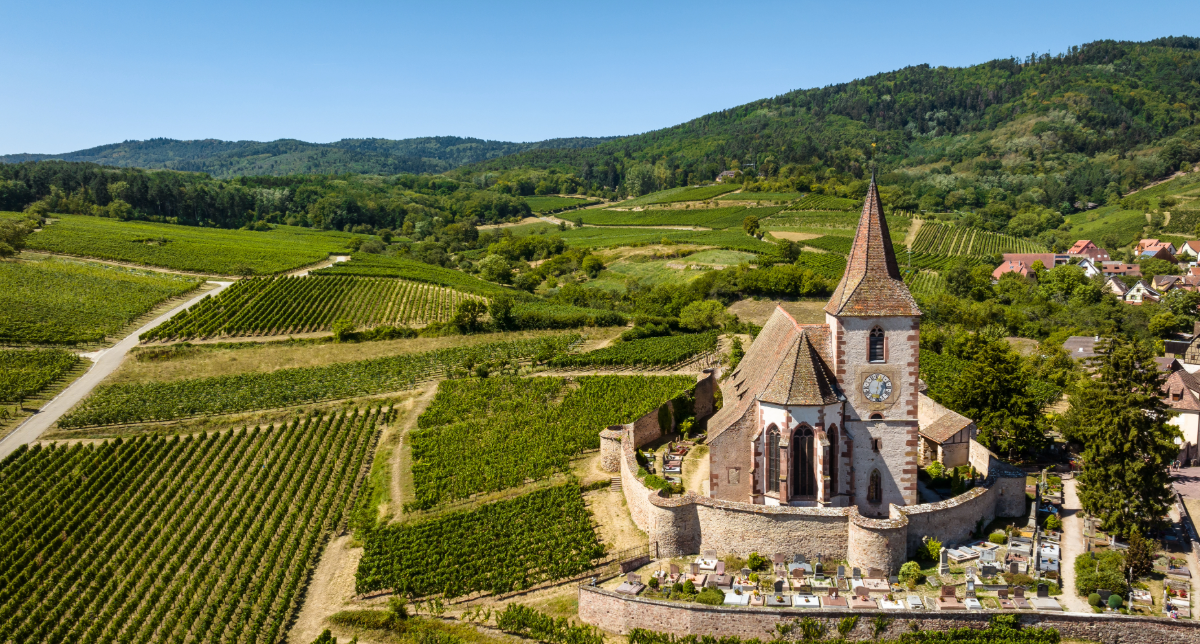
Colmar is not an ordinary tourist destination. It is Alsace's most instructive case study: a city of 70,000 inhabitants welcoming 3.5 million visitors per year, including 1.5 million for the Christmas Markets alone. A city generating €128 million in tourist turnover employing nearly 2,900 people. And a city whose short-stay rental market posted a RevPAR of €172 at Easter 2026 — up 11% — while certain sectors are capped at 29-32%. This gap is not coincidental. It is the product of management.
Tourism Market Analysis · Colmar · Alsace · 2026 · Verified Data
Colmar: anatomy of a destination that resembles no other.
I have worked on tourist markets long enough to know that there are destinations that defy models and those that illustrate them. Colmar defies. It defies because it is too small to weigh on national statistics, too large to be a mere regional curiosity, and too singular to fit standard categories. It is, in the vocabulary of data tourism, a productive anomaly — a city whose performance regularly exceeds what its size would suggest.
The On the Book report from the Grand Est Tourism Observatory, published 17 April 2026 based on AirDna-ARTGE data, provides exceptional precision: at Easter 2026, Colmar posted a 71% booking rate and a RevPAR of €172, up +11% versus Easter 2025 — Grand Est's leading figure, far above the regional average (52%) and at considerable distance from poorly managed sectors (29-32%). This differential is not heritage magic. It is the product of management.
The anatomy of Colmar's tourist market
Colmar's tourist market rests on two radically asymmetric temporal pillars. The first is the Christmas Market — six to seven weeks concentrating 1.5 million visitors. In 2023, the average hotel occupancy rate in the agglomération reached 70% annually — with notable December peaks. The second pillar is the spring and summer season — sustained by the Wine Route, producer markets, cultural events (International Festival of Colmar, Colmar Fête le Printemps), and structural demand from German, Swiss, Belgian and Dutch clientele.
Structural tension: in 2025, a collective of inner-city residents launched a petition against overtourism. This tension is real and deserves to be taken seriously in any honest market analysis. It means that for property managers or tourist accommodation investors, management quality is no longer only a financial performance issue — it is a territorial responsibility issue.
Eight questions on Colmar's tourist market in 2026
Why does Colmar post a RevPAR of €172 at Easter 2026 while some sectors are at 29-32% occupancy?
The answer lies in management quality, not the destination. Colmar is a destination with structurally strong attractiveness — UNESCO heritage, Wine Route, gastronomy, Christmas Markets — and this attractiveness generates real demand. But demand alone does not create performance. What creates performance is the capacity to capture this demand at the right price, at the right moment, on the right platforms, with the right descriptions and visuals. Professionally managed properties — with dynamic revenue management calibrated on real-time market data — capture this demand. Self-managed properties at fixed prices or with poorly updated listings do not. The difference between 71% and 29-32% is entirely within this management gap.
What is the profile of visitors to Colmar and how is it evolving?
Colmar's visitor profile is one of the region's most diverse. French, Belgian, German and Swiss markets constitute the absolute priorities — the proximity clientele forming the base of annual visitor numbers. Beyond this, Colmar benefits from growing international recognition — particularly in the United States and Asia, where it regularly features as "one of Europe's most beautiful cities." The International Festival of Colmar, Colmar Fête le Printemps and the Christmas Markets attract increasingly distant clientele. The average spend per international tourist in France progressed 7% in 2025 to reach €760 per stay — a level that benefits destinations like Colmar, whose gastronomic and cultural offer justifies high average spend.
Is overtourism in Colmar a risk for short-stay rental investors?
It is a legitimate question every honest investor must ask. Overtourism can generate two types of risk for rental investors. Regulatory risk first: facing resident pressure, some French municipalities have introduced furnished rental quotas, regulation zones, or enhanced registration requirements. Colmar has implemented registration systems in line with the November 2024 Le Meur law, but has not yet adopted strict quotas to date. Reputational risk second: a rental market saturated with poorly managed properties can degrade the overall destination experience and reduce its capacity to attract high-value clientele. This is why management quality is both a financial imperative and territorial responsibility.
What are the best months to rent a property in Colmar and how should pricing strategy be calibrated?
Colmar's demand curve is particularly bimodal — two major peaks with intermediate troughs. The first peak is December (Christmas Markets) — the busiest period of the year, where occupancy rates reach record levels and prices can be set significantly above the rest of the year. The second peak is the spring and summer season — from Easter to mid-September, with high points around public holidays (1 May and 8 May fall on Fridays this year, creating two consecutive long weekends). The most marked trough is January-February, requiring either a pricing repositioning to maintain occupancy, or acceptance of a lower occupancy rate to maintain traveller quality. A well-calibrated revenue management strategy maximises total annual revenue by combining high-season price optimisation with low-season vacancy minimisation.
Is the furnished rental market in Colmar saturated?
The answer is nuanced and depends heavily on market positioning. There is significant and growing furnished rental supply in Colmar — creating competition between properties. But this competition is highly asymmetric: properties distinguished by accommodation quality, pricing relevance, description and photo quality, and operational responsiveness operate in a different segment from commoditised properties. The data shows it: at Easter 2026, some properties are at 71% occupancy while others are at 29-32%. The market is not saturated for well-managed properties — it is saturated for undifferentiated ones.
How does the Le Meur law (November 2024) affect furnished rental owners in Colmar?
The Le Meur law (no. 2024-1039, 19 November 2024) introduced several important changes. The micro-BIC allowance for unclassified furnished rentals is now capped at 30% and €15,000 in revenues (versus 50% and €77,700 previously). National registration is generalised from mid-2026, with a mandatory number for all short-stay rentals. The energy performance certificate becomes mandatory for new short-stay rentals. Municipalities have more power to set quotas and authorisation conditions. For a Colmar property owner, these developments reinforce the need for professional management support: administrative and fiscal complexity increases, and the regulatory framework is evolving rapidly.
What is the impact of Colmar's cultural events on rental performance?
The impact is very significant and measurable. The International Festival of Colmar in July generates premium accommodation demand across the full week — with visitor profiles of high purchasing power (music lovers, international clientele) whose accommodation quality expectations are elevated. Colmar Fête le Printemps in April creates a spring demand peak. The Christmas Markets, spanning six to seven weeks, constitute the absolute annual peak. For a professional manager, each event is an opportunity to calibrate a specific pricing strategy — anticipating demand, adjusting minimum stay lengths, and positioning the property to attract the most qualified available clientele at that moment.
Does Adopte une Conciergerie offer rental management services in Colmar and the agglomération?
Yes — and it is one of our priority geographic sectors for premium rental management. Our Colmar approach integrates four dimensions. Dynamic revenue management: real-time rate adjustment based on AirDna market data, local events, territorial occupancy and booking behaviour. Multiplatform optimisation: coordinated presence on Airbnb, Vrbo, Abritel and channels suited to the destination's international clientele. Complete operational management: guest welcome, professional cleaning, quality linen, preventive maintenance, review management. And transparent reporting: we report to each owner with market-benchmarked data, not only raw figures. For properties in high-potential sectors — Colmar historic centre, Wine Route proximity — our objective is to position you in the segment of the 71% rather than the 29-32%.
Colmar does not ask whether it deserves visitors. It has 3.5 million of them per year. What it asks is whether its property owners have the management quality equal to the attractiveness they are fortunate to inhabit.
Tourism Analysis · Colmar · Alsace · 2026 · Tourism Expert
Adopte une Conciergerie — Premium Property Management · Alsace · Grand Est
Sources: Grand Est Tourism Observatory & Data · On the Book Report · Data as of 17 April 2026 · AirDna–ARTGE · Colmar Tourism Office (Activity Report 2023) · City of Colmar · La Gazette des Communes (Feb. 2026)